
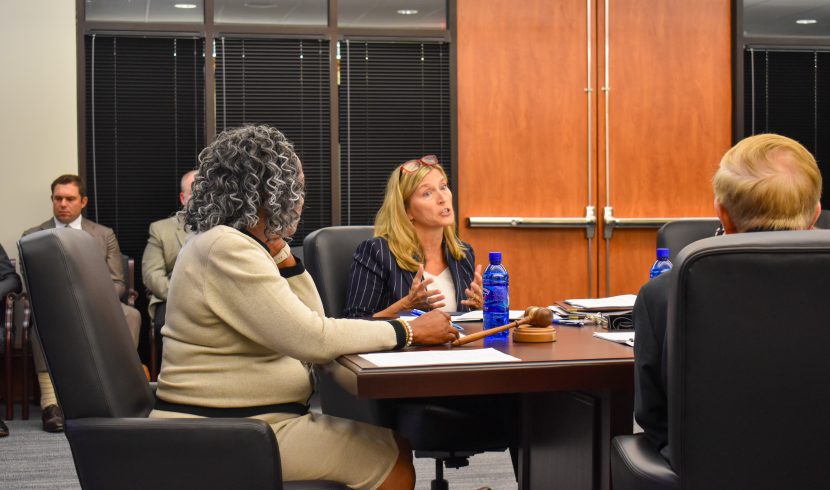
MONTGOMERY, Ala. – The Alabama State Employees Insurance Board approved its first premium increase in 11 years at its meeting on Wednesday.
The $15 across-the-board monthly premium hike will go into effect on Jan. 1, 2027, along with a slew of other benefit changes. Those include higher co-pays on 60- and 90-day prescription refills, $5 and $6 monthly price increases for standalone dental, vision and cancer coverage, limitations to GLP-1 prescription durations and higher cost shares for Medicare Part D prescriptions.
The board’s executive committee had recommended that the board increase premiums by $20, but SEIB members voted down that recommendation 3-4. The State Employees Health Insurance Program last increased member premiums more than a decade ago, with another uptick of $15.
The plan changes come as the SEIB’s expenditures consistently outpace its revenue. SEIB CEO Stephanie McGee Azar attributed the plan’s financial struggles to rising healthcare costs.
“Healthcare inflation, which is completely beyond our control, is the driver of this increase,” Azar told board members. “SEIB has no say in utilization trends, drug costs, et cetera. This is not just an Alabama or an SEIB issue, it is a national issue. The goal is a multi-year approach, which touches the three main sources of revenue coming into the plan to help build financial stability.”
Addressing revenue shortfalls
Board members discussed all three of the plan’s revenue streams – the SEIB’s trust fund, member premiums and state funding from the General Fund – and how the board can maximize them to stay afloat.
The program is projected to lose $39.9 million in fiscal year 2026, according to data through July. The SEIB previously addressed its deficit by pulling $30.5 million from its trust fund last year.
Though the board will likely pull 5% or more from its trust fund at some point in fiscal year 2027, board members did not take any official action to do so on Wednesday. The board can draw no more than 10% of the fund’s balance in any given fiscal year, which Azar said was $348 million as of Wednesday.
In addition to the premium increase and benefit changes, the SEIB will also ask the governor to increase the insurance plan’s state rate. The board approved a plan to ask lawmakers for a state rate of $1,250 for fiscal year 2028. The Legislature in April appropriated $18 million to the program for fiscal year 2027, raising its contribution from $1,025 to $1,175 per member per month.
Lawmakers, including a new gubernatorial administration, might be resistant to increasing SEIB’s funding as state leaders express concerns about future General Fund revenue, Azar said.
“Me being somewhat familiar with the headwinds that (the) General Fund is facing, I would say there could be a possibility we will be level funded in 2028,” Azar said. “I can’t speak to that, but it is something we have to assume could be a possibility.”
Alabama Daily News previously reported that the General Fund had collected about $3.4 billion in year-to-date receipts through August, up 3.3% from the same point last year.
That is higher than state officials anticipated during the most recent legislative session, LSA Deputy Director Kirk Fulford said, in large part because interest rates have remained higher than expected.
Azar said all of these changes come in an effort to keep the value to the member high while building long-term financial stability.
“The plan needs to work toward getting a working capital or a net as well, and I believe there’s a way to do it, even with so many unknowns,” Azar said. “Healthcare, it’s so unknown, but I’m very hopeful and optimistic about that because I’ve lived in healthcare for a minute and I’ve seen things really turn around. There’s definitely hope there. That’s why I say the sky’s not falling. It can be managed, we just got to do the best we can today.”
Board member discussion
Board member Bob Childree, who represents retirees covered by the plan, was the lone no vote for the $15 increase.
Childree brought up that unlike retirees, the state has given active employees more recent cost-of-living adjustments over the years. He said that retirees are “suffering more in this crisis than any other constituency group here.”
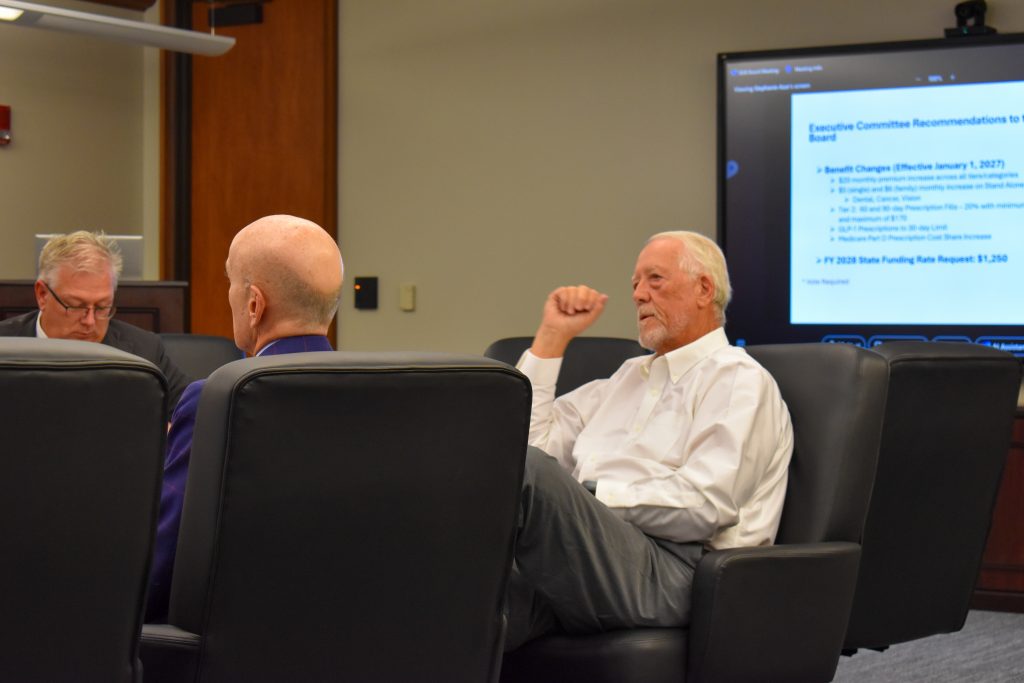
“Employees are different than retirees in that regard because for 20 years now we’ve not received a cost of living adjustment as a retiree,” Childree said. “So if you match that with the fact that some people have done the estimates on what the value of those dollars are, retirees basically have about 50% of the buying power that they had 20 years ago.”
Childree asked the SEIB to consider a premium increase exemption for Medicare retirees. His motion, which came after the board voted 6-1 on a $15 increase, could not get a second.
Board member Connie Grier, who represents active employees on the plan, disagreed that the burden should fall only on current employees insured by the state.
“It is very difficult for active employees and retirees with no COLAs, even if it’s for a specific period of time, any of it degrades overall income,” Grier said. “I feel like it’s unfair to keep putting all of it onto the active. I don’t want to put it on the non-Medicare, don’t want to put it on the Medicare, don’t want to put it on the active, but I feel like we all are in this together. I think sometimes we just got to share everything together because we are in a crisis.”
Other board members questioned if increased state funding will be a possibility going forward and whether a premium increase makes SEIB more or less likely to see an increased state rate.
After approving the plan changes, the SEIB also approved its $10.38 million agency budget for fiscal year 2028, an increase of 9.92% from the previous year.