
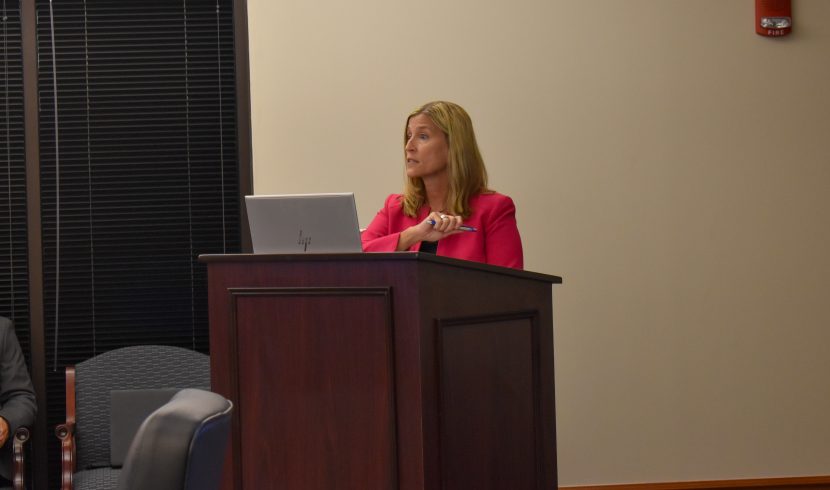
MONTGOMERY, Ala. – As healthcare costs skyrocket nationwide and Alabama’s General Fund revenue is stagnant or worse, the State Employees Insurance Board Executive Committee is recommending a premium increase and benefit changes for more than 100,000 state employees and retirees.
The proposed $20 across-the-board monthly premium hike is an effort to shore up revenue and help build long-term financial stability for the program, which has been a problem as the program’s expenses consistently outpace revenue.
The program is projected to lose $39.9 million in fiscal year 2026, according to a slide presentation from Tuesday’s meeting. But because the program pulled $30.5 million from its trust fund last year and started this year with a positive balance, estimates expect the program to end the year $33.2 million in the black.
Recognizing that repeatedly pulling from the trust fund is unsustainable, SEIB CEO Stephanie McGee Azar called the proposed premium increase and benefit changes “absolutely necessary.” Without any plan changes or trust fund withdrawals, Azar estimated that the program would end fiscal year 2027 down $16 million.
“Nobody wants to raise a premium or make premium changes… It’s happening everywhere because there’s really not another option…” Azar said. “My job is to put before you, and subject matter experts in my team, what we think is the least impactful to the member, least impactful to the General Fund, least impactful to that trust fund because we’ve got to hang on to that to help us as we build and do the best that we can bringing in and trying to get the revenue line up while we’re also just beating at that expense line.”
The State Employees Health Insurance Program last increased member premiums more than a decade ago, with an uptick of $15.
Azar also recommended several benefit changes, including higher co-pay ceilings on prescriptions, $5 and $6 monthly price increases for standalone dental, vision and cancer coverage, limitations to GLP-1 prescription durations and higher cost shares for Medicare prescriptions.
The premium hike would increase revenue by $12 million, and the benefit changes would decrease costs by $11.2 million, together saving the program $23.2 million annually, she estimated.
Azar and the committee are also recommending the board ask for more money from the Legislature next budget season.
The Legislature in April appropriated $18 million to the program for fiscal year 2027, raising its contribution from $1,025 to $1,175 per member per month. The executive committee’s vote on Tuesday included a plan to ask lawmakers for a state rate of $1,250 per member.
Even if the board adopts all of the premium and benefit changes, Azar still expects the program to draw from its trust fund in fiscal year 2027. Drawing 5% from the fund would amount to around $17.1 million, which is still not enough to cover the cost-revenue differential she expects in FY2027.
But coupled with a state rate increase the following year, the program could end fiscal year 2028 with a $6.8 million carry forward balance, Azar estimated.
“We eventually need to get to a net position, but we’re steadily holding at least a month in revenue,” Azar said. “We’re spending close to $12 million a week, and everything that I am putting before you today is 100% to do everything we can to fight for our members and (ensure) that we keep a good plan, keep a healthy, financially stable plan.”
Board member concerns
After Azar presented her recommendations, some board members expressed concerns about a premium increase, while others said the uptick is the only way for the program to stay afloat.
Committee member Connie Grier said she wasn’t “a big fan” of the premium increase, expressing special concern for families including more than one state employee.
“We have state employees that are married to state employees, and that means that that household will see a $40 increase in their payment because we do not allow a state employee to be a dependent on another state employee’s policy, unlike PEEHIP does…” Grier said. “I feel like that’s not going to be good for them in the outcome with $40 coming out of that one household.”
She asked if the program could manage with only a $15 increase, but Azar explained that a $20 increase would “help us build sustainability.”
State Finance Director Bill Poole, who sits on both the PEEHIP and SEIB boards, said that the two insurance programs face many of the same issues but have very different ways of absorbing higher costs.
While the Education Trust Fund’s revenue is flat, estimates indicate that the General Fund’s revenue will fall year-over-year, which Poole called “a cautionary note.”
Despite potential changes, Poole said that the program is still a premium plan at great value to employees.
“The value of this plan relative to the private marketplaces still and will continue to be, no matter what we decide, a remarkably valuable plan for employees,” Poole said.
Doubling down on this, other committee members emphasized the importance of showing the Legislature that the program is trying to improve its financial situation in all possible ways.
Board Chair Faye Nelson said it’s important to show lawmakers that state employees and the SEIB “have skin in the game.”
“We’ve got to present something to our board that we feel is going to keep this program sustainable over years, and give our CEO here credit that she (and her team are) making every effort to try to bring us the best options available, even though we’ve got a fight to put it,” Nelson said. “But like you said, legislators are expecting us to have some skin in the game, and we can’t keep coming asking for money when we’re not showing that we’re taking some work for some of the options.”
Poole added on, saying that embracing the premium and state rate increases as a partnership will pay dividends in the future.
The executive committee approved the premium increase, benefit changes and request for a higher state rate unanimously by a voice vote. The committee’s recommendation will go to the full board for a vote next week.
If approved, the benefit changes would go into effect on Jan. 1, 2027. The higher state rate, if approved by lawmakers, wouldn’t take place until fiscal year 2028.
The SEIB meeting will start at 1:00 p.m. at 201 Union Street in Montgomery on Thursday.