
MONTGOMERY, Ala. – Alabama is one step closer to joining 21 other states in an interstate licensing agreement for physician assistants.
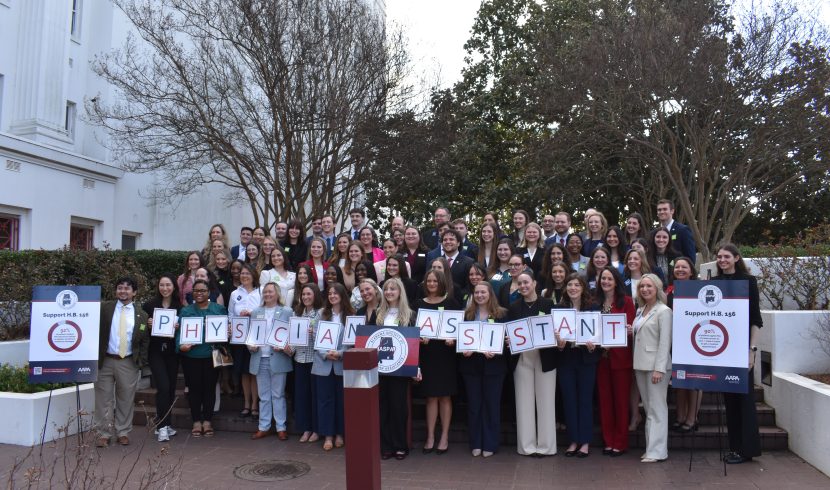
The Senate Healthcare Committee passed House Bill 156 Wednesday afternoon after a group of more than 60 practicing PAs, PA students and instructors gathered on the State House steps that morning in support. The House passed it by a vote of 101-0 last week.
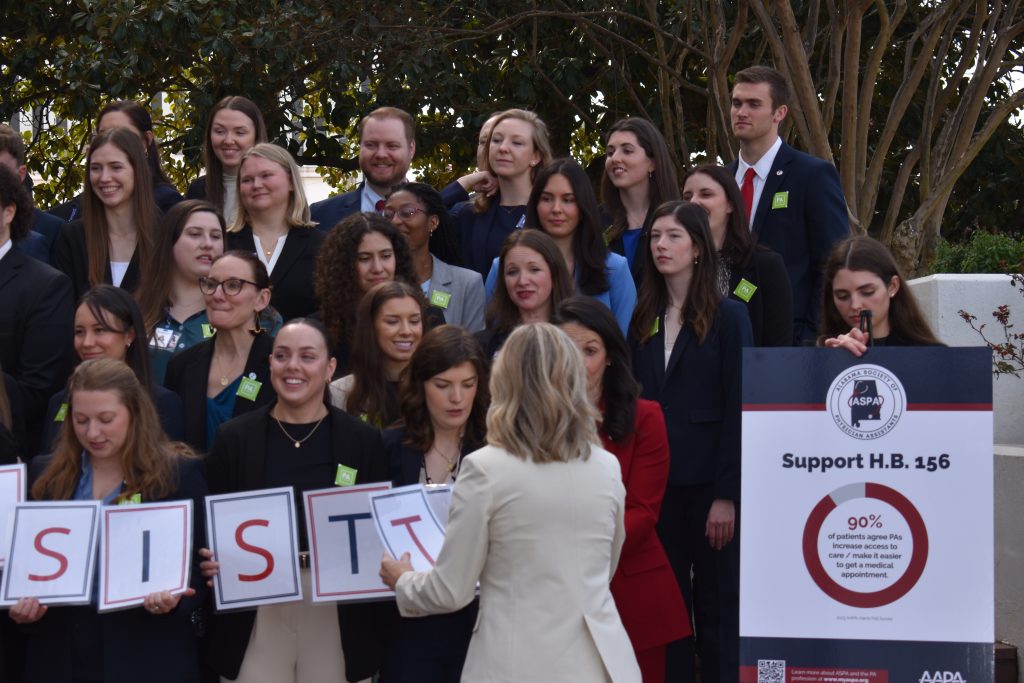
The bill would opt Alabama into the Physician Assistant Licensure Compact and make it easier for PAs from other states in the group to get licensed in Alabama. More than 1,400 PAs currently work in Alabama.
Physician assistants are medical professionals licensed to perform tasks like conducting physical exams, prescribing certain drugs, performing rounds in hospitals and nursing homes and making medical diagnoses.
Sponsor Rep. Paul Lee, R-Dothan, said the bill allows PAs, especially military spouses, to get to work quicker after crossing state lines.
“If you have a military base in your area, it certainly helps in helping those spouses come in and out without delay, delay for them to actually make a little more and delay for our health care,” Lee said when introducing the bill at Wednesday afternoon’s committee meeting
There are five military bases in Alabama, and the state is home to over 100,000 active duty personnel and their family members, according to VeteranPCS.
Kathryn Werner, a military spouse and practicing PA, spoke to the crowd Wednesday morning about her own difficulties in obtaining licensure in Alabama after practicing in other states.
“When our family moved to Alabama in 2018 for a brief military assignment, I encountered the most complex and time-consuming licensing process in my career,” Werner said. “And that’s saying a lot when we’re comparing it with Maryland and Virginia.”
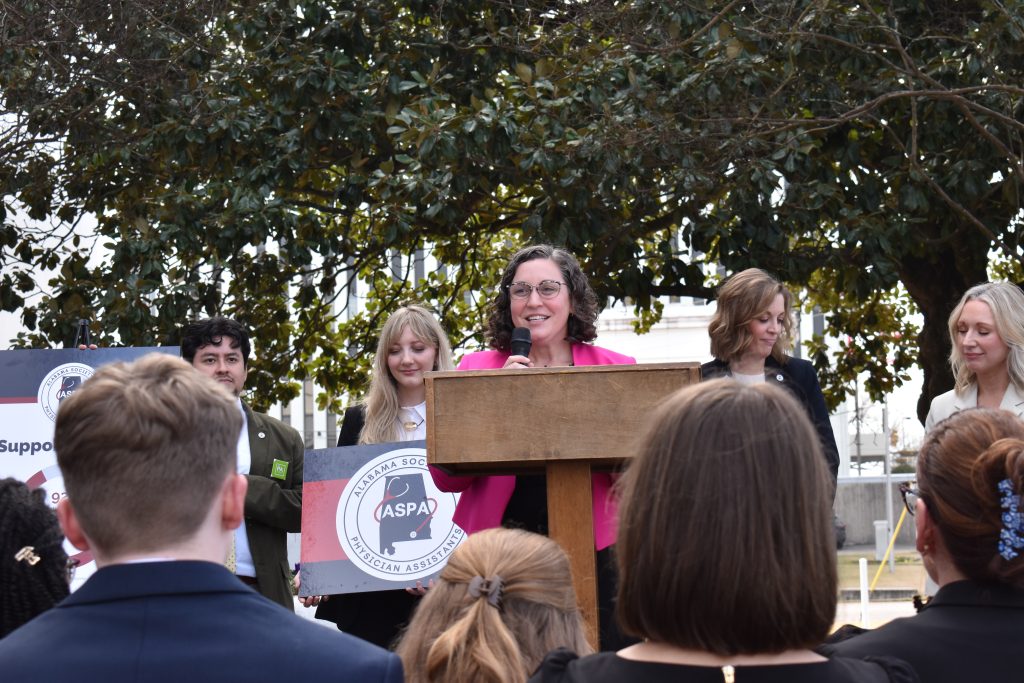
When she started her own telepsychiatry practice in 2019, Werner initially based it in another state because of regulatory hurdles. She said Alabama’s current process for licensing led to delays in providing care to patients and that she supports HB 156 because it will increase license portability in Alabama.
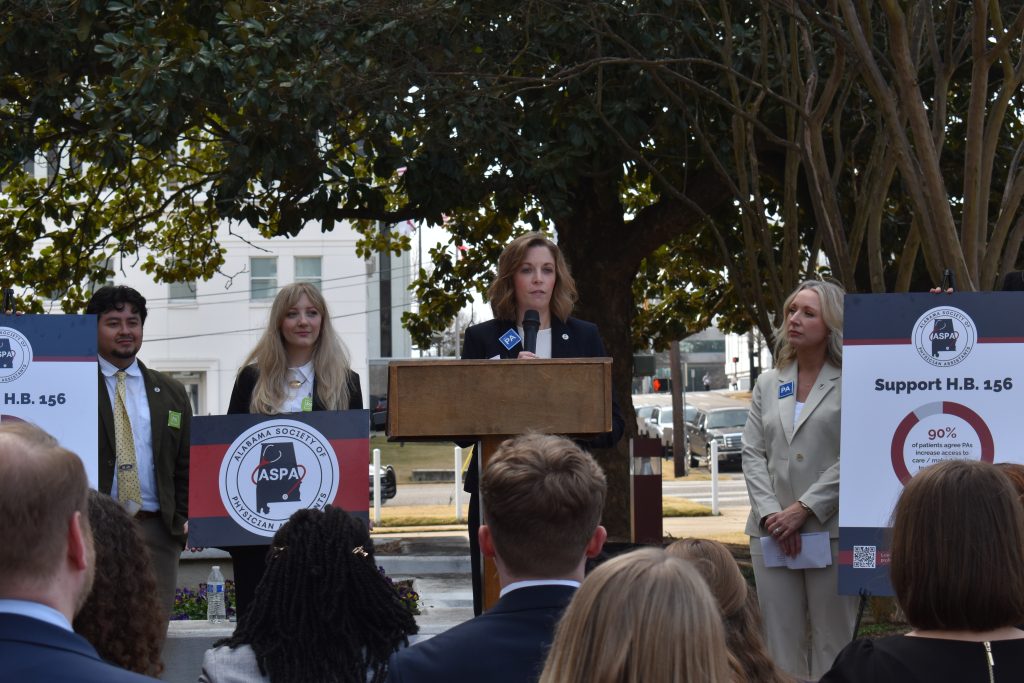
Outside of cutting out red tape, Heather Neighbors, legislative committee chair of Alabama Society of Physician Assistants and co-director of clinical education for the UAB PA program, said this bill will help to address the primary care provider shortage present across Alabama.
This shortage is particularly persistent in rural areas. There are 54 rural county hospitals in Alabama located in only 42 out of the state’s 55 rural counties, according to the Alabama Department of Public Health.
“House Bill 156 provides a meaningful solution through participation in the PA Licensure Compact,” Neighbors said as part of ASPA’s inaugural Lobbying Day Wednesday morning. “This legislation offers the opportunity to join Tennessee and 20 other states already participating in the compact, expanding access to care, providing flexibility for healthcare providers and strengthening Alabama’s health care system.”
The bill would also make it easier for PAs from outside of Alabama to see patients in telehealth appointments, a strategy used to address medical access gaps in rural areas.
It now heads to the Senate floor.