
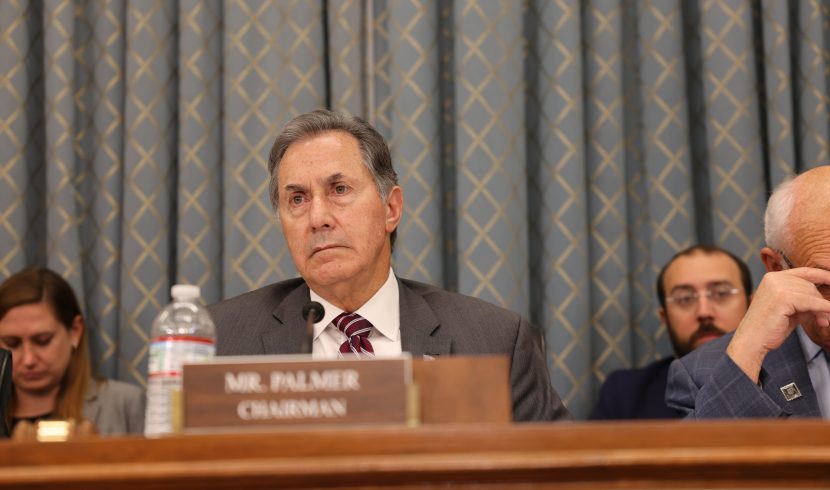
WASHINGTON — Twenty-one days into the government shutdown, Congressman Gary Palmer’s focus is on what’s ahead for Congress when the impasse ends — even as a way out remains uncertain.
Much of the U.S. House’s legislative work has grinded to a halt during the federal government shutdown, leaving less time for bills to get passed, oversight to be conducted or hearings to be held before the end of the year. The House has not held a vote since Sept. 19 when it passed the Republican-led short-term spending measure.
“We’re going to really be busy when we finally go back in session,” Palmer, R-Birmingham, said from his district office Friday in an interview with Alabama Daily News. “So we’re trying to make sure that we can fit everything into what will be a very compressed time frame now.”
The Alabama Republican has continued work in his district throughout the past month and has traveled to DC for meetings.
The sixth-term congressman’s mind is especially attuned to tackling the critical minerals work he oversees as the chair of the Energy and Commerce Subcommittee on the Environment.
On December 1, China is set to tighten export controls on rare earth elements, which are used in a range of products such as electric vehicles, consumer electronics and medical equipment. That date is a critical deadline for Palmer and his subcommitte as they help to address how to combat these planned restrictions. China is the dominant producer and processor of these key rare earths.
“This is not just a problem for the United States, it’s a problem for the entire Western Hemisphere,” Palmer told ADN. “We’re all in this together, and come December 1, China has indicated that they’ll place an embargo on these materials and these elements that our entire economy depends on.”
But despite the time crunch Palmer isn’t pushing Speaker Mike Johnson to bring the House back to Washington. And calling the House back to address the government shutdown is a non-starter for Palmer.
“Not in any context of changing direction on what we’re doing on the continuing resolution, I mean, we passed the bill. It’s a clean CR, there’s nothing in it political.”
But Democrats insist any funding deal needs to address health care including an extension of the Affordable Care Act enhanced premium subsidies, set to expire at the end of the year. As the Senate failed for an 11th time to advance the Republican-led spending measure Monday, any chances to get either side to the negotiating table remains bleak.
Palmer said he’d be “happy to engage” in the conversation around ACA subsidies with Democrats, just not yet.
“I’ll have that discussion, but first open the government,” he told ADN.
And if Congress runs out of time to have meaningful discussions on the tax credits or health insurance, Palmer said that will be Senate Minority Leader Chuck Schumer and other Senate Democrats’ fault for not reopening the government yet.
From the other side, as open enrollment begins Nov. 1, Schumer said Monday those discussions need to happen now.
“The ACA premium crisis is not a fix it later issue like Republicans keep pretending it is,” Schumer said on the Senate floor. “It’s a fix it now issue because very soon Americans are going to have to make some really difficult choices about which health care plan they choose for next year.”
The shutdown landscape in Alabama’s Sixth Congressional District
On the 17th day of the shutdown the phones at Palmer’s district office were quiet Friday morning, the GOP lawmaker said.
“By and large, we haven’t heard much,” he told ADN. “And I’m trying to do what I can to be prepared for when it’s over, so that we make sure that everybody’s made whole.”
The lack of phone calls could give insight into how Republicans feel emboldened to stand firm in their position as they face little opposition back home, at least from their own party’s supporters.
The 6th district includes nearly 11,000 federal workers, according to 2024 data.
“I’m concerned about the military not getting paid,” Palmer told ADN. “I’m concerned about federal law enforcement and other federal employees across the board who are missing paychecks.”
Earlier this month, President Donald Trump directed the Pentagon to use unobligated to pay troops who were set to miss their paychecks on Oct. 15. The Trump administration also plans to pay federal law enforcement, such as border patrol, Immigration and Customs Enforcement agents and Secret Service by Oct. 22 for their work during the shutdown.