
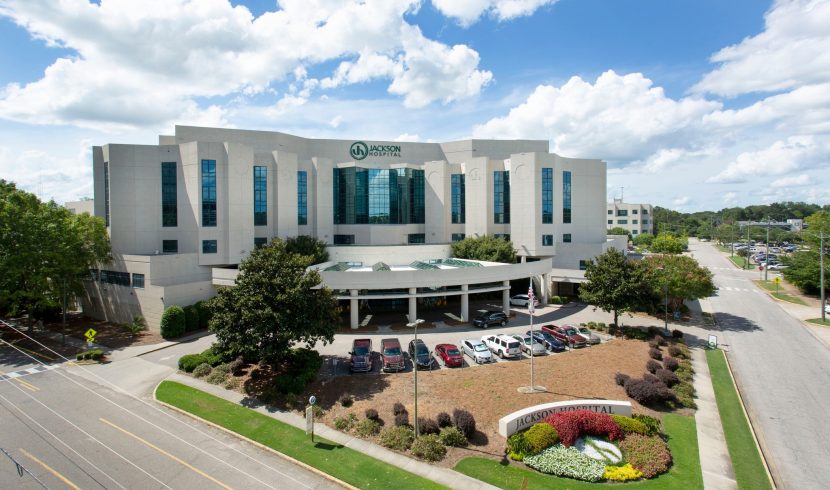
Governments are reacting to Jackson’s failure as if saving Jackson is the only option. But history teaches us otherwise. Inner-city hospitals have failed across America for decades, which give us clear case studies on how cities have struggled with this same problem, how some have made expensive mistakes and how others have addressed the real question: not what’s best for the hospital, but what’s best for the public. “People will die” histrionics should not be permitted to supplant the sober, evidence-driven analysis this moment requires.
Understandably, participants in the Jackson bankruptcy lack incentive to consult these case studies: they all want money. John Quinlivan (Jackson’s chief executive officer) says $293 million is needed to rescue Jackson—including more than $100 million in public money—yet no government entity has a seat, a voice, or even a watchdog role in the process. JIG (Jackson Investment Group, LLC, unrelated to Jackson Hospital) controls all three seats on Jackson’s board of trustees.
So, an evidence-driven analysis should begin with the vision Mr. Quinlivan has expressed for Jackson:
To transform Jackson Hospital into a financially stable, clinically advanced, and regionally recognized healthcare facility.” Its strategic goals include: to allow Jackson to earn top ratings as a Top 100 hospital, investment-grade bond rating, modernize infrastructure “across all service lines” and expand access to specialty care “across the region.
The handwriting is on the wall
This “build it and they’ll come” vision is no different from the vision Jackson implemented in the 1980’s, when it invested millions from bond issues to enhance facilities and buy physician practices across the region, to face identical threats: an eroding market share, adverse ‘payer mix’ (percentage of Medicare, Medicaid, and privately insured patients), and the advent of a talented competitor, Baptist. Now, almost 30 years of proof exists that JIG’s vision has failed:
– Jackson’s adverse payer mix and shrinking revenues have saddled it with $150 million-plus losses and $200 million-plus debt.
– For decades, Jackson sought buyers and lenders—up to 200 approached after filing for bankruptcy—with no success. Which speaks loudly to how the healthcare community regards Jackson’s chances even if bankruptcy erases tons of debt. Only then did Jackson turn to JIG, which made a loan earning a whopping 14% interest rate (19% on default), plus a $3.5M fee—and used that leverage to secure super-lien status (the equivalent of a first mortgage on all Jackson assets) and control of the hospital governance (controlling Jackson’s board of trustees and CEO position). Which fits the mold of a classic ‘bottom-fisher’: extract outsized returns from a distressed institution, shield itself from creditor risk (first mortgage position on hospital assets), and assume operational control to capture future gains.
– During these decades, Baptist affiliated with UAB, bracketed the market with key locations (hospitals south, east and north) and performed yeoman’s work cultivating community relations, affiliations, physician provider networking and grass-roots community involvement, so that it now enjoys 25 years of market dominance, having captured patient volumes with more attractive insurance coverages.
So, the handwriting is on the wall:
Jackson is geographically, competitively, and financially trapped as an inner-city hospital with a stagnant market share and eroding payer mix with no realistic hope of overcoming either problem. A business plan that has failed for 30 years has less chance than ever to succeed now that Baptist has achieved a commanding dominance of the market and tightened its grip on every profitable service line.
JIG’s business plan fails to address these issues.
JIG’s financial projections filed in bankruptcy (how Jackson will fare after bankruptcy if it receives government money) expressly warn the public not to rely on them. They’re provided “for use by creditors –not government officials or citizens;” JIG assumes no duty to provide additional or updated information or to make such information publicly available and disclaims any responsibility for reliability of its assumptions.
JIG’s plan of reorganization rests on assumptions (like how many more people will be drawn to Jackson from across the region) that are pulled out of thin air, devoid of empirical evidence that Jackson’s future will diverge from its long history of operational and financial failure. Assumptions anyone can make when they have nothing to lose if the plan fails—and a lot to gain from millions in public money wagered on its success.
JIG discloses that $120 million will be needed to upgrade its facilities over a period of five years—a disclosure that should itself erase confidence in the plan. It leaves unanswered the familiar risks of healthcare construction: overruns, operational disruptions, and regulatory delays (hospitals face some of the strictest building rules in the country, so there’s real risk of slowdowns in getting permits and losing grand-fathered status for older parts of Jackson, making expensive upgrades necessary). Yet JIG asks the public for millions up front while brazenly assuming, without evidence, that revenues will rise, and physicians and staff will be steadily added, during the very five years those risks will be the most acute.
A hypothetical
Imagine a bankrupt restaurant asking for a $120 million advance under a loan to renovate its restaurant — with no plans, no contractor, no code approvals, no idea what the final cost will be—thus the final loan amount requested is ‘Yet to be determined.’ The lender is asked to fund whatever the contractor finally bills (or foreclose on an unfinished restaurant). Yet, the restaurant insists that its business will somehow improve during construction.
It sounds absurd, but the analogy fits.
JIG’s plan assumes continuing post-bankruptcy losses of roughly $5 million per year for five years, presented as the “tail” obligation JIG expects governments to cover. But if you extend Jackson’s actual revenue numbers pre-bankruptcy and tone down their pie in the sky assumptions just a reasonable bit—even ignoring the twin risks mentioned above (construction cost increases and revenue losses during those same five years)—Jackson could easily lose $134 million over that same period and who knows how long thereafter. That means the public might not be on the hook for five years for a little — it might be on the hook a lot longer for an amount ‘Yet to be determined.’
If this were a public stock offering—which requires disclosure of all material facts so investors can make informed investment decisions—JIG couldn’t disclose enough to obtain regulatory approval to raise $293M to bail a long-since failed, debt-laden hospital out of bankruptcy, without any explanation of:
-Why JIG’s vision is any different than the failed vision Jackson implemented years ago, an explanation backed by case studies gleaned from comparable inner-city hospital failures demonstrating that JIG’s plan is likely to succeed,
-Why accomplishing JIG’s goals—making Jackson “financially stable,” “clinically advanced,” worthy of an “investment-grade bond rating”—not to mention “expand[ing its] access to specialty care ‘across the region’”—wouldn’t cost a moon-shot budget, or
-Why JIG thinks it can pull off a major upgrade to its facilities which will take five years to complete, without any assurance of what the total cost will be or how the construction will impact its revenue stream.
Yet here, JIG seeks $293M on the strength of disclosures so scant and speculative that it warns the public not to rely on them.
Conclusion
Government should not submit to JIG’s super-priority posture, its veto over any reorganization plan, or its control of Jackson’s governance. Instead, officials should hire professionals to review the documents JIG says aren’t for public consumption (e.g., contracts, payments, financial statements), and use that information to critique Jackson’s reorganization plan, while studying case examples for solutions that may better serve the public (e.g., some markets are served by single hospital providers, several of which markets exist in Alabama; other markets have simply adjusted, like Birmingham’s Cooper Green, reduced from a full-service hospital to urgent care and limited services). Finally, government should insist on a seat on Jackson’s board — a watchdog position that will allow professionals to monitor what’s actually happening to facilitate evaluation of options JIG may want to keep off the table.
JIG has smoothed the way for governments to follow this path by landing the agreement with Blue Cross Blue Shield just announced to increase reimbursements, which increases the chances Jackson—at least the part of Jackson still in service (two of its floors have been closed for months and a number of its physicians and staff have left, including its entire ENT clinic)—can manage to operate its emergency room at a minimum long enough for alternatives to be investigated.
Our community’s healthcare needs should not be entrusted to an opportunistic lender without the rigorous due diligence those needs require.
Duane Brookhart, a PhD graduate of The University of Iowa and Life Fellow in the American College of Healthcare Executives, is a retired hospital and medical group administrator, has spent most of his career in the central Alabama healthcare market.
Guy Martin is a retired commercial finance attorney, lay pastor, war veteran, former president of National Junior Achievement and director of the Foundry Ministries and Christian Life Center.