
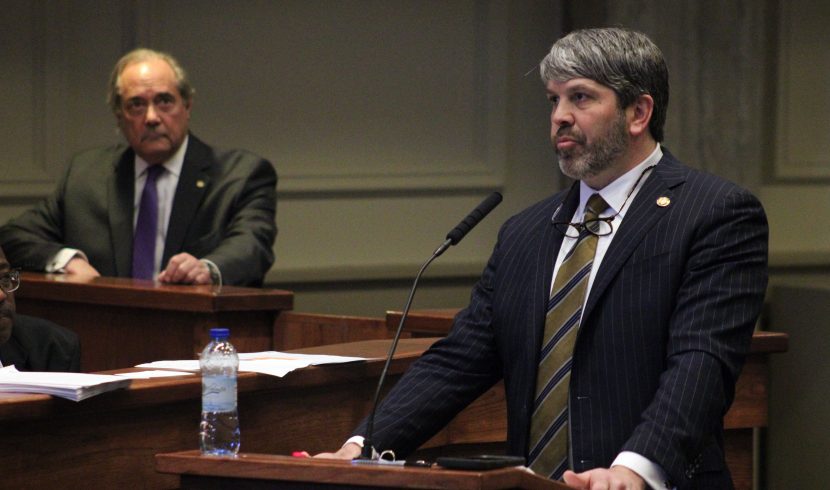
The Legislature’s newest version of a Public Service Commission reform bill was filed Tuesday afternoon and will get its first committee vote today.
It expands the body that regulates many utility providers in the state from three elected members to seven and creates a secretary of energy position to oversee the administrative functions of the commission.
It also prohibits utility rate increases from Oct. 1, 2026 through June 1, 2029.
Senate President Pro Tem Garlan Gudger announced the legislation in a written statement Tuesday.
“The Power To The People Act entrusts Alabamians with the power to elect seven seats on the Public Service Commission rather than three, and it prohibits regulated utilities from engaging in the campaign process,” Gudger said. “By giving Alabama citizens even more power and a louder voice in the operations of the Public Service Commission, we can make energy rates more affordable and ensure that a conservative, pro-Trump, Republican majority controls the PSC for years to come.”
The bill bans utilities from donating to PSC candidates’ campaigns.
Senate Bill 360 is sponsored by Sen. Clyde Chambliss and co-sponsored by the chamber’s other 34 members.
It will be in the Senate Fiscal Responsibility and Economic Development Committee at 1 p.m. today.
The commission’s seven members would be elected from the state’s congressional districts.
The Senate proposal comes after a House leadership-backed energy package stalled last month over concerns about a bill to make the PSC an appointed board. The bill lacked Senate support.
Clay Scofield, executive director of the Energy Institute of Alabama, said his trade association of energy companies has concerns about the new Senate bill at the outset.
“The Energy Institute of Alabama does not support the wholesale restructuring of our regulatory system in response to systemic pressures,” he told ADN in a statement. “Further, the legislation that has been presented goes so far as to actually set utility rates which sets a dangerous precedent.”
House members have brought up in the last month that the commission hasn’t held a public rate hearing since the early 1980s. The new Senate bill does not require such hearings to be held.