
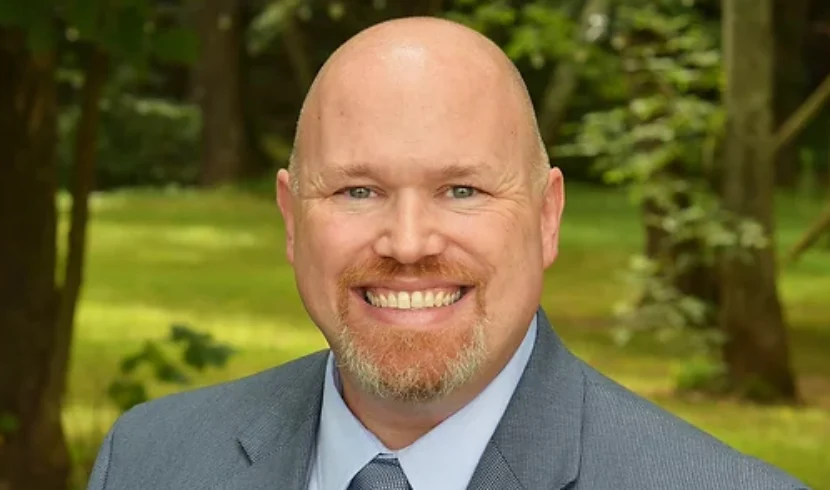
Addressing workforce development, infrastructure, health issues and education were all named by freshman state Rep. Phillip Rigsby as his top legislative priorities, but perhaps his first priority, he said, was to “listen and learn.”
A lifelong native of Huntsville, Rigsby won the Republican primary election in May of 2022, and went on to win the general election that November with 58% of the vote. Representing District 25, which includes portions of the western Huntsville metro area, the seat was previously held by Mac McCutcheon, who served as House Speaker from 2016 to January of this year.
When asked what motivated him to run for office, Rigsby told Alabama Daily News that his entire life had been defined by public service, and that as a state representative, he could expand his capacity for service.
“All my life has been defined by serving other people; whether that’s been (being) a volunteer firefighter EMT, serving by leading music at my church, (or) being president of different organizations, this just gives me a bigger platform to try to give a voice to people who don’t have a voice,” Rigsby said.
Rigsby currently owns an independent pharmacy in Huntsville, leads worship music and teaches youth at Providence Baptist Church, and serves with a number of different organizations. Rigsby is a past president of the Madison County Pharmacy Association and the Harrison School of Pharmacy Alumni Association, and currently serves as the treasurer of the Pharmacy Owners Alliance.
A graduate of SR Butler High School, Rigsby attended Auburn University and completed pharmacy school in 2000.
Rigsby was appointed to two House committees: the Commerce and Small Business Committee, as well as the Health Committee. Having both extensive small business and health experience, Rigsby’s priorities shared with ADN closely mirrored his committee appointments.
Q&A with Rigsby *questions are paraphrased
Q: What would you consider to be your biggest legislative priorities?
“Personally, I hope for this first session just to be quiet, listen and learn. I think as a freshman, it’s real important to figure out how things work (and) make relationships… I think that’s going to go a long way and serve me very well, (and) not just going in guns-a-blazing, thinking I’m going to change the world, which is not going to happen.
But if I get the opportunity, I’d like to help the discussion on health issues; I was really happy to be appointed to the Health Committee. Talking about the issues regarding the medical marijuana bills, talking about Medicaid reform, talking about maybe helping the pharmacy profession with the knowledge that I have, maybe looking at ways that we can continue to fight the opioid and fentanyl crisis.
So I think there’s going to be certain things that I’ll have an affinity for.
Q: What are some personal and professional experiences you feel may influence your decision making as a legislator?
“Being a volunteer firefighter, I get to see some of the struggles that these busy departments (see). Even though they’re unpaid professionals, I’ve seen firsthand some of the struggles that some of these not-for-profit organizations that are attempting to do good work struggle with. So I think I will have some good insight to help with that.
Personally, I joined the fire department after my sister was killed in a car accident, and that fire department that I joined was the same department that served her during her accident, and so that was the driving force for me to get involved.
I want to take that ability to listen – pharmacists are great listeners, we’re good problem solvers – and be able to sit down at the table and ask hard questions. I think one of the things we need to do better in government is to scrutinize things a little more. I think sometimes we’re afraid to ask hard questions – let’s ask the hard questions and let’s see if we can come up with solutions on how to fix things as opposed to throwing more money at things.”
Q: Are you open to diverting funds earmarked for public education toward private schools and public charter schools as has been advocated for by proponents of ‘school choice?’
“I always want to land on the side of the student, the teacher and the parent. We can come up with ways to make students more proficient learners, we can make teachers more proficient teachers, and we can give parents a voice to have an opportunity to be involved in their children’s education.
I’m a product of public schools, I’m a graduate of Butler High School here in Huntsville, I’m a native of Huntsville, and I can tell you I got a great education. Not only did I have good teachers, but I also had parents who cared; my parents were very involved with my education in the public schools. So what I would say about school choice is, if it’s an opportunity for a child to get a better education where the parents can be involved and the teachers have an environment that’s safe and conducive to learning, why would I not be for that?
I think school choice is not going to fix all of our problems; I think school choice will help some and give opportunity for others to have experiences or opportunities that they would not have without school choice, however, we’ve got to not be naive enough to say school choice is going to fix everything. So we still have to ask why we have failing schools, students that are behind, (and) teachers that are burning out after a year or two of teaching. I think there are some hard questions that need to be addressed.
School choice will help some of that no doubt, if that’s the way the state decides to go, but I don’t think it’s the holy grail of education, so we’ve just got to be brave enough to ask questions, and if it doesn’t work, be willing to change it.”
Q: What are some issues particular to your district that you’d like to address?
“One of the biggest ones are infrastructure and job-skill development. We have a booming growth in my district and we have a lot of infrastructure needs that probably haven’t kept up.
We’re also bringing in new jobs (as) North Alabama’s booming with opportunities, but we’ve got to make sure we’ve got a workforce willing and ready to embrace those opportunities. So workforce development and infrastructure are going to be the two that will probably perk my attention whenever they get discussed.”