
An Alabama lawmaker wants to know if the state has a strategy for addressing the numerous lawsuits against its prison system, which result in millions of dollars in annual legal fees.
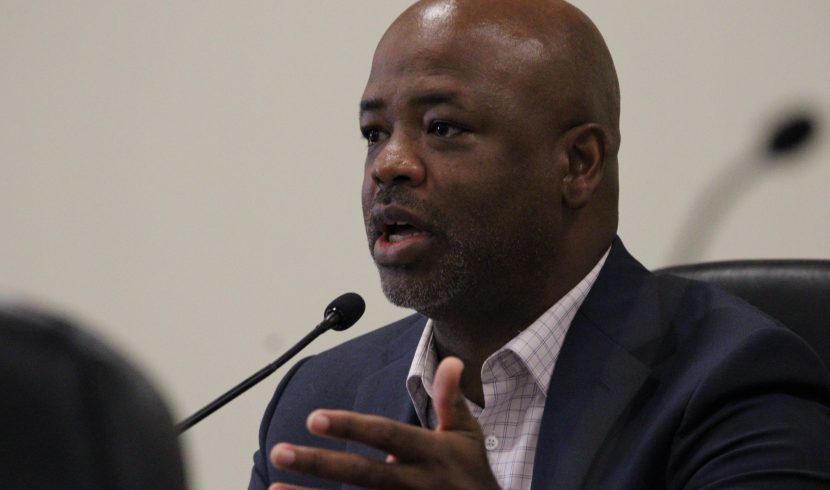
“Is there a strategy in these cases so that at some point we can stop paying lawyers?” Rep. Chris England, D-Tuscaloosa, asked at Thursday’s monthly Legislative Contract Review Committee meeting. The body sees contracts state agencies enter before they are signed.
The Alabama Department of Corrections contract in question was for $200,000 for attorney William Lunsford at the firm Butler Snow. Lunsford is the state’s go-to private attorney on prison lawsuits. He was part of a trio of attorneys recently sanctioned by a federal judge over the use of artificial intelligence to generate court filings that led to “completely made up” case citations.
The ADOC has paid $12.7 million in legal fees this fiscal year, all of it to Lunsford and Butler Snow. The Associated Press reported recently that Lunsford and the firm have earned more than $40 million from the state since 2020.
The state faces, and has for more than a decade, lawsuits related to crowded conditions, abuse and inadequate health and mental health care. Alabama Daily News reported in 2024 that the number of lawsuits against ADOC employees and defended through a state fund increased from 14 in 2014 to 236 in 2023.
England asked Chief Deputy Attorney General Clay Crenshaw, who was at the meeting presenting the newest contract, how the state can pull itself “out of the perpetual cycle of litigation.”
“It just appears that all we’re doing … is paying lawyers to show up for us,” England said. “We’re millions of dollars in the hole with nothing to show for it.”
He said it may be cheaper to settle some suits than pay attorneys. He asked for some reassurance that “we know this money that we’re spending has an end date on it.”
Crenshaw said he would relay that message.
The lawsuit in question was originally filed in 2018 but delayed for several years. Lunsford is new to that case, Crenshaw explained, because the previous attorney, also with Butler Snow, was recently sanctioned for using ChatGPT to write court filings with fabricated citations while defending the prison system.
U.S. District Judge Anna Manasco publicly reprimanded and sanctioned Lunsford, along with Matthew B. Reeves and William J. Cranford.
“Fabricating legal authority is serious misconduct that demands a serious sanction,” Manasco wrote in the July sanctions order. Reeves had previously said he alone was to blame for the false citations.
England asked why Lunsford is still being retained.
Crenshaw said Lunsford “did not have a lot of culpability with that.”
Sen. Tom Butler, R-Huntsville, moved to hold the contract until England gets answers on “his pertinent questions.”
The contract review committee, made up of several House and Senate members, can delay contracts for up to 45 days, but can’t kill them. Any member can delay a contract and no vote is required.
All ADOC litigation is handled by the Attorney General’s office. The department referred questions from Alabama Daily News to the AG’s office. A response wasn’t available from it Thursday evening.