
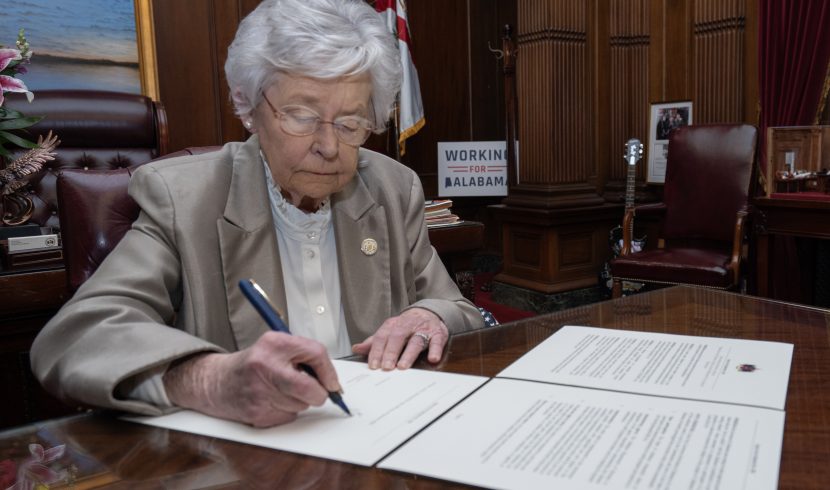
MONTGOMERY, Ala. – Gov. Kay Ivey voided primary results and called a special election for two Alabama State Senate districts Friday morning after a Thursday court decision allowed the state to revert to a previously struck-down map.
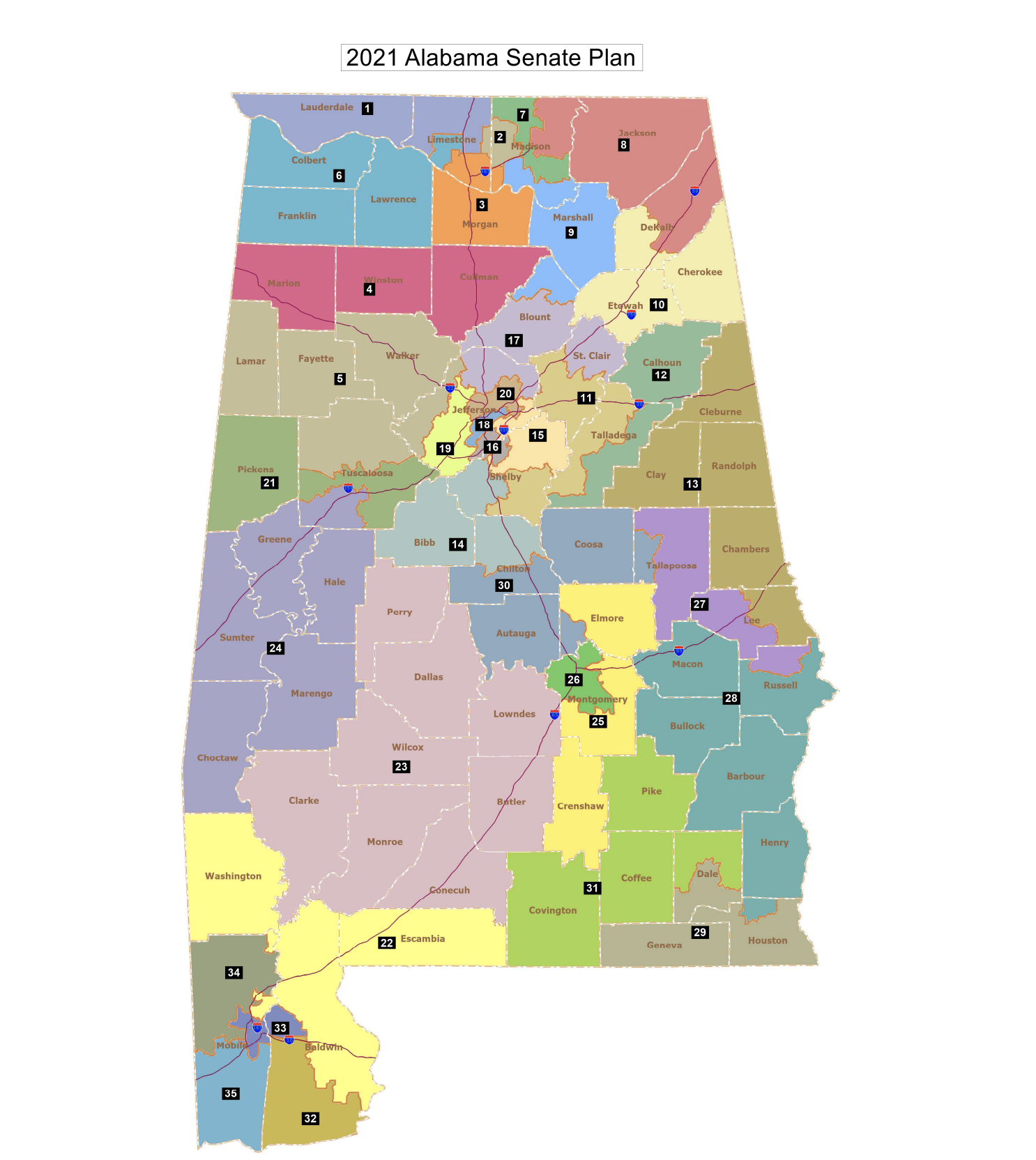
The special election for Montgomery area Senate Districts 25 and 26 will take place on Aug. 11, the same date as the special primary for four of Alabama’s congressional districts.
The affected districts span Montgomery, Elmore and Crenshaw Counties.
Ivey applauded the 11th U.S. Circuit Court of Appeals’ Thursday decision in a news release announcing the primary.
“Alabama continues winning fair and square in our redistricting battle, and I am proud to celebrate yet another victory for Alabamians and our elections,” Ivey said.
The special election proclamation is the latest step in Alabama’s redistricting battle, which has been rife with legal appeals. The Alabama Legislature empowered Ivey to call special primaries in case courts allowed the state to change its maps during a special session earlier this month.
Ivey said in the release that she remains hopeful the Supreme Court will rule in favor of Alabama in the state’s pending appeal about its congressional map.
“I can tell you this: Alabama is not tired of winning,” Ivey said in the release.
Senate President Pro Tem Garlan Gudger, R-Cullman, also celebrated the ruling in a release. He said the decision means that elections can be held “using fairly drawn maps that are firmly rooted in common sense and prioritize reason over race.”
“From day one, we have stood by the constitutionality of the State Senate maps that were drawn and passed by the Legislature in 2021, and the 11th Circuit Court of Appeals should be commended for finally seeing the light,” Gudger said.
“It is unfortunate that activist plaintiffs forced the state to waste so much time, effort, and legal fees in order to end up exactly where we started,” he continued.
The deadline for candidates to qualify with major political parties is June 2 – next Tuesday – at 8:00 a.m.
There will be no runoffs for the special election, so the winners will be decided based on plurality.
Incumbents change districts again in switcharoo
The change back to the old map only affects two districts, but those races have been effectively turned on their heads.
Sen. Kirk Hatcher, the Democrat from Montgomery who currently represents District 26, and Sen. Will Barfoot, the Republican from Pike Road who serves the people of District 25, announced shortly after the court ordered the new map that they were going to switch districts ahead of the 2026 election cycle. The shift would have allowed both men to remain with many of their current constituents.
But Thursday’s ruling means the incumbents don’t need to switch after all. The men will now run for reelection in the Senate districts they currently represent.
Running in District 25 again, Barfoot called the decision a relief and said he feels the court was correct.
No matter where he is running, Barfoot said his priorities of improving public safety and increasing police staffing stay the same.
“The folks that I’ve been fortunate to represent over the past eight years now, they know me, they know what I stood for and the kind of work that I’ve done at the State House,” Barfoot told Alabama Daily News. “I’m continuing to talk about those things, and that was true, whether I was going to be in District 25 or 26. What I believe in, what I stand for, that wasn’t going to change, it was just a different group of folks that I was going to be saying that to.”
Hatcher said he’s ready to continue to fight for the people of Senate District 26, placing the upcoming special election “in the long arc of Alabama’s voting-rights history.”
“This is not a state without memory,” Hatcher said in a press release. “Montgomery knows what voter suppression looks like. The Black Belt knows. Selma knows.”
He said it doesn’t matter what the court decides, rather that “the job is not finished.”
“This district is being asked to vote again because the lines keep getting fought over in courtrooms far from here,” Hatcher said. “The people of Senate District 26 deserve a senator who shows up, no matter how many times they reset the calendar.”
Hatcher’s Democratic primary was the only contested primary in the two affected districts during the May 19 election. He defeated challengers KK Middleton and Phadra Carson Foster and avoided a runoff with 55% of the vote. Those results are now void.
Challengers change plans
Though the incumbents now get to run for reelection, the swap throws a wrench into the plans of the other candidates who had stepped up to run.
Republican Ty Taylor ran unopposed in the District 25 GOP primary before the swap. Now that Barfoot’s back, he’s ending his campaign.
Taylor said that he’d known since the beginning of his campaign that there was a possibility that lines could change. He said he’s been clear since then that if the maps changed back, he would not run against Barfoot.
“From the beginning of this campaign, I have been clear about one thing: Senate District 25 has a strong current representative in Senator Will Barfoot,” Taylor said in a statement. “In fact, I spoke with Senator Barfoot the very day I qualified to run… I continue to believe Senator Barfoot has served our community well, and I fully support his continued leadership of this district.”
Barfoot said he has a lot of respect for Taylor and called him a “warrior.”
Tabitha Isner, vice chair of the Alabama Democratic Party, is in a similar position to Taylor. She ran unopposed in District 26’s Democratic primary but would now be running against Hatcher, the incumbent.
Isner announced on Tuesday that she’s also exiting the race.
“I didn’t end my campaign. The Alabama GOP ended my campaign,” Isner said in a statement. “They did so by cancelling an election that was already underway. It’s devastating for me and my supporters who had already poured our hearts, our money, and our time into this. But the real devastation is for the voters who showed up to cast their ballot only to have their ballot ignored. The real devastation is for the Black voters who are once again packed into Senate District 26 and denied representation in Senate District 25. The fight for Voting Rights continues, and I’m in it for the long haul.”
Voter confusion
Midterm primary turnout is already low in Alabama, and it’s likely a special primary could garner even lower participation.
Barfoot recognized this and said he hopes the fact that there’s also a congressional race on the ballot will help turn people out. Districts 25 and 26 sit within the districts that could potentially change if the state is allowed to use a GOP-friendly congressional map from 2023.
Though his number one concern is getting people out to vote, Barfoot said he wants voters to be educated about the candidates. Barfoot said that despite the shorter campaign timeline, he thinks there’s enough time for voters to learn enough about candidates to make an informed vote.
“Between now and August the 11th, we’ll have plenty of time to not only let folks know what we’ve done (but also) what we plan on doing,” he said. “Hopefully that’ll be enough to get turnout at least above what the prognosticators think it’ll be.”
Before the ruling came out, Hatcher said he tried his best along the campaign trail to decrease voters’ anxiety and encourage them to participate despite the confusion.
Voter confusion in general can lead to further apathy with the political process, said Spencer Goidel, an assistant professor in Auburn University’s Department of Political Science.
Goidel said that many voters already feel like special interests and corporations, not the people, control politics. Changing the rules so close to an election only increases this apathy and minimizes already-low primary turnout, he said.
“With the redistricting going on, you’re talking about a shortened campaign season, so limited time to learn about the candidates for those people who may get redistricted,” Goidel said. “Then (there’s) also a sense of apathy. Already people are apathetic about politics, they think their vote doesn’t matter. Now you’re getting redistricted, you don’t really know what’s going on, why turn out?”
The special election will take place on Aug. 11. The general election is Nov. 3.