
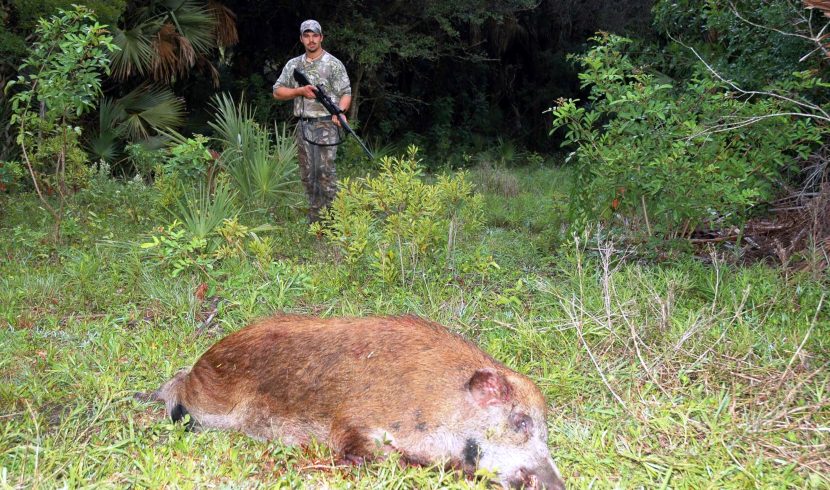
Most hunters probably bag hogs if one happens to walk past their deer stands, but the best time to shoot feral pigs occurs from the end of deer season until the beginning of turkey season later this spring.
In Alabama, sportsmen hunting private lands can shoot feral pigs all year long without limit. Properly licensed sportsmen on private property can even shoot feral hogs over bait and at night during the season. Feral hogs can live almost anywhere. They occupy every county and habitat type in the Cotton State from the mountains to the marshes.
On many public properties, Alabama sportsmen can kill unlimited feral hogs during open seasons for other game, including turkey, if using legal means to take those other game species. Snipe, quail, rabbit and squirrel seasons remain open for weeks after deer season ends. Even on the most heavily pressured public lands, sportsmen find little competition once deer season ends.
During late winter and early spring, most foliage already fell off the trees. Recent cold weather killed off some dense ground vegetation. Before new emerging vegetation grows too thick, sportsmen can see longer distances at this time.
In the winter, natural foods become scarce so hogs must spend more time roaming around looking for something to eat. Normally nocturnal pigs come out more frequently during daylight hours searching for food. Pigs eat almost anything, including whitetail fawns if they can catch them. They also love eggs and devour the young of ground-nesting birds like quail and turkeys.
“Between the end of deer season and the beginning of turkey season is a great time to hunt feral hogs,” commented Ryan Mareno, a hog hunter. “People start finding hogs in places where they might not have been for the last few months. Look for water sources or marshy areas. Pigs like moist, soft mud where they can root around for food.”
After deer season ends, food plots meant for whitetails make great places to look for wild pigs. During whitetail season, many hunters on private lands put up corn feeders to attract deer. Hogs love corn. Properly licensed hunters, sitting in those same stands after deer season can shoot hogs. The state creates food plots on some wildlife management areas to attract doves, other birds or deer. These plots could make great places to look for feral swine.
For pigs, some people sour their corn by adding beer, Kool-Aid or other ingredients that hogs can easily smell. To keep pigs in range longer, dig shallow holes and pour sour corn into the holes. That forces pigs to work harder for their goodies rather than just vacuuming up kernels off the ground.
Another way to keep hogs in an area longer, make a “pig pipe.” Cut a length of PVC pipe and cap one end. Drill holes into the pipe just big enough to let corn kernels barely trickle out when a pig shakes the pipe. Add a screw cap to the other end for easy refilling.
First sweeten the area with several handfuls of corn. Then, place the pipe on the ground. Once pigs find the corn in the pipe, they will knock it around trying to get all the corn out. Pigs might spend hours rolling the pipe around on the ground until they empty its contents. If pigs stay longer in an area, sportsmen could enjoy more good shooting opportunities.
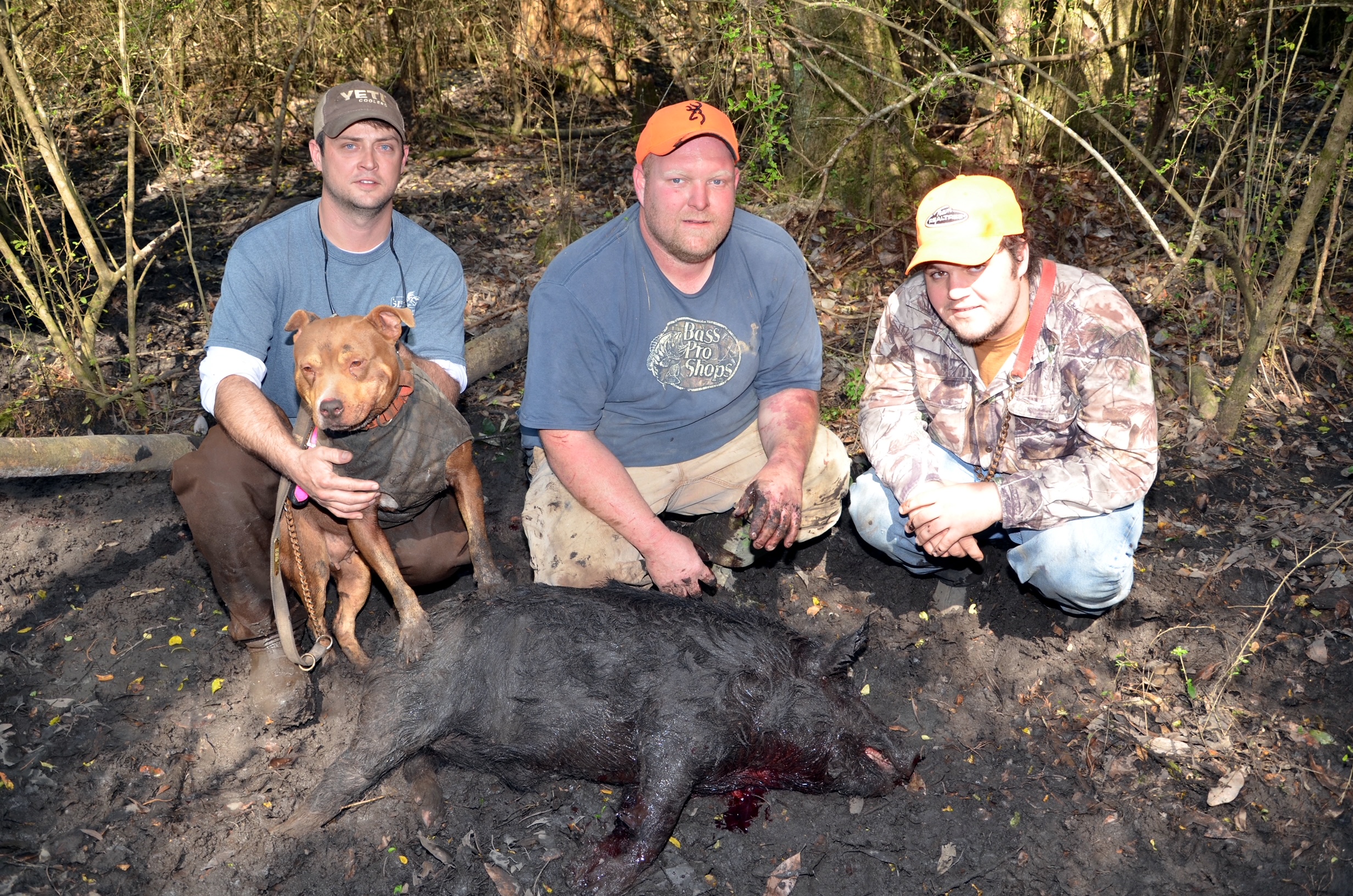
In late winter, some sportsmen hunt hogs with dogs. People release “strike dogs” to find the pigs and “bay them up.” When the hog turns to fight the strike dogs, hunters release a “catch dog,” usually a powerful, scarred-up pit bull that loathes pigs. The catch dog grabs the pig by its sensitive or vital organs and holds it until the hunters can kill it.
Pigs breed prolifically all year long, but breeding generally peaks around January 1 and July 1. A sow that breeds around January 1 will give birth in late March or early April. Sows commonly travel in groups called “sounders” with two or more large sows and multiple piglets.
Highly protective of their young, sows fiercely protect their offspring and vigorously drive off any threats. Brave coyotes or bobcats occasionally snatch a piglet. Alligators might grab one that ventures too close to the water, but few animals want to tangle with an adult pig, especially a hefty sow with piglets.
Not fearing predators, adult hogs concentrate more on finding food than worrying about something attacking them. Therefore, sportsmen could possibly stalk pigs. Although possessing excellent senses of smell and hearing, hogs cannot see very well. However, they can easily spot movement.
Face into the wind and move slowly, just a few feet at a time. Take advantage or trees or other natural objects. Put such objects between the hunter and the pigs. Stop periodically to look and listen for squeals, grunts, rustling or other sounds. Some people call hogs with low grunts. Don’t squeal. That broadcasts a warning or distress.
“Stalking in early spring can be a very good technique for hunting wild hogs,” Mareno explained. “Pigs are very smart. Hunters need to be on their ‘A’ game.”
As weather warms, farmers start planting crops again. Feral swine can devastate crops, destroy gardens, ravage fruit and nut orchards and consume anything else they can find. After farmers plant seeds, feral pigs dig up the seeds to eat them. In pastures, wild hogs graze on rye grass and other crops just like cattle. After grazing for several hours, they often look for a place to take a nap for the rest of the day.
Since pigs breed so prolifically and cause so much damage to crop and wildlife habitat, many landowners welcome, even encourage, sportsmen to shoot all the hogs they can on their properties. Many landowners lease tracts to deer hunters. After deer season ends, those landowners might welcome sportsmen to kill hogs on their lands.
Making acquaintances with a few landowners could open access to thousands of acres for hog hunting.
An avid sportsman, Felsher is professional writer, photographer and radio show host who has written thousands of articles for many publications. He’s always looking for ideas or outdoors adventures that will make good stories. Contact Felsh at [email protected] or through Facebook. He also hosts an outdoors tips show for WAVH FM Talk 106.5 radio station in Mobile.