
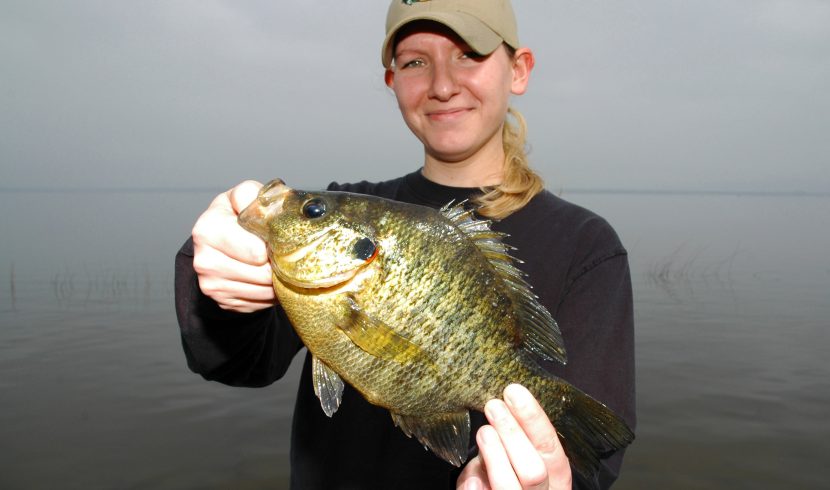
As waters warm, fish begin to think about spawning. The spring offers one of the best times of the year to catch various sunfish species, usually all lumped together as perch or bream.
Redear sunfish, also called shellcrackers because of their fondness for snails, usually start spawning when water temperatures reach about 75 degrees. They spawn again in the fall. Shellcrackers spawn a little earlier and deeper than bluegill. The state record shellcracker weighed 4.25 pounds. It came from Chattahoochee State Park in Gordon.
“Redear sunfish spawn a little earlier than other bream species, usually in March and April,” explained Tommy Purcell, an Alabama Wildlife and Freshwater Fisheries Division fisheries biologist in Spanish Fort. “Bluegill typically begin spawning in late April or May. Bluegill will reproduce throughout the late spring, summer, and even early fall when conditions are right, but the full and new moons during the summer usually get bluegill fired up.”
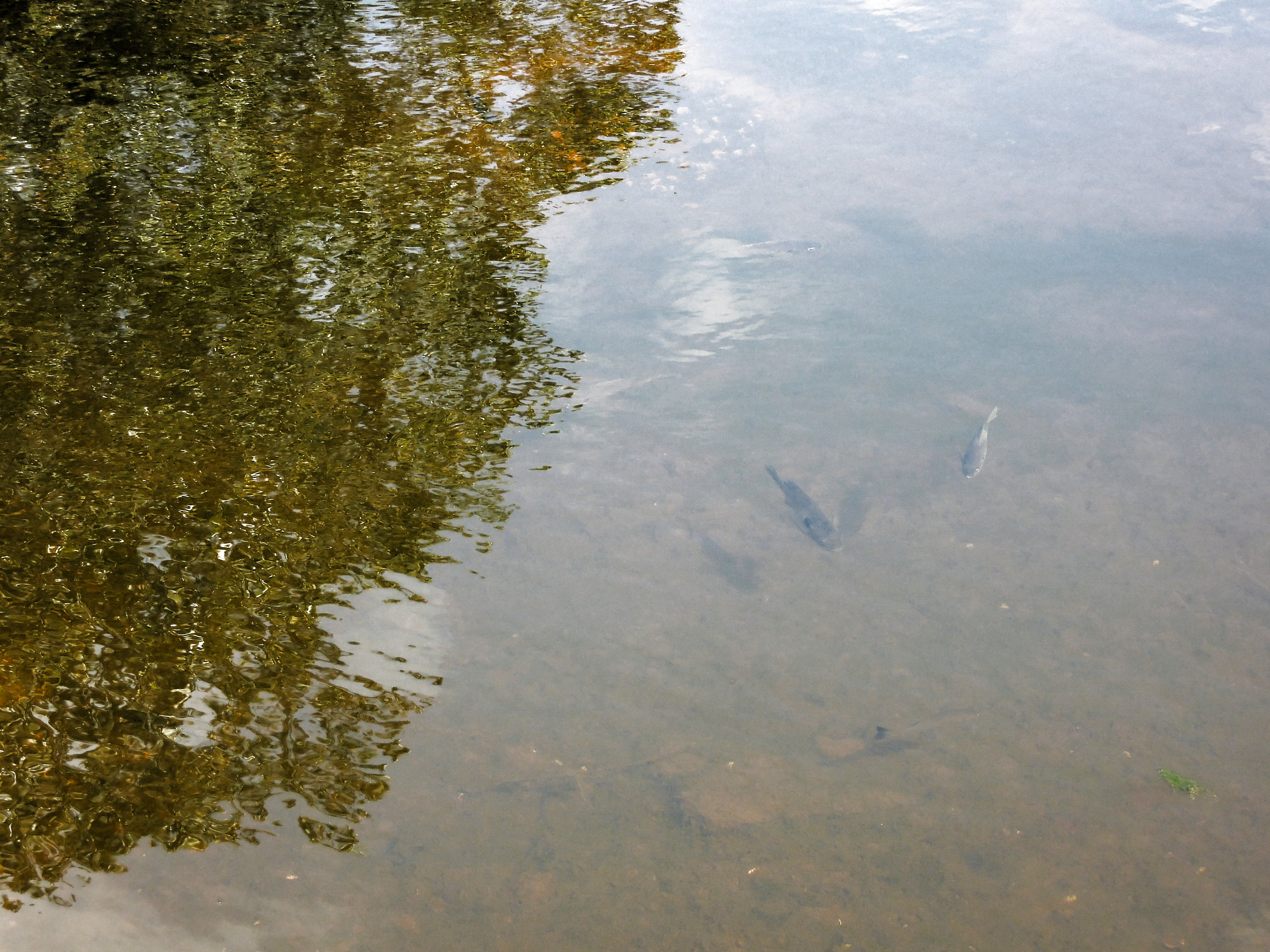
Bluegill start spawning when water temperatures reach about 75 to 80 degrees. Prolific creatures, healthy female bluegill spawn about every 28 days through early October, depending on the weather. Few bluegill weigh more than a pound, but the state record weighed 4.75 pounds, caught in Ketona Lake in Birmingham.
Pound for pound, or more appropriately ounce for ounce, few fish can match the astounding strength and determination of a bull bluegill fighting far above its bantam weight class. Bluegill strip line out and make determined runs and swim in circles, turning their flattened bodies to the angler for leverage.
Bluegill and other bream species occupy practically every freshwater system in Alabama. Bream hollow out dish-shaped depressions in shallow water with sandy or gravel bottoms. Look for dark depressions in the shallows. Also, anglers can find beds with their noses. Spawning bream give off a scent like fresh watermelon. Males tend to give off a sweeter smell, while spawning females exude a strong, more pungent odor.
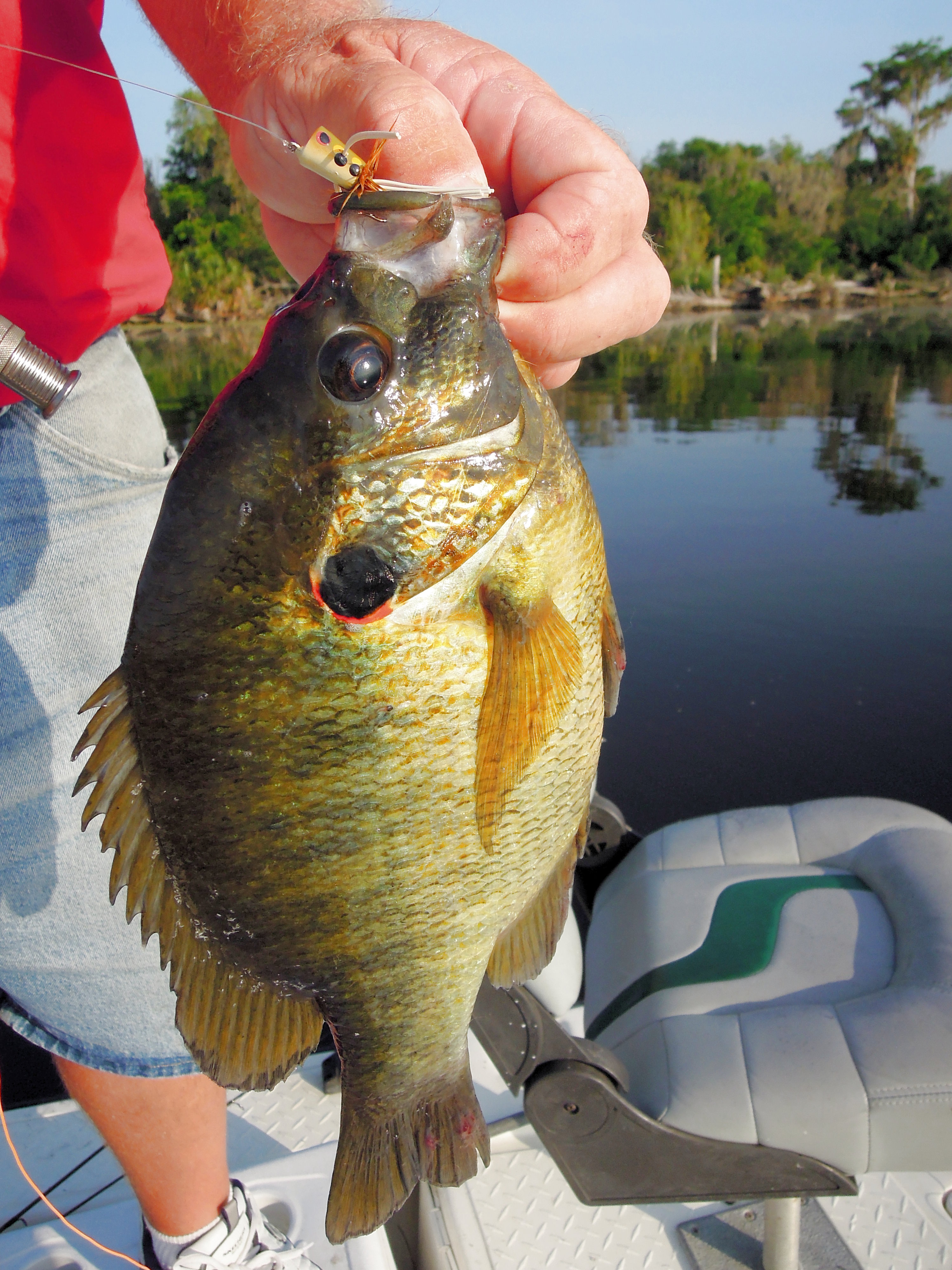
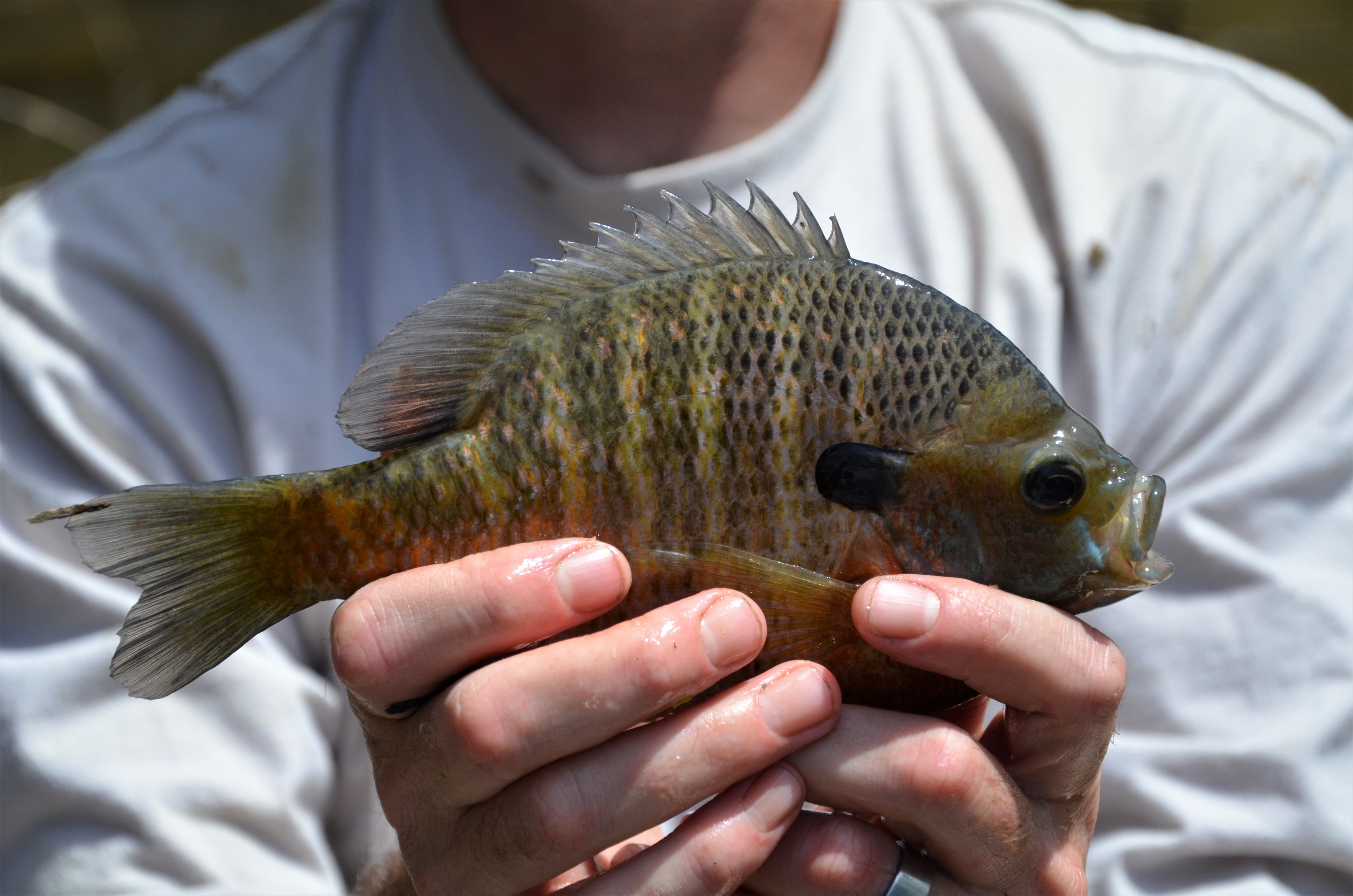
Bluegill vigorously defend their nests and attack anything that might threaten the offspring or look edible. Bream eat almost anything including minnows, crawfish, worms, grass shrimp and other tiny morsels, but they especially love insects.
For some of the most exciting spring action, use ultralight fly tackle. Small cork or foam poppers that resemble crickets or other insects make excellent temptations for bedding bluegill. When feeding on insects floating on the surface, their tiny mouths create distinctive snapping noises. Astute bream busters can zero in on these “snaps” to locate bedding or feeding areas.
Pay attention to what fish want to eat at that time. For instance, if blue dragonflies swarm the area, try blue poppers. When fish feed upon minnows, throw a white popping bug with long white or green tail feathers.
Toss bugs as close to structure as possible. Let one rest on the surface until the ripples fade. Then give it a small twitch or pop and let it rest again for several seconds. Keep repeating this retrieve. Anglers can also make slow, steady pulls across the surface or short hops to tempt hungry fish. In a bedding area, toss the bug beyond the nest and pull it over the bed. Then, twitch it and let it rest.
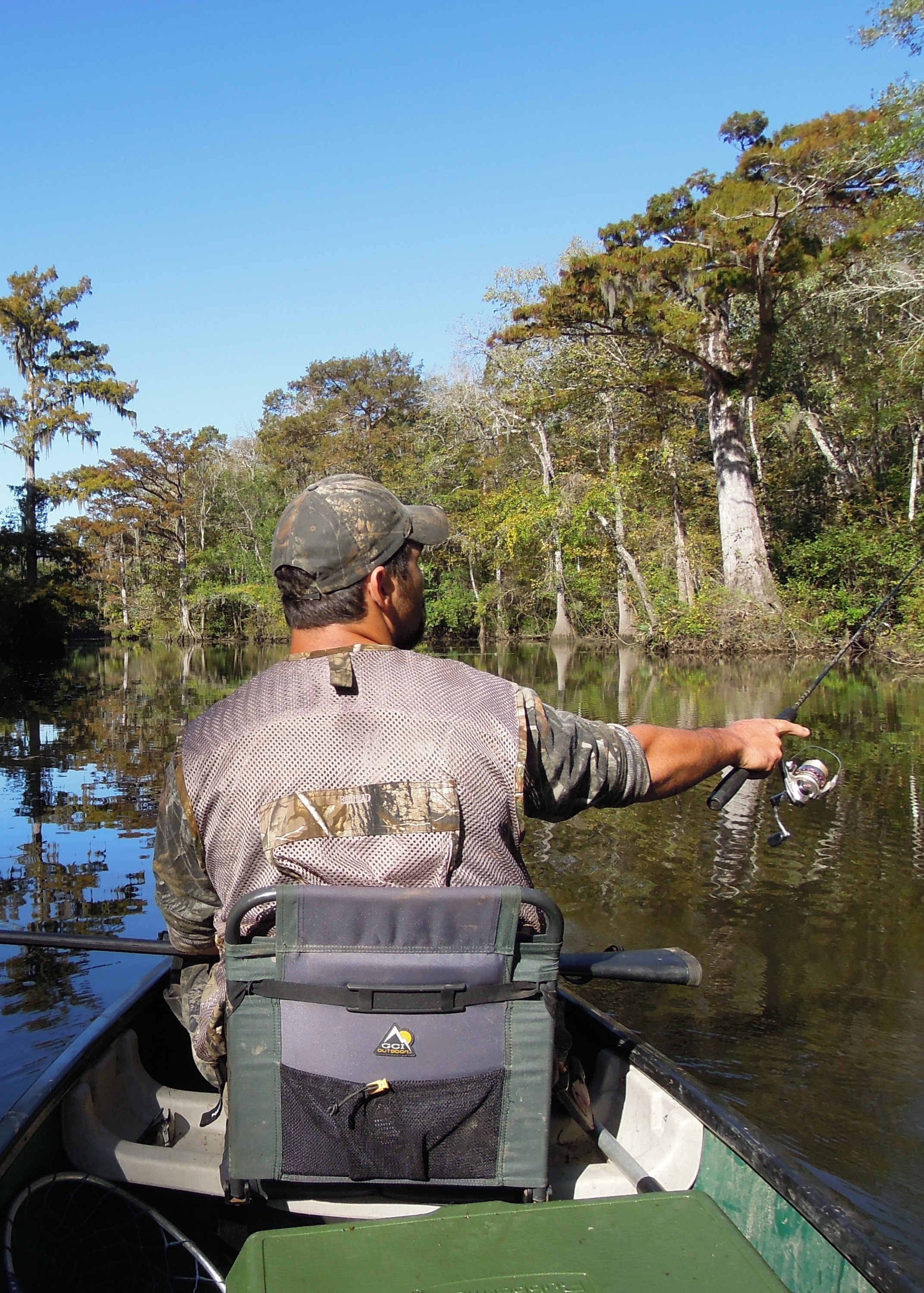
Bream prefer quiet waters with considerable weedy or stumpy cover and bed in places with little to no current, like placid streams and backwaters. Move quietly along a shoreline casting to any visible cover, like stumps, cypress knees, tree trunks or weedy edges. The mouths of rivulets flowing out of flooded swamps or ponds create excellent places to toss a few poppers. When water levels drop, these drains carry insects and other creatures that bream eat.
Often, bream attempt to obliterate surface poppers. At other times, one might act almost timid, gently tasting an apparent morsel before committing itself to strike. Frequently, bream simply suck down bugs. Suddenly, the popper vanishes without the slightest ripple breaking the surface.
Bluegill habitually return to the same bedding spots each year. They don’t frighten easily and don’t like to stray far from their nests. People who locate a good bedding area can usually keep catching fish in the same area for months and year after year.
“Bream are community spawners, so there might be up to 100 fish spawning in the same vicinity,” advised Phil Ekema, a state fisheries biologist in Tanner. “People who find a good bed can catch a bunch of fish off of it.”
If bream stop biting in an area, change lure bug colors or types. After exhausting all available color combinations leave the area for a few hours to look for other bedding areas. Return to that spot later for more action. Bedding bream don’t like to leave their home territories and might bite all day.
Shellcrackers also hit floating temptations, but usually prefer to feed near the bottom in deeper water. The biggest bluegill also tend to stay in slightly deeper water or suspend over drop-off edges. For fishing slightly deeper, use sinking temptations such as wet flies or streamers that mimic minnows. Let temptations sink a few feet. Then, pull them through the water in short spurts. Pause periodically so the fly hovers or slowly sinks.
Nothing puts bream into a feeding frenzy like a mayfly hatch. After spending months underwater as nymphs, adult mayflies emerge en masse with only one purpose – to mate and die. In Alabama, hatches might occur from late March through early November with the peak from June to August.
After emerging from the water, mayflies look something like oversize mosquitoes. They cling to low overhanging bushes and shrubs to dry their wings. Inevitably, some flies fall into the water. When they hit the water, ravenous fish rush in to gorge themselves. Water boils beneath an insect-laden shrub like a frenzied piranha school.
Many young people begin fishing by catching bream, but they can still delight even the most veteran anglers. With delicate sweet white meat, bluegill taste better than many other freshwater fish, in my opinion. Good luck on your next trip!
**********
An avid sportsman, Felsher is professional writer, photographer and radio show host who has written thousands of articles for many publications. He’s always looking for ideas or outdoors adventures that will make good stories. Contact Felsh at [email protected] or through Facebook. He also hosts an outdoors tips show for WAVH FM Talk 106.5 radio station in Mobile.