
MONTGOMERY, Ala. — Several bills related to cryptocurrency and blockchain technology could be voted on this week in the Alabama Legislature, marking the first real test of lawmakers’ appetite for regulating the emerging technologies.
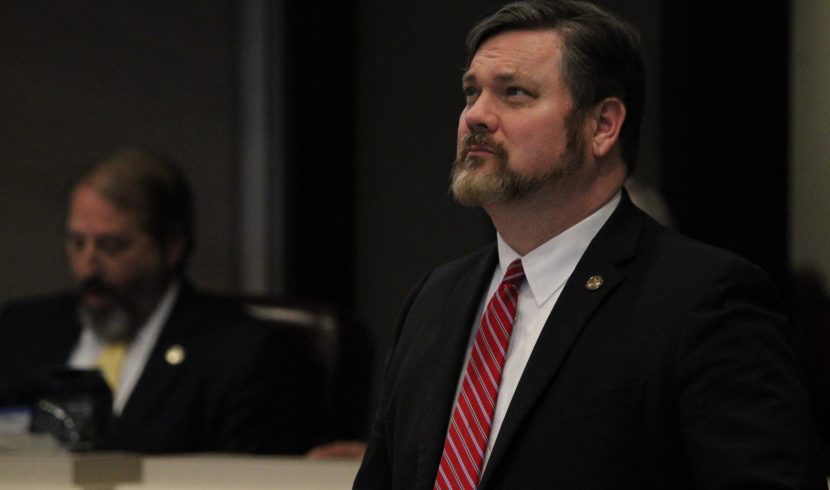
The first of such bills to be heard this week is Senate Bill 282, sponsored by Sen. Will Barfoot, R-Pike Road, relating to cryptocurrency. Scheduled to be heard Wednesday in the Senate Finance and Taxation General Fund Committee, the bill would exempt virtual currency from state property tax, and define virtual currency as a “unit of account, a store of value, or a medium of exchange.”
Barfoot’s legislation is a companion bill to House Bill 483, sponsored by Rep. Mike Shaw, R-Hoover, who first floated the idea of introducing legislation to regulate cryptocurrencies like Bitcoin and Ethereum last year.
Wade Preston, a leader of the Alabama Blockchain Alliance, called it “super smart legislation.”
“This is a good example of clear rule making that I think we’ve been wanting in the blockchain space,” Preston told Alabama Daily News on Monday. “Digital assets are so varied.”

Preston went on to explain how digital currencies as defined under the bill could also extend to digital assets, things like digitized medical records, which he hoped would be standardized as digital assets on a blockchain, a digital and secure public ledger that records and verifies transactions, and is the basis upon which cryptocurrencies exist.
Shaw’s HB483 is just one of three bills related to cryptocurrency and blockchain technology he’s filed this year, with the others being House Bill 482, which would allow the State Treasurer to invest state funds in digital assets like cryptocurrency, and House Bill 484, which would mandate state expenditures exceeding $1,000 be published on a public blockchain.
All three of Shaw’s bills were scheduled to be heard last week in the House Ways and Means General Fund Committee, but were carried over by Shaw’s request, who told ADN Monday that he wanted more time to prepare himself for questions on the bills by the committee. Shaw said he hopes for all three to be taken up for a vote in committee this week on Wednesday.
As an advocate against over-regulating blockchain technology, Preston said that on HB482, it wasn’t his place to advocate for or against a bill that may dictate how public funds are allocated. He did say, however, that the introduction of a bill illustrated just how far blockchain technology had come in only a few years.
“I think it’s interesting and a very promising sign of the times that this is where the blockchain sector has gotten itself to where we have bills like this coming in at the national and state level,” he said.
Digital public ledgers have been used since the early 1980s, however, it’s only been in the past decade that more advanced and decentralized digital public ledgers using blockchain technology have emerged. A number of states have already utilized blockchain technology for record keeping, such as California, which last year digitized its 42 million car titles using the technology.
On HB484, Preston was far more outspoken in his support for the proposal, and called it an opportunity for “Alabama to really step out and take the lead” on blockchain-related policy.
As to how state lawmakers could further help foster a favorable environment for cryptocurrency and blockchain entrepreneurs, Preston said that establishing a crypto-blockchain regulatory sandbox – a broad, and somewhat lax regulatory framework – could help foster growth in the sector by providing entrepreneurs ample “breathing room,” while also giving lawmakers practical data on how to craft more long-term regulation on the industry in the future.
The collection of cryptocurrency and blockchain bills come shortly after the Alabama Blockchain Study Commission, established last year by Sen. Greg Albritton, R-Range, endorsed the idea of making Alabama among the most cryptocurrency and blockchain-friendly states in the nation. Both Shaw and Preston were appointed members of the commission.