
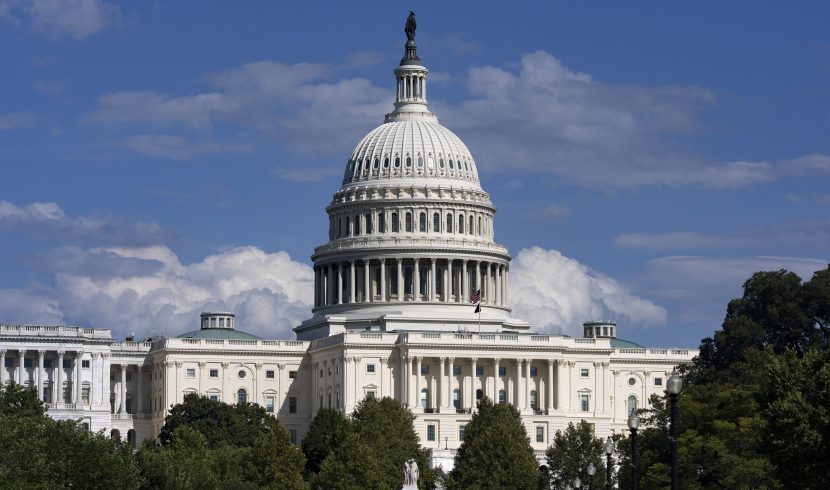
WASHINGTON — A funding fight, the expiration of Affordable Care Act tax credits and the National Defense Authorization Act await Alabama’s nine congressional members when they return to Washington today.
The biggest task on Congress’ to-do list is to reach a deal on government funding before it runs out Oct. 1. The House has passed just two of its spending bills so far and the Senate has passed three. Lawmakers would have to pass all 12 of the bills before the deadline in order to avoid a temporary stopgap funding bill, which is unlikely.
A bipartisan deal looks even more difficult now after President Donald Trump announced his plan to cut $4.9 billion in foreign aid that Congress already approved through a pocket rescission. The rarely used move is when the president submits a request to cancel funds near the end of the fiscal year, so Congress can’t act within the 45-day timeframe and the funds are not spent.
“As the country stares down next month’s government funding deadline on September 30th, it is clear neither President Trump nor Congressional Republicans have any plan to avoid a painful and entirely unnecessary shutdown,” Senate Minority Leader Chuck Schumer, D-NY, said in a statement.
Republican Appropriations Chair Sen. Susan Collins of Maine also blasted the White House’s plan for a pocket rescission, calling it a “clear violation of the law.”
Rep. Robert Aderholt, R-Haleyville, chairs the Appropriations Subcommittee on Labor, Health and Human Services and Education, which will markup the largest non-defense spending bill today. That’s the first day lawmakers return to Washington. It’s the only House bill that didn’t receive a markup before the month-long August recess.
Aderholt previously told Alabama Daily News that there will be some funding cuts in the bill, but said he will also ensure the departments it funds “can still do their mission.”
On the Senate side, the Appropriations Committee has yet to markup the Homeland Security spending bill, which Sen. Katie Britt, R-Ala., oversees as chair. The Senate still has three other spending bills to mark up.
Currently, Alabama is set to receive nearly $330 million in earmarks for projects across the state if the spending bills become law. The money will fund infrastructure projects, health care and law enforcement equipment upgrades and improvements to water systems.
ACA tax credits
Health care will also be top of mind for Congress in the second half of the year, as the expiration of the ACA enhanced premium tax credits looms at the end of 2025.
After Republicans passed Medicaid cuts in the new tax law, they now have to contend with the potential of even more Americans losing access to health insurance if they lose subsidies. In Alabama, ACA premiums are expected to rise about 20% next year, which could impact almost 500,000 people in the state.
Republicans have signaled some openness to addressing the tax credits, though there is no concrete plan to extend them at this time.
NDAA
The Senate will take a procedural vote on the Fiscal Year 2026 National Defense Authorization Act as its first scheduled vote after recess. The House Rules Committee is expected to meet the week of Sept. 8 to take up the bill.
The NDAA authorizes funds for defense spending but does not obligate them. The funding comes through the appropriations process.
The House NDAA authorizes $892.6 billion for fiscal year 2026. The Senate version authorizes $924.7 billion in funding. The House mirrors the White House’s budget request of $892.6 billion for discretionary defense spending.
“Equipping an innovative and agile military requires an efficient and streamlined acquisition process,” Armed Services Committee Chair Rep. Mike Rogers, R-Saks, said in a statement. “The FY26 NDAA supports modernization and fundamentally reforms defense acquisition by cutting red tape, eliminating bureaucratic hurdles, and encouraging innovation. It refocuses acquisition on its most important mission: getting our warfighters what they need when they need it.
“This legislation builds on the wins from the One Big, Beautiful Bill – revitalizing our defense industrial base, improving our servicemembers’ quality of life, and building out our readiness capabilities.”
Sen. Tommy Tuberville, a member of the Armed Services Committee, praised the NDAA for including “conservative wins” such as eliminating DEI programs and prohibiting men from competing in women’s sports at service academies.
“In addition to providing a 3.8% pay raise for our troops, this year’s NDAA will make housing more affordable and safer for our military families,” the Alabama Republican said in a statement. “The bill supports Alabama’s defense industrial base by directing the DOD to fully support the development of all quantum computing technologies. It also makes key investments in surface ship sustainment and readiness that will boost Alabama shipbuilding.”