
WASHINGTON – Alabama’s House delegation split along party lines in adopting a budget blueprint to kickstart drafting the legislation to cut taxes, slash spending and increase funds for the military to enact President Donald Trump’s agenda.
After hardline conservatives, including U.S. Rep. Barry Moore, R-Enterprise, were hesitant to adopt the plan over concerns there weren’t enough spending cuts, the GOP shored up enough votes to approve the budget resolution Thursday.
All of Alabama’s Republican lawmakers voted for the budget framework. Reps. Thomas Massie of Kentucky and Victoria Spartz of Indiana were the only Republicans to oppose the resolution. The vote was 216-214.
Moore ended up supporting the budget framework after he told Alabama Daily News on Tuesday that he was “undecided” on it because of the stark difference in spending cuts between the House and Senate. The Senate outlines at least $4 billion in spending cuts while the House aims to cut at least $1.5 trillion. Moore said on Wednesday he got the assurances he needed and said he was feeling “pretty good about it.”
“(The president is) going to help us with the Senate, so I think there’s an opportunity to get the cuts we need to get plus maintain the tax breaks for the American citizens,” Moore told ADN.
Moore said seeing Trump support the blueprint helped him get to a ‘yes’ vote.
“This vote on the budget resolution is an opportunity for us to show the American people we are united and ready to enact President Trump’s America First agenda,” Moore said in a statement after the vote.
Trump posted a congratulatory post about the “big, beautiful bill” on Truth Social Thursday, saying it “sets the stage for one of the Greatest and Most Important Signings in the History of our Country.”
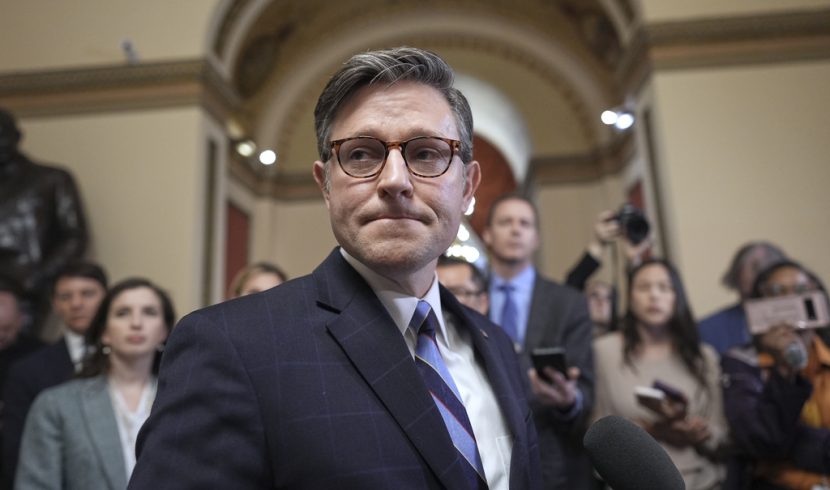
The House vote was delayed until Thursday morning after Speaker Mike Johnson struggled to gain enough support from fiscal hawks Wednesday night. Johnson and Senate Majority Leader John Thune teamed up to promise Republicans that the final bill would include significant spending cuts to offset tax cuts.
“We are committed to finding at least $1.5 trillion in savings for the American people while also preserving our essential programs,” Johnson said during a press conference before the vote.
However, House Democrats argue there will be cuts to programs, including Medicaid and the Supplemental Nutritional Assistance Program. The resolution directs the House committee that oversees Medicaid to cut $880 billion, and the committee that oversees SNAP to cut $230 billion.
A Congressional Budget Office letter shows that the Energy and Commerce Committee can’t hit $880 billion in cuts without touching Medicaid. Non-Medicaid and Medicare spending under the committee’s jurisdiction sits at just $581 billion.
Alabama has more than a million residents who are eligible for Medicaid.
Reps. Shomari Figures, D-Mobile, and Terri Sewell, D-Birmingham, are opposed to those possible cuts. Figures said it was “disappointing” to see the House move forward on the plan.
“(It’s) literally going to cut billions of dollars from the people who need it most in this country all to fund tax breaks for the people who don’t need it,” Figures told ADN.
Reps. Robert Aderholt, R-Haleyville, and Dale Strong, R-Huntsville, both said passing the resolution is necessary to advancing Trump’s domestic agenda.
“So this is a step forward to seeing what we can do to make sure that we do the tax cuts,” Aderholt told ADN.
The budget blueprint would extend Trump’s 2017 tax cuts and calls for an additional $1.5 trillion in tax cuts that could include Trump’s campaign promise of no tax on tips.
Raising the debt limit is also part of the framework, though the House increased it by $4 trillion and the Senate increased it by $5 trillion. That’s another difference the two chambers will now have to work out.
The Senate passed the budget resolution Saturday. Now that the House and Senate agreed on the same framework, committees will have to hash out the details of exactly how they will enact the tax and spending cuts.