
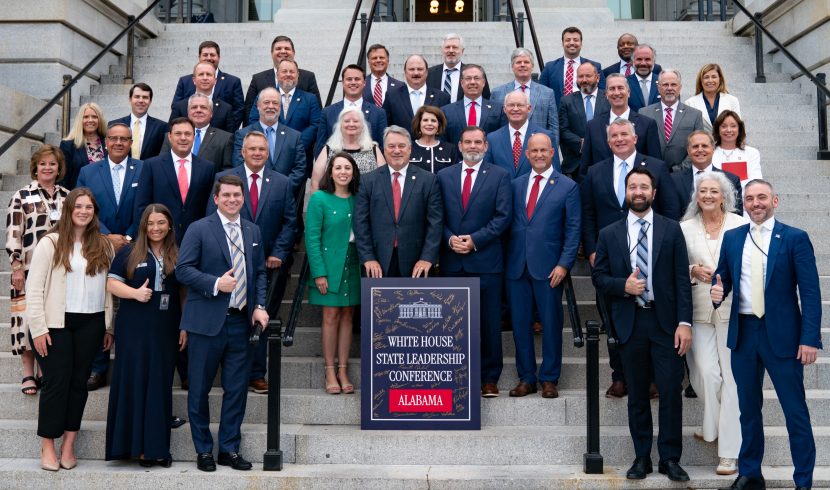
WASHINGTON — Alabama lawmakers traded in the State House for the White House this week as they met with Trump administration officials to discuss how the Legislature and executive branch could collaborate to advance initiatives in education, election integrity and public safety, among others.
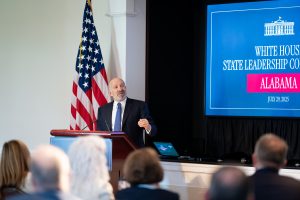
Alabama Republicans heard from Commerce Secretary Howard Lutnick and representatives from all of the federal agencies in meetings at the White House. About 40 lawmakers attended the event as part of the White House State Leadership Conference.
“It was great to learn about his priorities … from election integrity to education to investing in the economy to growing our economy,” Rep. Susan DuBose, R-Hoover, told Alabama Daily News. “So very informative.”
President Donald Trump’s tax breaks and spending cuts bill, which is now law, was a main topic during Tuesday’s sessions, where lawmakers learned how the multitude of provisions, including those on Medicaid and education, in the legislation could play out in Alabama.
DuBose was particularly interested in how the Trump administration would advocate for educational freedom, as Alabama prepares for the first school year of the CHOOSE Act. The One Big Beautiful Bill Act created a federal tax credit scholarship program for the first time.
“There’s going to be more tax credits that are going to come in from the federal level to give parents more money for school choice,” DuBose told ADN.
The 529 plans, usually reserved for college savings, have been broadened under Trump’s megabill to cover other educational costs and vocational training.
As DuBose looks to the next legislative session, she said securing funding for the CHOOSE Act as eligibility expands will be a key priority.
“We want to make sure that we continue to fund every family regardless of their income so that’s going to be a continued challenge,” DuBose said.
Rep. Ginny Shaver, R-Leesburg, said her constituents were concerned about the cuts to Medicaid in Trump’s budget bill, so she was particularly interested in learning how the changes would be implemented in the state.
“What we’re trying to do is to preserve those benefits for those who need it and who are truly eligible for it,” Shaver told ADN.
The budget bill expands work requirements for Medicaid, which Shaver said she supports. Since Alabama hasn’t expanded Medicaid, generally, able-bodied adults are not eligible for the program in the state.
More than 11 million people nationwide could lose health insurance under the legislation, which could threaten rural hospitals. To offset some of the potential challenges, the budget law includes a $50 billion fund for rural hospitals. Out of that program, $10 billion will be distributed nationally each year through 2030.
“We’ll be getting a lot of money the first few years, so it’ll be up to the Legislature then to decide how we’re going to utilize those funds to best help our rural hospitals,” Shaver said.
It was an honor to visit the White House and meet with officials from President Trump’s administration.
We discussed key issues facing our state and how Alabama can continue to lead in implementing the president’s agenda. pic.twitter.com/kbQB8oJc21
— Nathaniel Ledbetter (@RepLedbetter) July 30, 2025
On Tuesday, Lutnick discussed Trump’s tariffs with the lawmakers as the Friday deadline looms when dozens of countries could face reciprocal tariffs. Rep. Chip Brown, R-Hollinger’s Island, said he talked with the Commerce Secretary about the tariffs on seafood imports, which is of particular interest in his district.
“So far, it’s been very favorable, because in the past, many countries haven’t had tariffs importing their seafood, particularly shrimp, into Alabama or other states,” Brown told ADN. “So I’m excited to see what’s going to come out of this.”
As a law enforcement officer, Rep. Shane Stringer, R-Citronelle, appreciated the conversations on public safety during the White House visit. A pre-filled bill, sponsored by Rep. Matt Simpson, R-Daphne, in the Alabama Legislature, would expand the list of offenses that could lead to a capital murder charge.
“Some of the topics that were near and dear to my heart is the public safety and dealing with law enforcement and including the death penalty for child rapists and drug traffickers, especially with what we’ve just had go on in Alabama and the bunker situation,” Stringer told ADN.
Stringer also said he wanted to work with the Trump administration to provide support and resources to those with mental health challenges, such as through drug rehab or mental health treatment.
The Republican lawmakers’ visit to the White House also centered around codifying Trump’s executive orders through state laws to ensure his changes are permanent across the states even after Trump leaves the presidency.
“We talked about, for example, protecting citizens that vote,” DuBose said. “We want to make sure that only U.S. citizens are voting, and there’s a new database now that we can partner with and run names through to make sure these are citizens that are voting.”
During their trip to Washington, the state legislators also visited with U.S. Sens. Katie Britt and Tommy Tuberville.