
BIRMINGHAM, Ala. – Alabama could be on the hook for up to $265 million a year in food assistance benefits under the federal Supplemental Nutrition Assistance Program (SNAP) in 2028, unless it lowers its payment error rate below 6%, state officials say.
The new cost-sharing requirement is part of the One Big Beautiful Bill Act, signed by President Donald Trump on July 4. The law allows the federal government to shift up to 15% of SNAP benefit costs to states, depending on how accurately they administer the program.
In fiscal year 2024, Alabama’s payment error rate (PER) was 8.32%, placing it in the 10% cost-share bracket. Based on that rate and Alabama’s $1.77 billion in SNAP benefits paid out last year, the state would be responsible for about $177 million in additional costs in fiscal year 2028.
Under the new law, states will face the following cost-sharing tiers based on their PER:
- Below 6% – 0% state match
- 6 – 7.99% – 5% state match – $88.5 million for Alabama
- 8 – 9.99% – 10% state match – $177 million
- 10% or above – 15% state match – $265.5 million
That’s not the only new cost coming to Alabama. Under a separate change in the law, the federal government’s share of SNAP administrative costs will drop from 50% to 25% beginning in fiscal year 2027, meaning Alabama must cover an additional $39 million in administrative spending annually. That cost is coming regardless of what happens with the PER.
DHR leaders say Alabama must act now to avoid the long-term financial consequences.
They’re optimistic the state can improve its accuracy, but say it will require more staffing and administrative oversight.
The law gives states the option of using either their FY25 or FY26 error rate to determine their share of SNAP benefit costs for FY28, when cost-sharing begins. For future years, the share will be based on the average of the previous three years.
“We can do some things to help the error rate,” Department of Human Resources Commissioner Nancy Buckner told board members at a Thursday meeting. Buckner said DHR could change some of its processes like certification and re-certification to catch errors earlier. But, she added, additional actions come with additional costs.
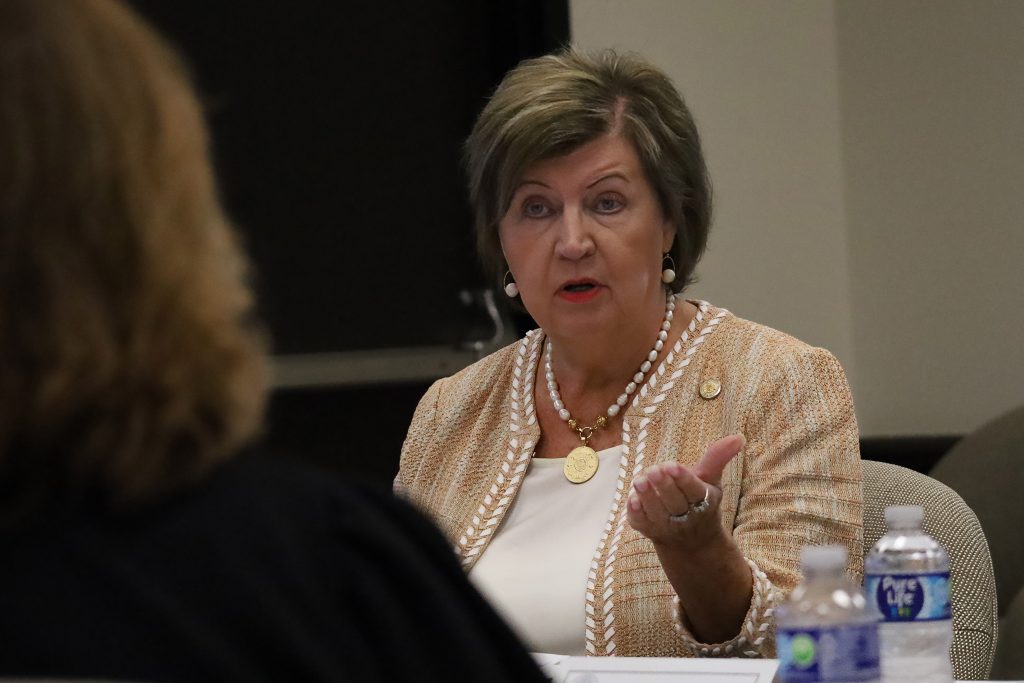
“Every time you do those things, you raise your admin costs because you’ve got to add more staff in order to be able to do that,” she said.
Alabama paid $1.77 billion in SNAP benefits to 374,000 households and more than 700,000 individuals in FY24, according to DHR. Given that scale, even a modest error rate can translate to an additional tens of millions in potential state costs under the new law.
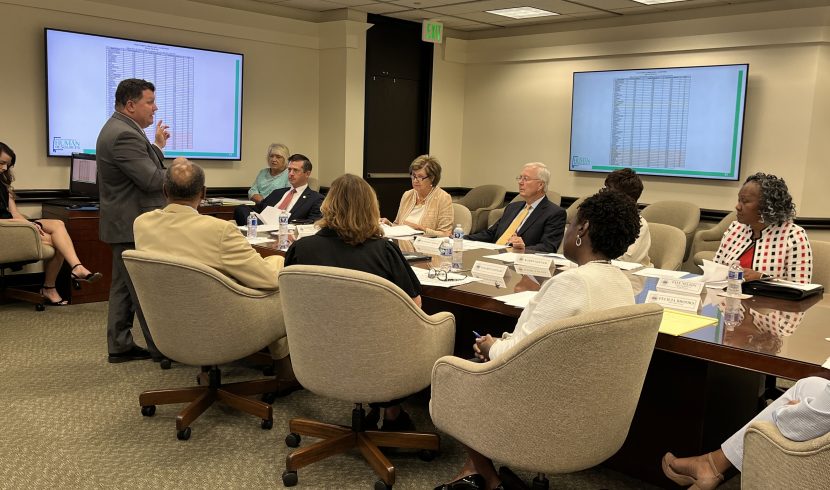
Alabama SNAP Director Brandon Hardin shared information on Alabama’s payment error rate and why some types of errors are being made during Thursday’s DHR board meeting in Montgomery.
“Recipients are certified only once in a 12-month period, and life circumstances can change during that time,” Hardin explained. For example, if a person is initially certified and given a utility deduction but later moves into housing where utilities are included, that becomes a payment error every month until DHR makes the change to the recipient’s benefits.
DHR might not catch that change until the recipient is recertified at the end of the initial 12-month period.
In FY24, Alabama reviewed 1,109 cases as part of the required yearlong random-sample review of cases. Most errors that are identified are unintentional, he said. Of the errors found, 51% were attributed to clients and 49% to the department.
DHR is already focusing on geographic areas to lower the error rate. “We’ve had a really good effort in our large counties trying to reduce the number of errors,” Hardin said. “We’re focusing on our top five counties trying to work on that.”
That effort is beginning to show results. For the first five months of fiscal year 2025, Alabama’s PER has dropped to 7.19%, down slightly from the same period last year.
Hardin emphasized while fraud in food assistance programs is often discussed, very few Alabama cases involve fraud. “In FY24, out of those 1,109 (sampled cases), only 19 cases were found to be ineligible during the Q(uality) C(ontrol) review,” he said. “Only 19 cases for only $6,394.”
Hardin pointed out that Alabama’s 8.32% error rate was lower than the national average of 10.93%, according to USDA data, and the lowest among southeastern states for three years running.
Buckner noted that the law allows high-error states to delay cost-sharing, giving them a break that more accurate states don’t get. Ten states – including Florida and Georgia – had PERs above 13.34%, the threshold that gives them a temporary reprieve from cost-sharing.
“So if you’re doing so bad that your error rate is (13.34% or higher) right now, you get a free pass on a couple of years,” Buckner said. Alabama, with a lower rate, doesn’t get that option.
Hardin said he’s optimistic the department can bring the error rate below 6% in time with the right investments in staff and infrastructure.
“We’ve hit that mark six out of the last 10 years,” he said. “But we want to make sure that we hit it 10 out of 10.”