
TRUSSVILLE, Ala. – On a hot, muggy Wednesday morning in July, the parking lot at Hewitt-Trussville High School looked more like the first week of school than the middle of summer.
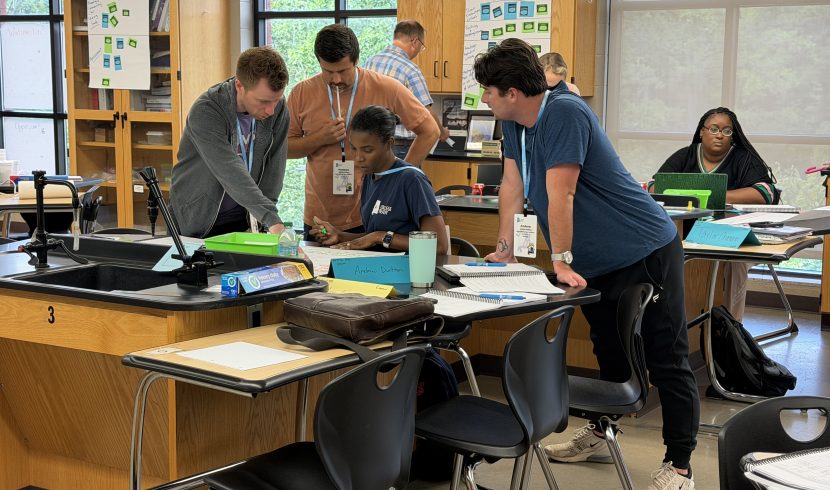
Inside, about 1,000 educators were spending four days of their summer preparing for students who will return to class in only a few weeks.
Those teachers filled nearly 60 classrooms across three floors of the high school, taking part in training tailored to their subjects and grade levels in English, math, science, social studies, computer science, Spanish and art.
About four dozen principals and other school administrators were there, too, for a separate, one-day training focused on how to recognize and support the instruction once the school year began.
While teachers studied lessons they would soon take back to their classrooms, the administrators were there to learn how to recognize and support teachers’ instruction once the school year began.
The gathering was A+ College Ready’s annual E3 summer conference. The name stands for Equip, Empower and Expect More.
This year’s training included educators from grades six through 12, and the administrators’ session was aligned with that work, helping school leaders understand and support the instruction their teachers were learning.
But the training is only the beginning of the work.
Schools join A+ College Ready in three-year cohorts and commit to teacher and administrator training, using curriculum developed by Alabama teachers for Alabama classrooms.
Jennifer Abney, A+ College Ready’s Senior Director of Leadership and Support, led the principals’ training. She said administrators need to understand what their teachers are learning so they can support it back at school.
“We need to make a connection between the training that the teachers are going through,” Abney said. Administrators need to see the work as instructional leaders, she said, because helping teachers improve ultimately helps students.
Teachers become the students
In classrooms throughout the school, the teachers were the students.
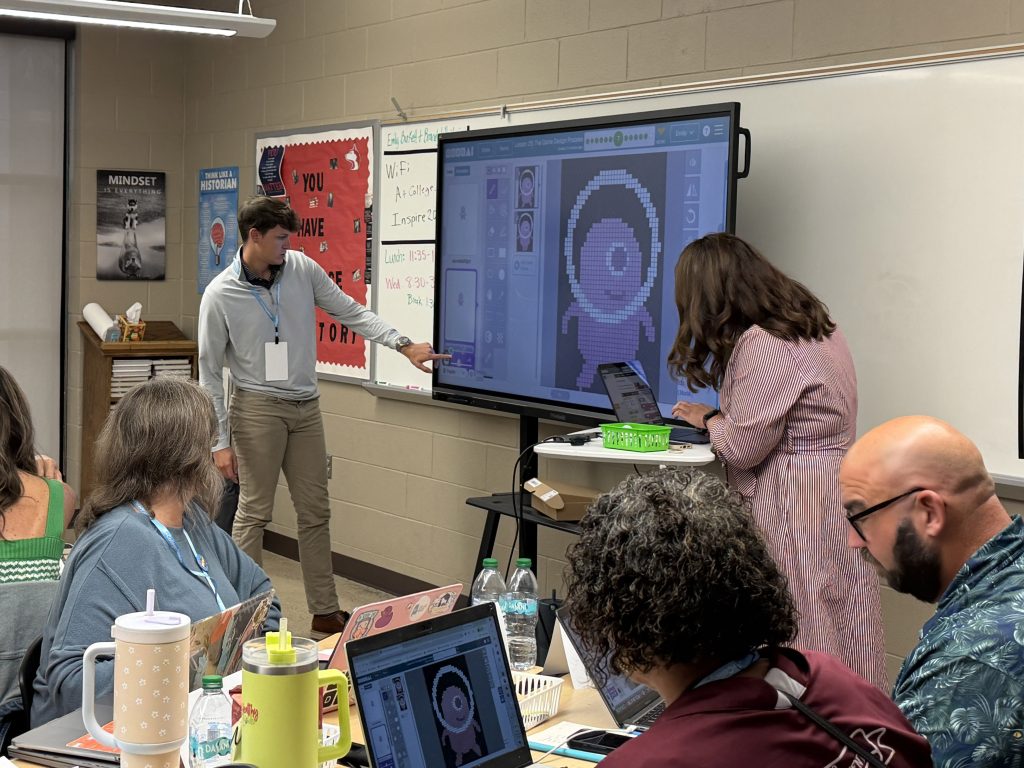
In one computer science session, teachers learned to write code that moved a small animated being across a screen.
In a government and economics class, teachers used Lego blocks and were assigned roles as employed or unemployed workers in a lesson designed to demonstrate production, unemployment and gross domestic product.
The instructors were experienced teachers trained by A+ College Ready. They modeled the same lessons and strategies participants could use with their own students.
Keisha Ragland, a Talladega High School social studies teacher with 22 years of experience, was preparing to teach government and economics for the first time.
“This curriculum makes you believe that you can be a great teacher,” Ragland said. “It gives you the confidence you need to push you because here are your resources – everything you need.”
Success with one lesson builds confidence for the next, she said.
The E3 curriculum is aligned with Alabama academic standards and was developed by Alabama teachers for Alabama classrooms, A+ Education Partnership President Mark Dixon said. Along with training, materials and ongoing support, it gives teachers a stronger starting point for planning and teaching their courses.
A+ College Ready began in 2008 as a high-school initiative, initially supported by a National Math and Science Initiative grant. Its purpose was to expand access to Advanced Placement courses and increase the number of students earning qualifying AP scores, including students who had not traditionally been encouraged to take advanced classes.
More than 200 schools have participated since the program began, Dixon said.
Alabama now ranks 17th nationally in the percentage of AP exams earning a qualifying score of 3 or higher, according to Dixon.
A state-funded middle-school expansion
In 2019, A+ College Ready, state education officials and lawmakers expanded the initiative into middle schools.
The aim was to strengthen instruction in grades six through eight and prepare a broader group of students to succeed in advanced coursework once they reached high school.
The current state education budget provides $11.6 million for A+ College Ready. The program operates as a public-private partnership: lawmakers appropriate the money, the Alabama State Department of Education provides data and strategic direction and holds the program accountable for results, and A+ develops curriculum, trains educators and supports participating schools.
Participating middle schools receive curriculum aligned with Alabama standards, instructional materials, equipment, teacher training and administrator support.
Students take tests and set individual growth goals. Those who meet their goals receive a $50 gift card.
“What we know from experience is, when we set a high bar for students and support the teachers, the kids can meet that bar,” Dixon said.
Program leaders say the aim is to extend that opportunity beyond students already identified as advanced.
“We want every child to have that opportunity, and we want them to be prepared when they get into those classes,” said Dieatra Howie, Vice President of A+ College Ready. “We want them to be successful and feel empowered to do whatever they decide to do.”
PARCA study finds higher scores in participating schools
A recent analysis by the Public Affairs Research Council of Alabama found students in participating middle schools generally performed better on the Alabama Comprehensive Assessment Program, the state’s annual standardized test, than similar students in other schools.
The study looked at the Middle School Training and Incentive Program, or MSTIP. Researchers compared participating students with similar students in other schools, taking into account differences like economic circumstances, race, gender and attendance.
PARCA found stronger results across both individual students and schools.
MSTIP students scored higher in English and math than similar students in non-participating schools, and participating schools posted higher proficiency rates in all three tested subjects.
The biggest differences were among eighth graders in 2025. In math, 53% of students in participating schools were proficient, compared with 25% statewide.
In science, the comparison was 73% to 42%.
Participating schools also posted stronger results for groups that have historically scored below statewide averages.
Economically disadvantaged students generally outperformed their peers statewide. Among English learners, 60% were proficient in English language arts, compared with similar students who reached 17% proficiency statewide.
Those results suggest the program is making a difference.
Principals as instructional leaders
For the administrators gathered at Hewitt-Trussville, the focus was on how to support stronger teaching once they returned to their schools.
Abney reminded them that discipline, transportation, schedules and emergencies may take up much of a principal’s day, but principals are also expected to be instructional leaders.
The group studied instructional frameworks – shared expectations for teaching and learning across a school – and practiced instructional rounds, also called walkthroughs.
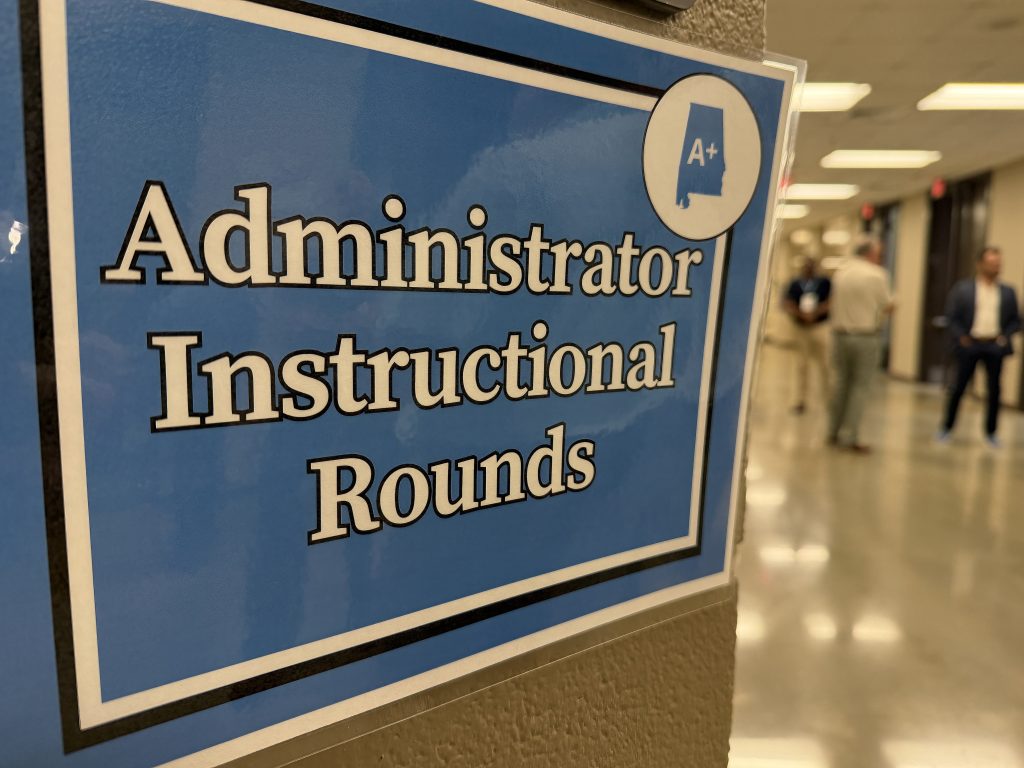
Instructional rounds are not intended to evaluate teachers or catch them doing something wrong.
They are designed to help educators learn from each other by observing each other, focusing on a specific teaching practice and considering what they could use in their own classrooms.
Before principals walked into classrooms, Abney told them, “Put on your teacher hat.”
The administrators in the group ranged from longtime school leaders to about half a dozen brand-new administrators.
They carried worksheets asking what they saw, what they wanted to understand better and what they might apply in their own practice.
“We want to learn from each other,” Abney said.
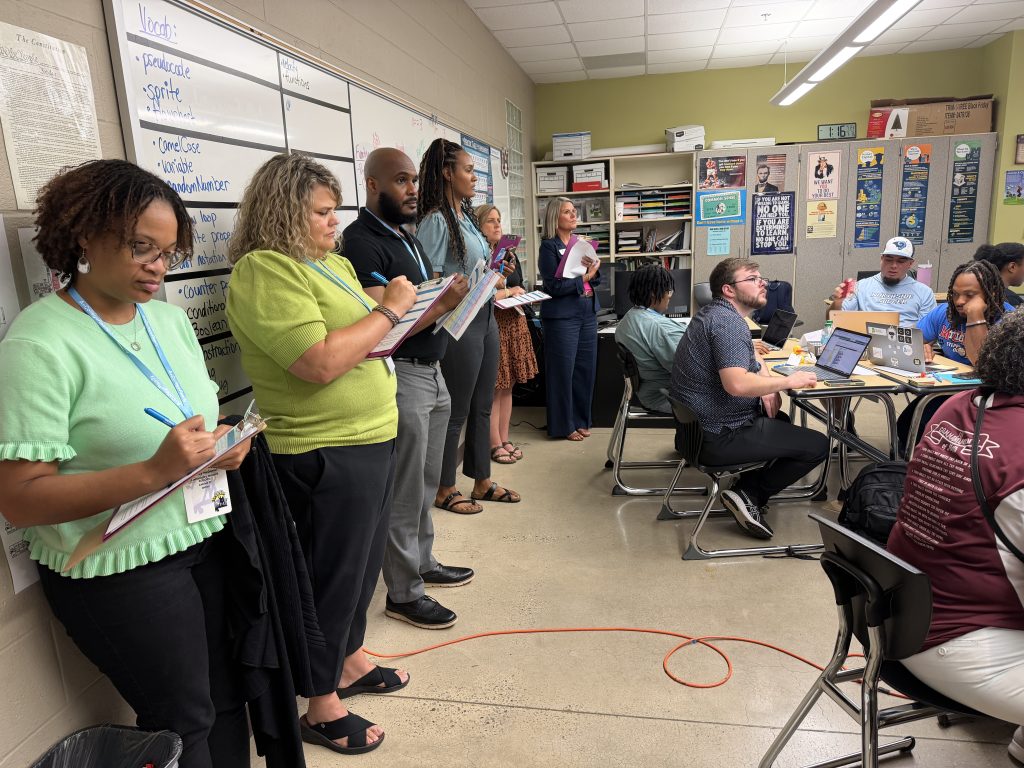
The opportunity to learn from one another is unusual in middle and high schools, where teachers typically spend most of the day in their own classrooms and rarely get to see how other teachers work with students.
Enjuli Alexis is the middle school principal at i3 Academy public charter school in Birmingham. She said she attended the training to understand what her teachers were learning and what she should expect to see when she visited their classrooms.
Her school’s instructional framework has changed as teachers and leaders have learned what works, she said. And that’s how it’s supposed to evolve.
“It’s supposed to be a living, breathing document,” Alexis said.
Building something that lasts
A+ College Ready’s three-year cohort model is intended to move schools from adopting the program to making it part of their everyday work.
In the first year, schools establish a shared vision for rigor and access. In the second, they strengthen collaboration, teaching practices and their use of student data. By the third year, the goal is to put systems in place that will continue through changes in faculty and leadership.
The work must become part of the school’s culture and cannot depend on one principal or teacher, Abney told the group.
That was especially important in a room that included both veteran administrators and people preparing to lead schools for the first time.
Within a few weeks, administrators will be back in their own schools, where discipline, transportation and daily emergencies will compete for their attention.
Their challenge will be to keep instruction at the center of the job and continue entering classrooms with their “teacher hats” on.
“The work we’re doing – we do not have time to waste,” Abney said. “Children don’t choose their teachers. We want all students to have effective teachers.”
Correction made 10:15 a.m. 7/20 to correct the spelling of Jennifer Abney’s name.