
BIRMINGHAM, Ala. – Alabama’s governor has a direct role in shaping public education, serving as president of the State Board of Education and working with lawmakers to determine how billions of dollars in state education funding are spent. The governor also can influence education policy through budget proposals, legislative priorities and appointments.
Though many decisions about public schools made at the state and local levels, the outcome of the Nov. 3 governor’s race could have significant consequences for Alabama students, families and educators.
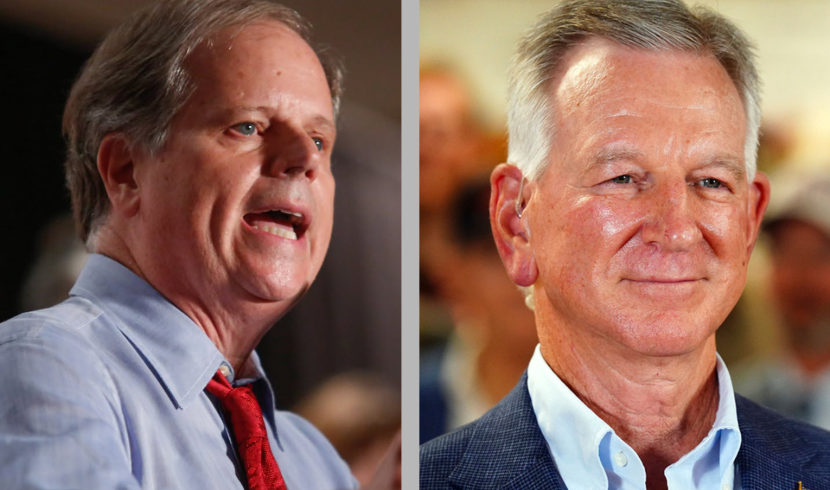
Democratic gubernatorial nominee Doug Jones and Republican nominee Tommy Tuberville have sharply different plans for the state’s education savings account program, but Alabama’s two candidates share some priorities for improving public education, including building on recent gains in reading and math.
Tuberville, a former Auburn University football coach who defeated Jones in the 2020 U.S. Senate race, has released a detailed education agenda as part of his campaign’s Back to Basics: The Golden Age Playbook. His proposals include expanding school choice, extending reading and math initiatives through eighth grade, strengthening school accountability and preparing students for the workforce.
Jones, who served three years in the U.S. Senate, has emphasized strengthening public schools through additional funding for schools serving disadvantaged students, continued investments in reading and math instruction, and greater support for teachers.
School choice
Perhaps the clearest difference between Jones and Tuberville involves the CHOOSE Act, Alabama’s education savings account program, which provides up to $7,000 per student in state taxpayer funding for private school tuition and other approved expenses, or $2,000 per student for homeschooling expenses.
Tuberville strongly supports the program and has pledged to provide funding for its expansion as eligibility opens to families at all income levels in the 2027-28 school year.
That eligibility change is already scheduled under existing state law, though key Republican lawmakers have questioned whether enough funding will be available to meet the demand.
Tuberville argues that giving parents more educational options creates competition that will encourage public schools to improve.
During an interview on Alabama Public Television’s Capitol Journal, Tuberville said public schools losing students to other educational options should examine why parents are choosing to leave.
State Superintendent Eric Mackey said recently that public school enrollment is down by 12,000 students for the current school year, though where those students have gone is unclear. State law prohibits Alabama education officials from collecting private school enrollment numbers or the numbers of students in homeschool programs, so it is not possible to determine precisely how many departing public school students have enrolled in private schools or homeschool programs.
Jones wants to phase out the private-school portion of the CHOOSE Act, arguing that the program redirects money that could otherwise support public education.
He has said he would work with lawmakers to stop accepting new private-school participants while allowing students already receiving benefits to continue through graduation.
Jones has expressed support for preserving the homeschooling benefit, distinguishing the purchase of educational materials from using taxpayer funds for private school tuition.
About 33,000 students are currently using CHOOSE Act education savings accounts to pay for their schooling at a cost of about $174 million.
State allocations for public schools for the 2026-27 school year are about $7,800 per student for a total of $5.6 billion.
Only about 175 CHOOSE Act awards, fewer than 1% of the total, are being used for expenses associated with attending a public school outside a student’s assigned district. The remaining awards support private school attendance or homeschooling.
Accountability for CHOOSE Act funding and student outcomes is another point of contention between the candidates.
Public schools must administer state assessments and report student performance, graduation rates and other measures through annual state and federal report cards. Private schools participating in the CHOOSE Act are subject to different requirements.
Participating private schools must administer their choice of standardized assessments and report certain results to the Department of Revenue, with school-level data subject to public records requirements if more than 20 CHOOSE Act students participate in testing.
However, those schools do not receive a letter grade as public schools do, nor are they required to participate in the state’s public school accountability system or publish the same range of performance measures.
Jones argues that private schools receiving CHOOSE Act funding should face the same academic and financial accountability requirements as public schools if they receive public funding.
Asked on Capitol Journal whether private schools accepting state money should meet the same standards as public schools, Tuberville said they should be accredited and held accountable. His campaign playbook promises to publish CHOOSE Act results but does not specify which academic or financial performance measures would be reported or whether participating schools would face additional consequences for poor performance.
A September report from the Public Affairs Research Council of Alabama found Alabamians nearly evenly divided on the CHOOSE Act, with 48% supporting the program and 50% opposing it. Large majorities of respondents supported requiring private schools receiving taxpayer money to meet accountability standards comparable to those applied to public schools.
Jones said he supports the Alabama Accountability Act program, which allows students in schools earning a “D” or “F” to transfer to other district schools or for eligible students to receive privately funded scholarships to attend participating private schools.
Unlike CHOOSE Act education savings accounts, those private-school scholarships are funded through donations eligible for state tax credits. About 3,600 students used AAA scholarships to attend private schools during the 2025-26 school year.
Public school funding
Jones has emphasized continuing Alabama’s recent changes to public school funding, including the RAISE Act, which provides additional resources targeted to student needs.
The legislation directs additional money – $191 million more for the current school year – to schools serving students from low-income families, students with disabilities and English language learners.
Jones argues that sustained investments in these programs, along with the Literacy and Numeracy Acts, offer a better path to improving public education than expanding private-school subsidies.
He has also advocated using revenue from a potential state lottery to support education.
Tuberville’s education agenda focuses heavily on tying educational spending to measurable results.
His playbook calls for enforcing Alabama’s A-F school accountability system, rewarding improvement and giving school leaders greater authority to turn around persistently low-performing schools.
The state already assigns letter grades to public schools, but Tuberville is proposing stronger rewards for improvement and greater intervention in schools that consistently struggle. His playbook does not specify how those interventions would differ from the state’s existing school improvement efforts.
Tuberville has pledged to expand CHOOSE Act funding while also maintaining programs that have improved reading and math achievement.
His broader economic agenda includes eliminating the remaining state grocery tax and reducing state income taxes, with a promise to protect school funding.
Both taxes help support the Education Trust Fund, raising questions about how the proposed reductions would affect future education revenue. Tuberville has said the income tax cuts would be financed through government savings and economic growth, rather than reductions in education spending.
Reading, math and school accountability
Both candidates have praised Alabama’s recent improvements in elementary reading and math achievement and support continuing that progress.
Tuberville proposes extending the state’s reading and math initiatives through eighth grade, including instructional coaches, evidence-based curricula and tutoring programs tied to results.
His proposal, called the Alabama Life Ready Act, would place those changes alongside new career-readiness requirements and stronger school accountability measures.
The proposed expansion would build on the Alabama Literacy Act, which focuses largely on kindergarten through third grade reading, and the Numeracy Act, which established additional math supports in elementary and middle grades.
Jones has also praised the Literacy and Numeracy Acts and emphasized the importance of sustaining the investments behind them.
During an October education town hall in Montgomery, Jones pointed to Mississippi’s experience improving reading achievement as an example of the importance of maintaining a consistent approach to education reform.
Tuberville also proposes expanding Alabama’s First Class Pre-K program, which currently serves about 40% of eligible 4-year-olds, to serve every family seeking a place. Jones has praised the state’s nationally recognized pre-K program and called attention to the need to reach more children.
Both candidates’ support for the program suggests that expanding access to pre-K could remain a priority regardless of the election’s outcome, although their proposals differ in specificity.
Teachers and classroom conditions
Both candidates have discussed the importance of supporting teachers, though their proposals emphasize different approaches.
Alabama already offers additional compensation to teachers in certain subjects, grades and geographic areas through programs intended to attract and retain educators where shortages are greatest. Both candidates have discussed ways to build on those efforts, although their proposals differ.
Tuberville’s playbook proposes creating a career ladder allowing highly effective teachers to earn additional compensation by mentoring and training colleagues, beginning with teachers in middle schools.
Alabama began a mentoring program in 2004 and recently revamped that program. It pays additional compensation to teachers who mentor new teachers for up to two years.
Tuberville’s proposal appears to envision a broader career structure in which experienced teachers could earn more without leaving the classroom for administrative positions. The playbook does not specify how the new system would interact with existing mentoring and teacher compensation programs.
He also proposes giving teachers stronger backing when removing disruptive students from classrooms.
Lawmakers enacted the Alabama Teacher Bill of Rights in 2024, giving teachers the authority to remove students for specified disruptive behaviors and establishing procedures for administrators to respond and teachers to appeal certain disciplinary decisions. Tuberville has not specified what additional authority or protections he would propose beyond those already in law.
Jones has emphasized teacher recruitment and retention, including financial support for prospective teachers and additional compensation for educators working in high-need subjects.
During his October education town hall, he expressed support for expanding financial incentives and training opportunities for teachers. He also discussed improving mental health support for students and training teachers to respond to behavioral challenges.
Jones has also emphasized the importance of keeping students in traditional classrooms when possible, arguing that teachers need greater support in addressing the behavioral and mental health issues that can interfere with learning.
Career preparation and higher education
Alabama’s public schools have reinvigorated efforts to expand career technical opportunities spanning from traditional vocational and technical offerings to high-tech jobs. Alabama lawmakers have invested hundreds of millions of taxpayer dollars in allocations and grants to school districts expanding those offerings in recent years. And Alabama’s community colleges are playing a major role in those offerings as well.
Those investments provide a foundation for the candidates’ proposals to connect classroom instruction more closely with the skills employers need.
Both candidates have connected education to Alabama’s ability to attract employers and prepare residents for available jobs.
Tuberville has made workforce preparation a central part of his education platform.
His playbook would require students to identify a career interest by the end of eighth grade and choose a pathway by the end of 10th grade, whether college, military service or a skilled trade.
He also wants schools to emphasize industry credentials that lead to available jobs and, where possible, count toward college credit.
Tuberville said he is working with community college officials to expand their role in delivering workforce training, apprenticeships and shorter credential programs designed with employers.
Jones has also emphasized workforce development and the importance of expanding educational opportunities beyond high school, including community college and apprenticeships.
While both candidates emphasize preparing students for employment, Tuberville has outlined more specific grade-level career planning requirements, while Jones has placed greater emphasis on strengthening public education and expanding opportunities for students after high school.
The general election is Nov. 3. The winner will be inaugurated on Jan. 18, 2027.