
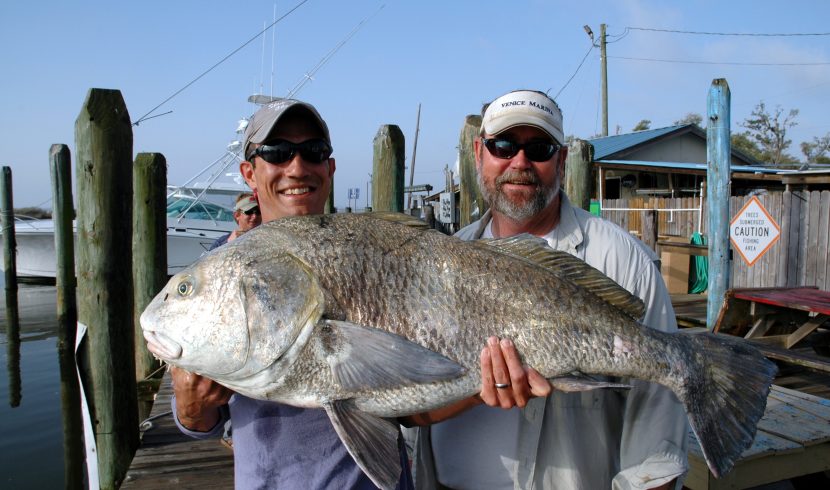
Not everybody can afford to buy a big boat or hire a charter captain for an offshore adventure, but Alabama anglers don’t need to head offshore or spend a fortune to catch giant fish.
Typically ignored or even held in contempt by many Alabama anglers, black drum can provide heavyweight action for little cost. Black drum, the largest member of the drum family, can weigh more than 110 pounds. The Alabama record weighed 61 pounds. Anglers regularly catch drum in the 20- to 40-pound range and some bigger ones in inshore waters.
Most Alabama anglers only catch drum by accident while fishing for redfish or other species, but the humongous fish can put up an incredible fight. Bait doesn’t need to break the bank either. Like a hungry catfish, drum scour the bottom looking for any delicious morsels they can gobble.
“Black drum have several great big, fleshy, barbels hanging on the underside of their lower jaws,” described the late marine biologist Bob Shipp in his book Dr. Bob Shipp’s Guide to Fishes of the Gulf of Mexico. “They are predominantly bottom-feeders with no great preference for any particular foodstuff.”
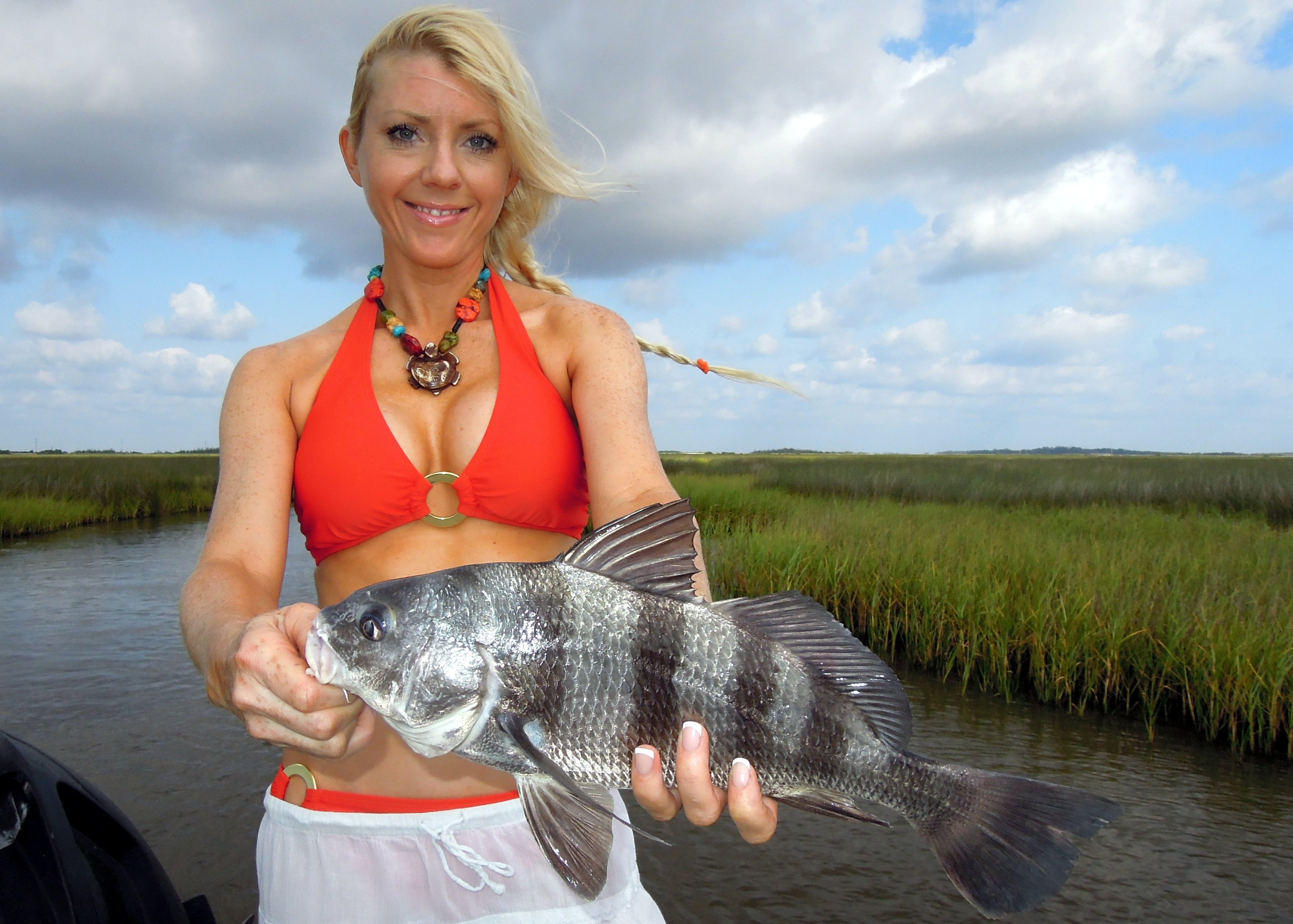
Drum like clams and fresh or live shrimp. They occasionally eat squid, fish chunks, live minnows, pogies or other baitfish, but prefer crustaceans. In shallow water, dangle a live or fresh shrimp under a cork. Hook a live shrimp under the horn or through its tail.
“Although they graze on bottom, shelled animals are a main feeding strategy,” Shipp wrote. “Drum are especially proficient at digesting thick-shelled animals like clams and crabs by using a set of heavy, crushing teeth that are borne on the bones that support the gills.”
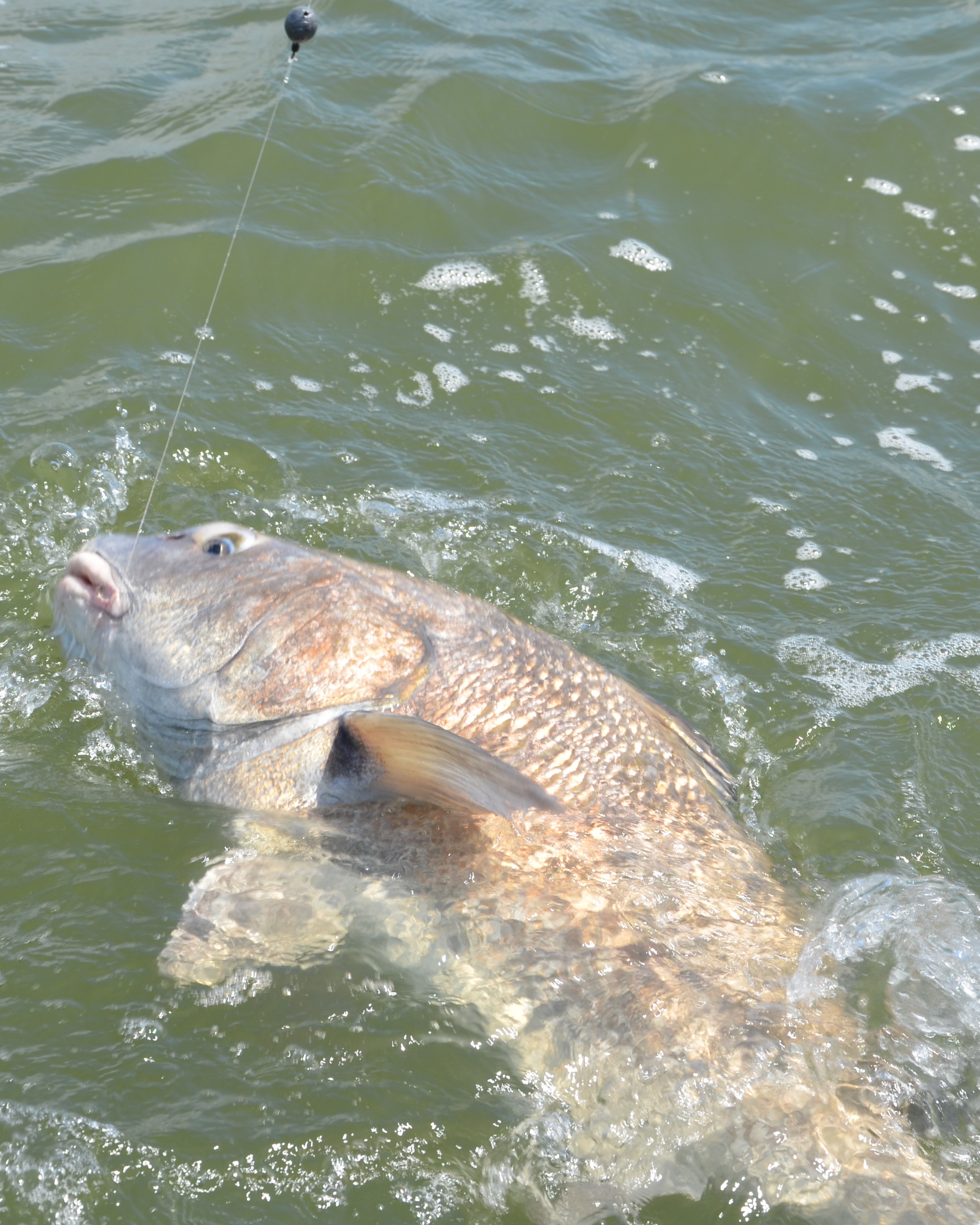
Drum might eat anything, but trophy drum can’t resist a succulent blue crab. For monster drum, use a whole fresh crab. Leave the top shell attached, but crack it so irresistible juices ooze from it. Hook the crab onto a Carolina rig with an 8/0 circle hook on the leader. When fishing with circle hooks, simply begin reeling after feeling the fish on the line. The hook usually catches a fish in the corner of its mouth so anglers can more easily release large fish with little injury to it.
“Drum really love crustaceans,” advised Mike Weaver with Navigator Charters (FishingBooker.com) in Orange Beach. “We don’t catch as many drum on live pogies or other baitfish. For targeting black drum, I definitely stick with fresh crustaceans. A black drum’s mouth turns down a little more than a redfish so it’s more of a bottom feeder.”
Many anglers also fish with crab halves. Remove the top shell and break a crab into halves. Remove one of the legs and run a hook through the meat so that the point exits the leg hole. Toss the temptation to a likely spot and wait for a powerful bite. Smaller fish, like pinfish or hardhead catfish, might pick at the meat, but anglers will know when an enormous drum gulps down a bait.
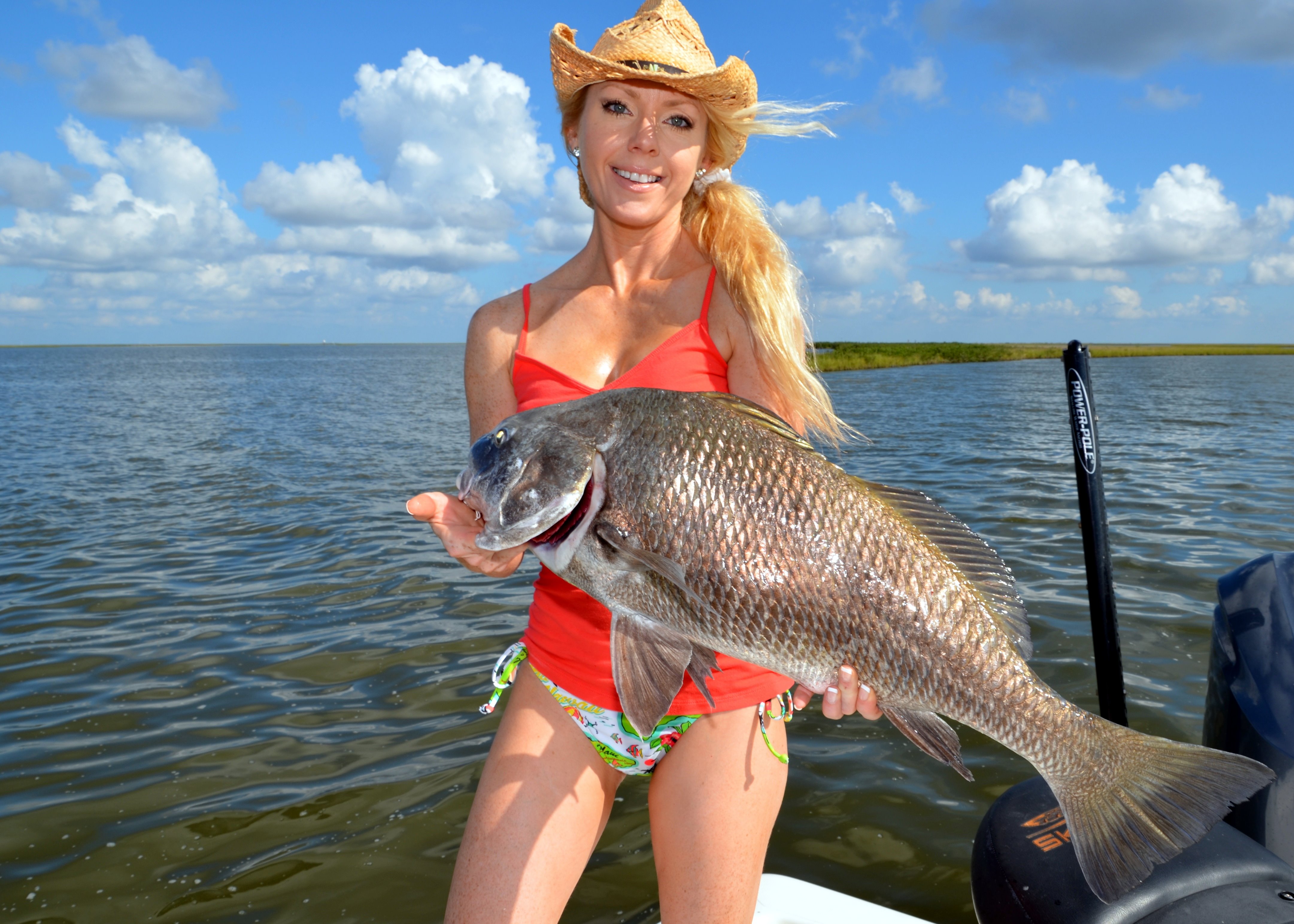
Drum also love to eat small live crabs. Hook a live crab through the back near the rounded “swimmer” fin. Insert the hook into the soft joint where the fin connects to the body and push it out the second leg. Anglers can fish a live crab on a drift line or a Carolina rig. When fishing in shallow water, like along a shoreline, dangle the bait under a popping cork.
Fiddler crabs also make superb drum bait, fished on bottom or under a cork. Only use male crabs, those with one huge claw. Release the females to reproduce. Break off the huge claw and toss it into the water for drum chum before baiting a hook with a fiddler. Slip a hook through the back of a fiddler crab so that it comes out through the top shell.
Since black drum mainly feed by feel and smell, they rarely hit artificial baits. Infrequently, someone catches a drum on a jighead tipped with a soft-plastic shrimp imitation while casting for speckled trout or redfish. Some people sweeten a lure with a piece of fresh shrimp for added enticement.
Drum sometimes hit spoons, spinnerbaits and other lures. Bass anglers fishing the brackish tidal marshes of the lower Mobile-Tensaw Delta might catch drum on jigs tipped with scented soft-plastic craw trailers that mimic crabs. For fly-rod enthusiasts, black drum might even slurp flies, particularly those that resemble small crabs or shrimp.
“It’s hard to get a drum to hit a lure,” Weaver commented. “I have caught drum accidently on soft baits like a Gulp! Shrimp on a jighead while targeting something else. Sometimes, when fishing for redfish, we work a gold spoon slowly along the bottom. It might look like a crab to a drum so it hits it.”
Alabama anglers might catch drum in any brackish to salty waters in the state. Even people without boats can catch huge drum off shorelines, beaches, seawalls, docks and public piers. Fish-cleaning stations make especially good places to tempt drum. When people clean fish, they toss heads, backbones, scraps and entrails into the water. That attract crabs, shrimp and small fish.
Also look for drum around hard structures, such as bridge pilings, docks, oyster reefs, sunken boats, platforms or other structures. Gas wells can hold many mighty bruisers. Rocky jetties like the ones lining Perdido Pass in Orange Beach make excellent places to catch big drum. Huge drum also congregate in the deepest holes in the Theodore Canal and the Mobile Ship Channel. Deeper holes in the delta river channels can also hold massive drum.
Although not as highly prized as other fish, when it comes to putting up a good fight, monster drum can beat almost anything in inshore waters and rival many offshore fish. Since few anglers intentionally seek these magnificent brutes, anglers in even the smallest boats or no boat at all might find themselves battling tackle-busting behemoths with little or no competition. Any cast could mean a fish of a lifetime!
**********
An avid sportsman, Felsher is professional writer, photographer and radio show host who has written thousands of articles for many publications. He’s always looking for ideas or outdoors adventures that will make good stories. Contact Felsh at [email protected] or through Facebook. He also hosts an outdoors tips show for WAVH FM Talk 106.5 radio station in Mobile.