
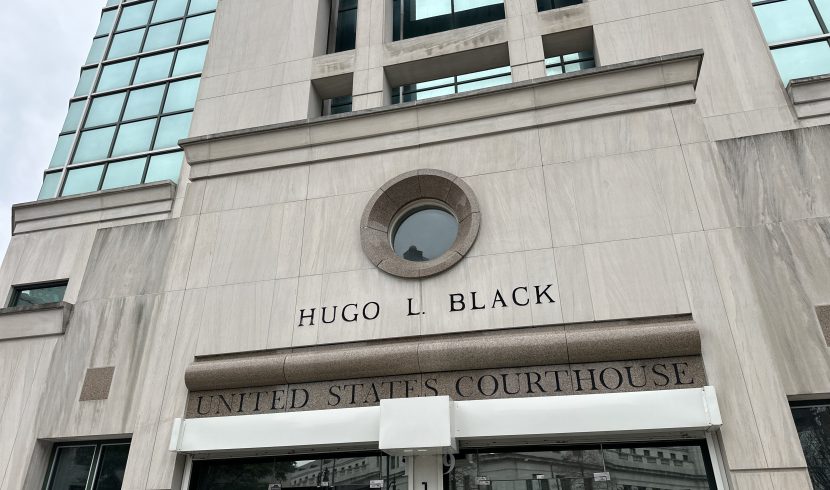
A federal three-judge panel on Tuesday blocked Alabama from using its Republican-drawn congressional map this year, ruling the map remains racially discriminatory despite a recent Supreme Court ruling.
The court issued a preliminary injunction in the redistricting case. The three judges ordered the state to use the 2024 court-drawn map, which led to the election of two Black Democrats in Alabama.
Republicans have already begun to implement the 2023 congressional map this year, which would revert the state to one majority-Black district. After a special session in which the Legislature passed a law to revert to that map, Gov. Kay Ivey scheduled special primary elections for four congressional districts on Aug. 11.
“Ultimately, we cannot see our way clear to requiring Alabamians to cast their votes in the 2026 elections under a districting plan tainted by intentional race-based discrimination,” the panel wrote.
Alabama appealed the lower court’s ruling to the U.S. Supreme Court shortly after it was issued. Attorney General Steve Marshall said he was “disappointed” by the decision.
“Know this—in my mind, it is not a matter of whether we win this case, only when,” Marshall said.
Ivey said she is backing the state’s appeal.
“I fully support Attorney General Marshall appealing this unsurprising decision to the U.S. Supreme Court, and I remain hopeful they will allow Alabama to move forward with our August 11 Special Primary Election,” Ivey said. “I will continue to say: Alabama knows our state, our people and our districts best.”
Tuesday’s ruling is the latest in a flurry of legal activity in Alabama’s redistricting efforts after the Supreme Court narrowed how race could be used to draw boundary lines in a Louisiana redistricting case in late April.
Earlier this month, in light of the Louisiana v. Callias decision, the state asked the high court to intervene in its case to allow Alabama to use the 2023 map adopted by the Legislature. It would likely flip one of the state’s seats red, giving Republicans another seat in Congress.
The Supreme Court did just that, quickly paving the way for the state to use that map this year by vacating the lower court’s mandate, but at the same time calling for that same three-judge panel to review the case. Plaintiffs also asked the lower court for a preliminary injunction to bar the state from using the Republican-friendly map.
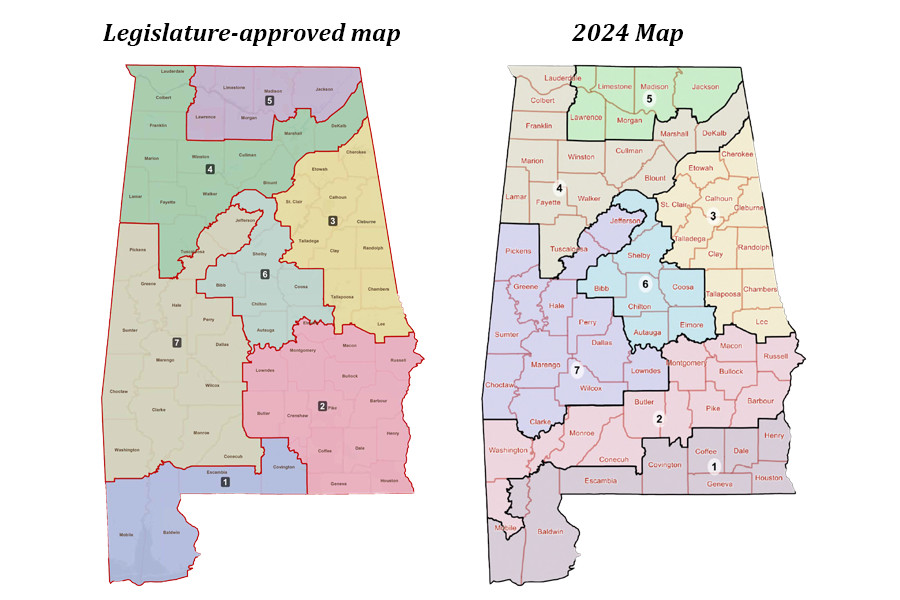
After a hearing last week, the federal panel concluded that when lawmakers crafted the 2023 congressional map, they “tried to distribute Black voters across districts to dilute their votes, at least in part because they are Black.” The judges ruled that the map remains racially discriminatory and thus violates the Constitution, even in light of the Louisiana decision.
Two Trump-appointed judges and one appointed by former President Bill Clinton make up the panel overseeing the case.
The federal court also said that Alabama will have an easier time administering elections under the 2024 remedial map instead of under the 2023 legislative map.
The judges pointed to testimony from Alabama Director of Elections Jeff Elrod during last week’s hearing in which he described the difficulty of reassigning voters to different districts under the 2023 map on a compressed timeline. That could lead to voters being accidentally placed in the wrong district and given the wrong ballot.
Ivey has already scheduled the special primaries for the 1st, 2nd, 6th and 7th congressional districts for Aug. 11. Candidate qualifying for those elections closed on Friday.
“We acknowledge that our holding is a rare one in the modern era, and we are painfully aware of the gravity of our ruling, but in this unusual posture and on this extensive record, we do not find the issue particularly complex or close,” the judges wrote.
Democrats and voting rights advocates praise ruling
U.S. Rep. Shomari Figures, D-Mobile, who cheered the lower court’s decision, alluded to the fact that the redistricting saga is far from over this year. The 2023 congressional map significantly alters Figures’ current 2nd Congressional District, which was created as an opportunity district for Black voters.
“This is a significant step in the right direction, but there is still a long way to go before the fight is settled,” Figures said in a statement.
U.S. Rep. Terri Sewell, D-Birmingham, called it a “victory for fair representation and a powerful rebuke of Alabama’s continued efforts to silence Black voters.”
Davin Rosborough, an attorney representing the plaintiffs in the case and the deputy director of the ACLU Voting Rights Project, said he thinks the lower court got it “right” in its ruling on both the merits and timing of its decision.
“The district court found number one that the Legislature had still engaged in intentional racial discrimination in 2023 and that the evidence was overwhelming of that,” he told Alabama Daily News.
“Then number two, that we were also still likely to prove a violation of the Voting Rights Act because the evidence was so overwhelming that it met the new, even more stringent standards of the Callias case.”
Republicans vow the fight is not over
Alabama Republicans said they remain hopeful that the Supreme Court will ultimately rule in favor of letting the state implement the 2023 congressional map this year.
“As a party to this case, in my official capacity as Secretary of State, I strongly disagree with the lower Court’s decision, and I look forward to appealing it to the United States Supreme Court as soon as possible,” Secretary of State Wes Allen said in a statement.
House Speaker Nathaniel Ledbetter said, “Elections should be decided by voters at the ballot box, not activist judges.”
“This is nothing more than a politically motivated attempt to weaponize the judicial system for partisan gain, and Alabama has every intention of taking this to the Supreme Court and fighting back,” Ledbetter said.
U.S. Rep. Barry Moore, R-Enterprise, who is running for U.S. Senate, also said he stood with the state as it continues to fight to fully implement the 2023 map for this year’s elections.
“This latest ruling against Alabama’s congressional map is another example of unelected courts trying to override the will of Alabama voters and punish our state for standing its ground,” he said.
This story has been updated with additional reporting.