
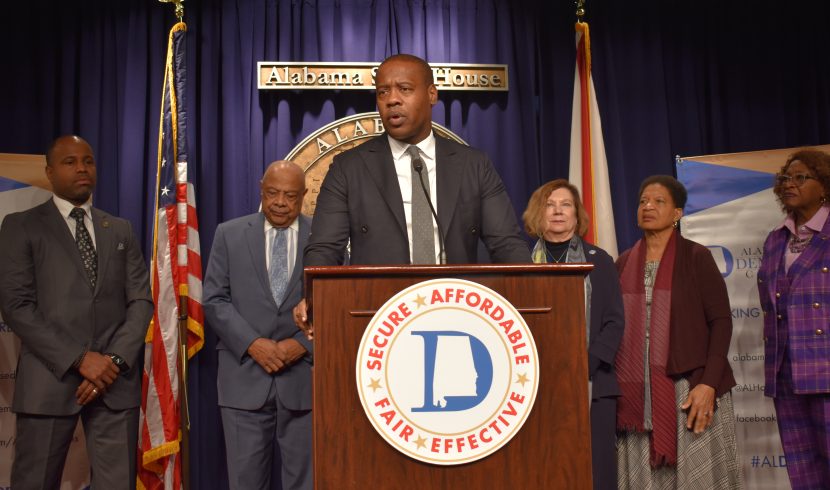
MONTGOMERY, Ala. — As the uncertainty of federal health care subsidies and rising grocery prices loom, Alabama House Minority Leader Anthony Daniels, D-Huntsville, said the Alabama House Democratic Caucus’ agenda is focused on “issues that impact people,” specifically poor and working-class Alabamians.
Cuts made by DOGE and the Trump administration have put many Alabamians in a “tough spot,” he said at a Tuesday press conference.
A recent survey conducted by the Alabama Poll showed that the economy is a top priority for likely Republican primary voters in Alabama. Eighty percent said the governor and state lawmakers should focus on the economy, 28.2% of whom said inflation and cost of living were top issues.
To address rising grocery costs, Daniels said the caucus will introduce legislation to make investments with local farmers in an effort to drive down costs and to incentivize grocery stores that do business with them.
Though the Democrats support a complete cut on state sales tax on groceries, the small victories achieved in lowering this tax – usually amounting to a few cents per purchase – aren’t enough to help out families, Daniels said.
Lawmakers have cut state sales tax on groceries twice since 2023. It currently stands at 2%.
Daniels said the legislature will also have to address the SNAP cuts – especially ones affecting veterans, people between the ages of 60 and 65 and people in foster care – included in the One Big Beautiful Bill Act.
Another important issue for voters and the Democratic caucus going into the session is health insurance. When asked about their biggest concerns regarding increased prices in the latest Alabama Poll, 50.2% of likely Republican primary voters said the cost of food, 34.3% said health care and 33.8% said insurance.
Federal health care subsidies via the Affordable Care Act expired on Dec. 31, 2025, leaving many Alabamians in limbo because of higher insurance costs. Without the subsidies, Daniels said it’s likely 120,000 individuals will drop their coverage in the first year and 80,000 more will drop in the second.
Alabamians dropping their coverage will also have a hit on the General Fund Budget, which Daniels estimated to be $19 million. As COVID dollars dry up and interest rates flatten out, the General Fund Budget will be in a crisis, Daniels said, echoing the sentiment expressed in Finance Director Bill Poole’s budget presentation last week.
The caucus’ policy Chair Rep. Adline Clarke, D-Mobile, and Rep. Barbara Drummond, D- Mobile, touched on other hot button issues like early and absentee voting, concealed carry, pardon reform and the CHOOSE Act during their remarks.
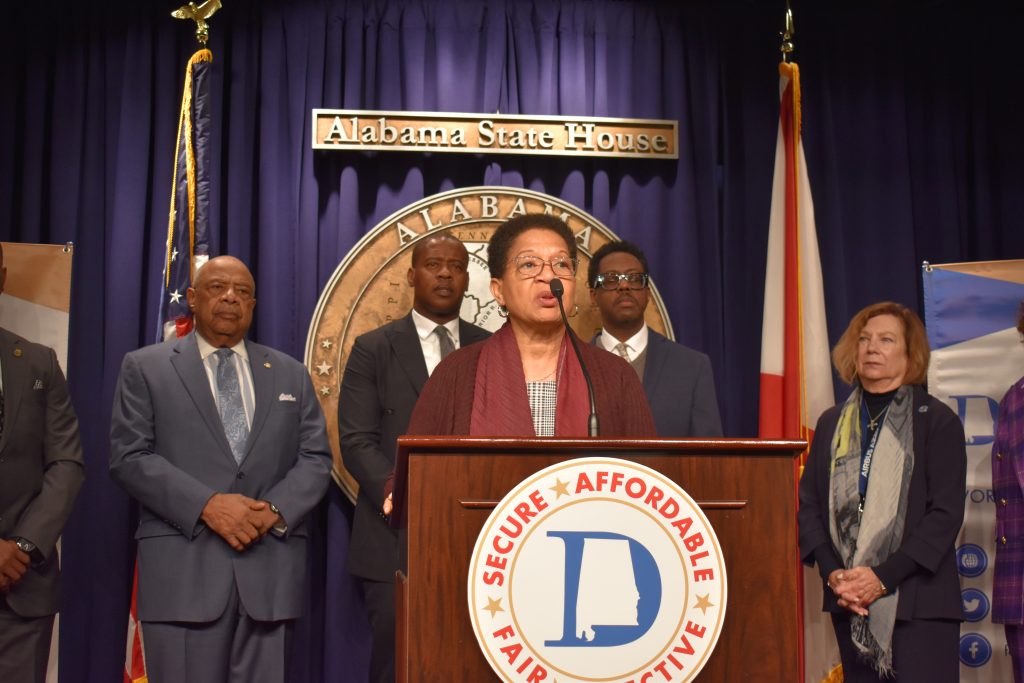
Clarke said the question of affordability applies to the CHOOSE Act – Alabama’s school choice voucher-like program – just like it does to groceries and health care. Gov. Kay Ivey recommended the legislature expand funding for the CHOOSE Act from $180 million to $250 million in her latest budget proposal.
“House Democrats believe that public education dollars should be spent on public education, not for-profit private schools,” Clarke said.
Caucus members said they will be filing their bills soon.