
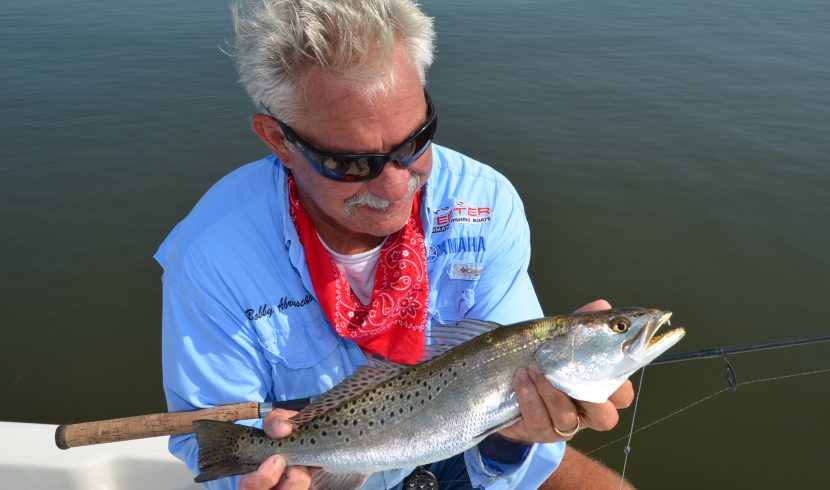
Many anglers wait for warmer weather to fish, but cold days can produce hot action on big speckled trout. Anglers just need to watch the weather and fish a little differently.
“Many people give up on trout during the winter, but we catch many big trout when it’s cold,” stated Bobby Abruscato with A-Team Fishing Adventures (251-661-7696, www.ateamfishing.com) in Mobile. “Some people look forward to the winter because it can be some of the best trout fishing all year.”
Cold-blooded specks can tolerate frosty conditions if water temperatures don’t stay below freezing too long. Trout don’t like sudden fluctuations. When conditions change drastically, fishing shuts down.
“Fishing is better when the weather is cold, but stable,” explained Jason Gamble with Red Sky Fish Company (251-404-3144, redskyfishing.com) in Mobile. “During the winter, anglers need to stay versatile because conditions can change quickly. I try places where I think trout should be. If they aren’t there, I’ll try a new spot, perhaps a place I never fished before. Just keep looking for fish.”
During the winter, trout traditionally head for deeper water, which stays more stable with relatively comfortable temperatures all year long, despite the air temperature. When cold weather hits, trout frequently congregate in the deepest holes. Anglers who find such a hole might load a boat with big specks.
Holding the deepest water in coastal Alabama, the Mobile Ship Channel averages about 45 feet deep with some deeper holes. Well known for producing big specks, the Theodore Industrial Canal flows into the ship channel. It runs about 40 feet deep. Water drops off quickly along the shorelines of dredged canals. Trout might hold in deeper water, but occasionally move shallow to hunt.
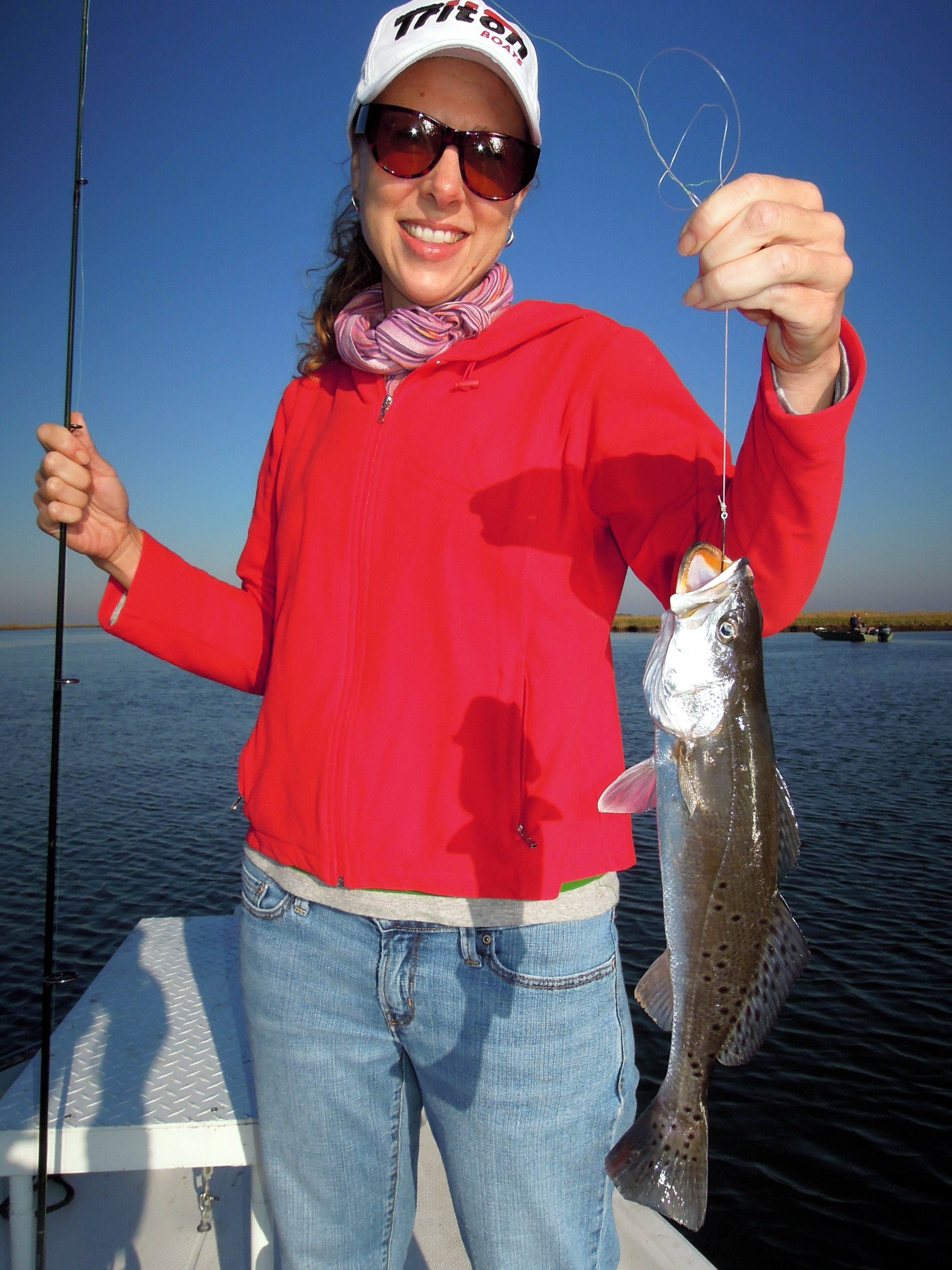
“In the Theodore Canal, trout might be down 25 to 30 feet,” Abruscato observed. “When it’s really cold on the day of or day after a front, fish will be in the main channels. As it warms a bit a couple days later, trout move up on the ledges.”
When fishing dredged channels, work the entire depth range. Throw baits as close to the shoreline as possible. Drag them out over the drop-off into the deepest water. Also try running baits parallel to drop-off edges.
Several brackish rivers flowing out of the Mobile-Tensaw Delta also hold deeper water. As temperatures cool in the fall, trout commonly leave the upper bay and enter the delta rivers and other streams flowing into Mobile Bay. Look for the deepest holes to find trout. Baitfish also seek the more stable, comfortable temperatures in these holes. Trout usually stay in those deeper channels until spring.
“In the winter, trout will be in the deepest parts of the river systems, but that depends upon where someone fishes,” Abruscato detailed. “In the Fowl or Dog Rivers, specks might only be 12 feet down because that’s the deepest water they can find.”
In a stream with current, water must travel farther around an outside bend in the same amount of time as water going around the inside of the bend. Therefore, the current increases in velocity going around the outside bend. These powerful currents scour deeper holes. Generally, the point on the inside of a river bend points to the deepest water in that area. Trout regularly congregate in these deeper holes.
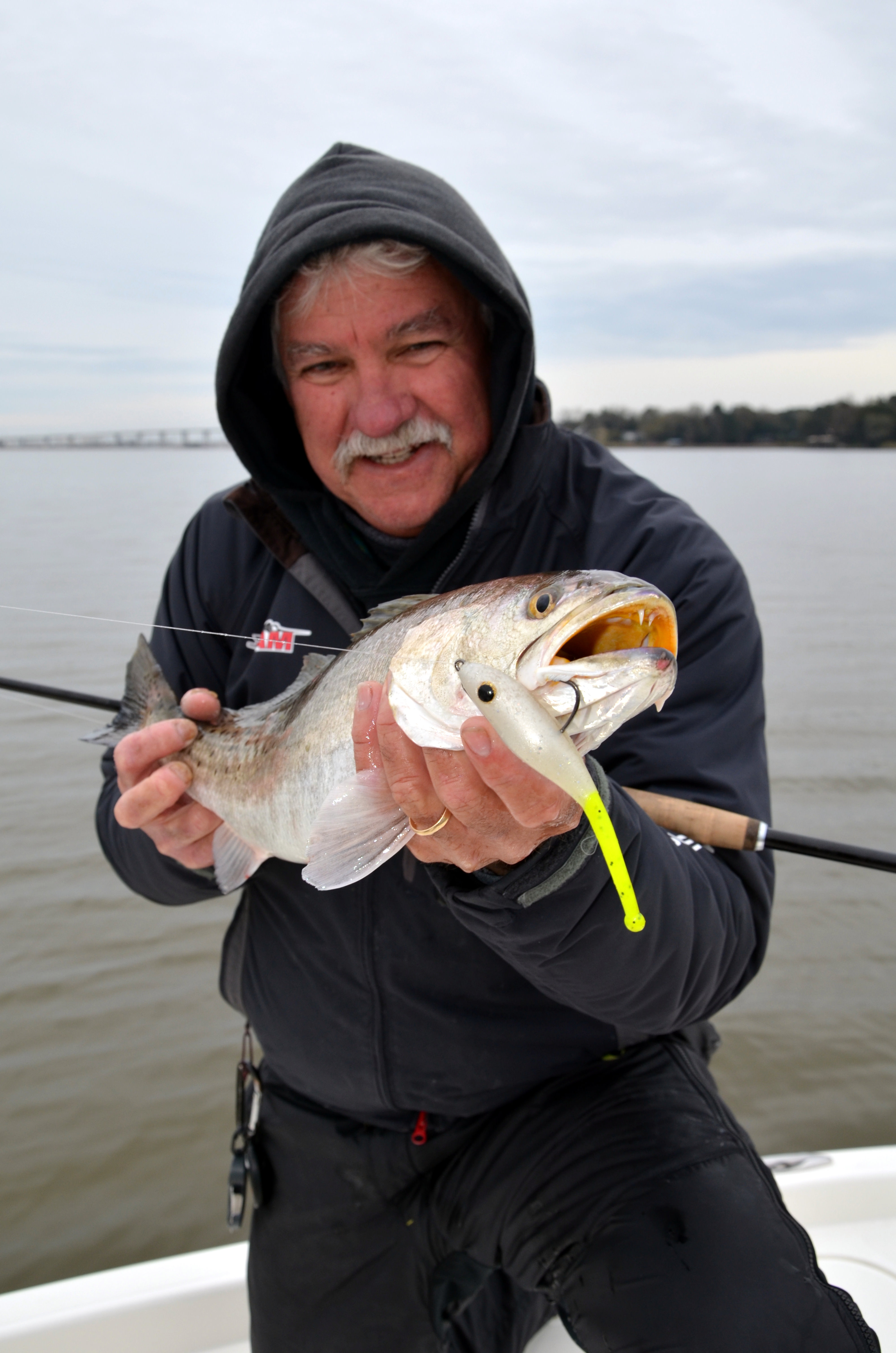
“Bends in river channels are always good places to fish in the winter because that’s where the bait stays,” Gamble advised. “Finding bait in the winter is essential. For most of the year, we fish with live shrimp. In the winter, speckled trout mostly target baitfish, not shrimp. Therefore, it’s important to concentrate on matching the lure to the dominant baitfish in the area.”
With shrimp largely absent from inland waters during the winter, trout mainly feed upon menhaden, known locally as pogies. They also like mullets, croakers and other finfish. Slowly sinking or suspending baits make excellent finfish imitations. Such lures require considerable patience to fish, but they can devastate trout in frigid water. Give the baits very little extra action. Just let one slowly sink. Perhaps twitch it periodically.
When temperatures turn frosty, cold-blooded fish become more lethargic. Their metabolic rates decrease and they won’t move as far, as often or as fast as they would during the summer. Trout won’t chase down fast baits in cold water. During the winter, larger specks might not eat for two or three days. To find hot action in cold water, fish painfully slowly with a consistent cadence. Don’t make erratic movements.
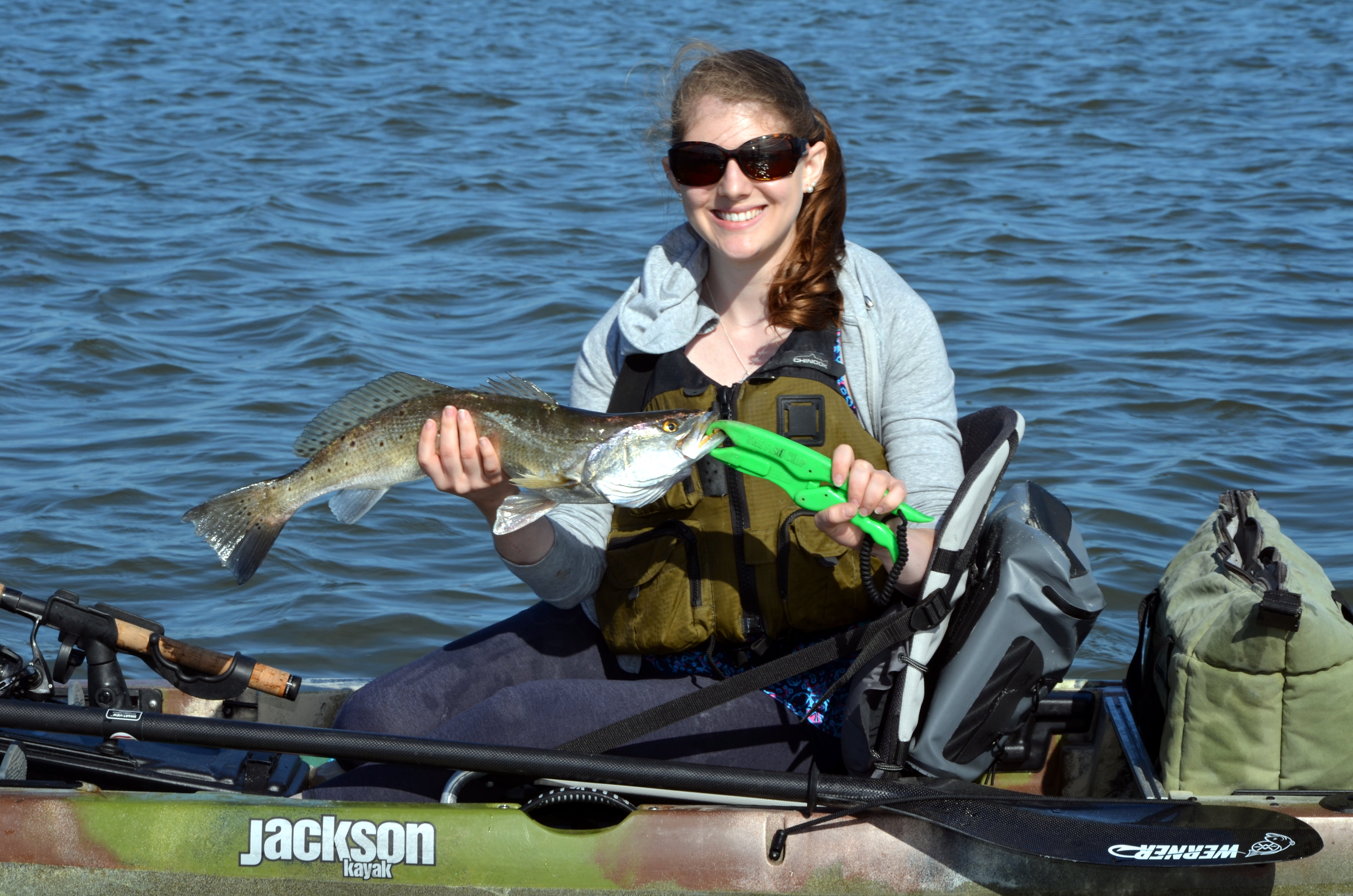
“Most people work baits way too fast,” Abruscato admonished. “They don’t have the patience to just let a bait sink or twitch. Work the bait as slowly as possible. Not only do trout slow down, but their prey also slows down. In the winter, a lure won’t look natural if anglers work it too fast. Someone who gets the right tempo can put a lot of good fish in the boat in the right spot during the winter.”
If artificial baits don’t work, offer specks real meat. Trout love to eat mullets about three to six inches long or pogies, but a monster speck can easily swallow a 12-inch fish. Like everything else in the winter, fish live baits with extreme patience.
Sweeten a circle hook with a live pogie or small mullet. Drop it into a deep hole and leave it there. The natural movement of the baitfish swimming around should tempt any trout or redfish in the area. If nothing bites after a while, drag it a few feet. Even a slight change could make a huge difference.
For more dynamic live-bait fishing, tip a jighead with a bull minnow hooked through the eyes or lips. Slowly drag it along the bottom. Pause periodically. The natural frantic wiggling of the minnow provides enough enticement for any predatory fish. Even the most lethargic cold, hungry trout can’t resist a squirming minnow.
Fishing on icy days requires extreme patience, but in the right place, any bite could mean the trout of a lifetime.
**********
An avid sportsman, Felsher is professional writer, photographer and radio show host who has written thousands of articles for many publications. He’s always looking for ideas or outdoors adventures that will make good stories. Contact Felsh at [email protected] or through Facebook. He also hosts an outdoors tips show for WAVH FM Talk 106.5 radio station in Mobile.