
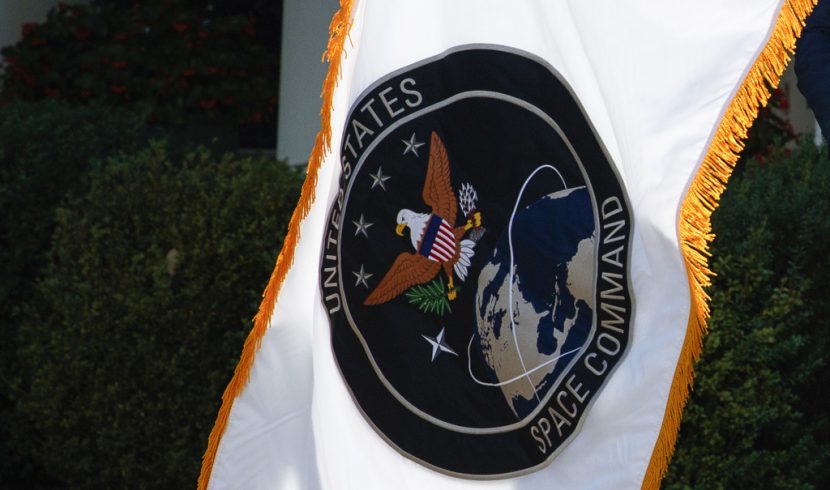
Make no mistake: President Donald Trump made the right call this week when he announced that SPACECOM will be based at Redstone Arsenal in Huntsville. In doing so, he ended a long and misguided delay in permanently basing a combatant command that is critical to U.S. national security.
I was serving as chief of staff for former coach, now-Senator, and future-governor Tommy Tuberville when the call from the Secretary of the Air Force came announcing Huntsville as the “preferred location.”
From the start, it was clear the decision was based on an objective evaluation of mission, infrastructure, community, and cost. Huntsville always scored best.
When that selection process was challenged by politicos afflicted with an ailment that we in the Tuberville office came to call “sore loser syndrome,” the professional investigators stepped in. In each instance, reports from the independent Inspector General and the Government Accountability Office confirmed the sanctity of the process and the reasonableness of the result.
Frankly, they didn’t tell us much we didn’t already know.
President Joe Biden later rejected the Air Force’s decision, a move motivated by political winds that, at that moment, were driven at least in part by abortion policy. This week, Trump simply corrected a process that others distorted. In the end, the delay has been costly – China doesn’t play these games – but at least it appears to have been made right.
Chairman Mike Rogers, R-Saks, Tuberville, Sen. Katie Britt, Rep. Dale Strong, R-Huntsville, Rep. Aderholt, R-Haleyville, and their staffs deserve credit for holding the line and using the legislative tools at their disposal to create the opportunity for Trump to make this decision. Absent their willingness to stand in the breach, this issue would have been dead long ago. Others deserving credit: Mayor Tommy Battle, the Chamber of Commerce, and many on the ground in Huntsville deserve praise for building a strong case for the hometown team. Some of the work was done publicly, but like most productive things in politics, more took place behind the scenes.
To be clear, there’s still work to do. The State of Colorado has signaled it may file suit, though the legal basis of its claim is unclear. Alabama’s capable Attorney General (and U.S. Senate Candidate) Steve Marshall tells me he is confident in Alabama’s position.
Then there is the issue of moving things: dirt, bricks, equipment, and people. Though a money-saver in the long run, transitioning the command does come with a cost—somewhere in the neighborhood of $1.5 billion. Although those funds aren’t specifically budgeted, there are options that include repurposing existing dollars, building room in the budget in the next fiscal year, or seeking funds in a supplemental spending package. The Alabama congressional delegation is well positioned on the relevant committees to influence that process. It’ll be important to move swiftly.
Now that it’s coming, it’s time to get smart on the lingo. A layman’s guide: Space Force — led from the Pentagon — organizes, trains, and equips. SPACECOM — now coming to Huntsville — takes the fight to the bad guys in space. What that means exactly is not something to get into here but, suffice it to say, the days are over where we pretend that space is a domain reserved for science and immune from conflict. The next big war starts there, and the United States must win it. That’s SPACECOM’s job.
A lot will be made of the local economic impact, and rightfully so. A lot of the direct jobs will be filled by the joint force in military uniforms. But many of those so-called indirect employees will be hired into technology firms, national and local, that will need a Huntsville presence to support the work of SPACECOM. It’s a huge opportunity.
Here’s the thing: the government can’t do this alone. Not by a long shot. Though etched in the minds of those who love “The Right Stuff” and “Apollo 13,” the days of heroic government engineers clad in white, short-sleeved shirts are gone. Today, American competitiveness in space is reliant on the capabilities of a talented, highly-trained private tech sector.
Think hoodies more than skinny black ties; A.I. more than slide rule.
But SPACECOM isn’t the only shiny object in Huntsville catching the attention of a defense tech sector increasingly backed by venture capital. Other Washington-based decisions are aligning to create a generational opportunity for space-related tech and innovation in the area.
Just a few:
1 –The massive reconciliation bill passed by Congress in July set aside nearly $10 billion for NASA’s Artemis program to return to the moon and beyond. Of that, $4.1 billion is earmarked for the Space Launch System that has huge implications for the North Alabama area. It was only earlier this year that DOGE’s cost-cutting crusade, the latest budget request, and Musk-inspired personnel choices at NASA had analysts forecasting the end of the program. Now, missions 4 and 5 seem likely to be important milestones in a new space race with China.
2- A significant share of the nearly $25 billion down-payment for the Golden Dome for America is expected to flow through North Alabama. The reality is that foreign adversaries are increasingly capable of striking U.S. territories with ballistic missiles and hypersonic weapons. If that doesn’t make you lose sleep at night, it probably should. Though a massive technological challenge, a reliable multi-layered shield that renders such weapons moot significantly shifts the balance of future geopolitical power. Specific details on the so-called “system of systems” are forthcoming, but it’s telling and fitting that the well-attended, industry-friendly national kickoff to the program took place at the Von Braun Center in Huntsville.
3 – Though bigger than Huntsville’s research and development community, much-needed acquisition reform at the Pentagon is likely coming and will impact those close to home. Defense Secretary Pete Hegseth recently scuttled the Joint Capabilities Integration and Development System that unsatisfactorily set acquisition requirements and evaluation criteria for defense programs. On a larger scale, changes driven by House Chairmen Rogers of Alabama and Senate Chairman Roger Wicker of Mississippi stand to reshape the way the Pentagon supports innovation and buys defense technology. The specifics remain to be worked out as the House and Senate are taking up parallel versions of the annual defense bill this month, but any solution that eradicates the dreaded “valley of death” that kills innovators during the lengthy period between research and fielding will be welcomed.
Speed and agility are key as new space technology must be brought online faster to keep pace with adversaries that, in some areas, are beating us.
When David Lasseter, former Deputy Assistant Secretary of Defense and now my business partner at Horizons Global Solutions, recently met with senior Department of Defense space leadership, the message was clear: “We’re looking outside the box, and the days of ‘business-as-usual’ contracting are over. Deliver on time, or we’ll find someone else.”
That’s music to the ears of agile, innovative firms that have something important to offer. Given recent decisions in Washington aimed at making America more competitive in space, it seems more likely they’ll look to Huntsville to offer it.
Stephen E. Boyd is a partner at Horizons Global Solutions. Previously, he served as a Senate-confirmed Assistant Attorney General at the U.S. Department of Justice, Chief of Staff for Alabama members in both the U.S. Senate and U.S. House of Representatives, and as a Communications Director of the Senate Committee on the Judiciary. He resides in the Washington, D.C. area.