
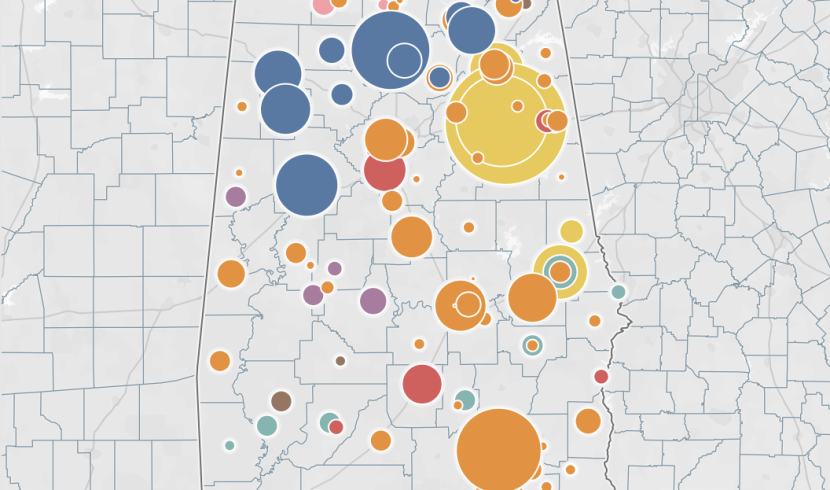
WASHINGTON — Alabama could receive more than $360 million earmarked for projects across the state in spending bills that are moving through Congress.
The state’s congressional delegation is working to secure funding for about 174 projects in Alabama, including a health clinic in Fayette, infrastructure for AI research at the University of Alabama in Huntsville and biotechnology research equipment for the Southern Research Institute, according to congressional records.
The fate of the earmarked funding for the next fiscal year is still uncertain, though, as final spending bills have yet to be taken up for a vote on the House or Senate floor this year. The new fiscal year starts Oct.1. No earmarks were included in the fiscal year 2025 continuing resolution.
Each dot on the map represents a project that could receive earmarked funding. Zoom in for a clearer look at areas with multiple projects. Click a lawmaker’s name on the side panel to see the projects each person secured money for in the bills. Click the name again to go back to the original map. Hover over a dot to see the recipient name and amount. The map is best viewed on a desktop screen. Click here if you are unable to see the map.

Topping the list
The most expensive project allocated in Alabama is $32 million to fund a warehouse at Anniston Army Depot, followed by $18 million for an access control point also at Anniston. Rep. Mike Rogers, R-Saks, chairman of the Armed Services Committee, secured the funding for those two projects in the military construction and veterans affairs spending bill.
The next most expensive project is $15.68 million for road improvements on Boll Weevil Circle in Enterprise. Sen. Katie Britt, R-Ala., a native of Enterprise, secured the funding for the project.
Other large infrastructure projects earmarked to receive money include $13.5 million for the St. Bernard Bridge in Cullman, $8.5 million for the Tuscaloosa Airport and $7 million for the Waterloo Bridge in Lauderdale County.
Also topping the list for Alabama’s earmarks include $10 million for AI research infrastructure at the University of Alabama in Huntsville and $6.5 million each for a manufacturing center at Jacksonville State University and Auburn University.
Who is bringing in the money?
As a member of the Senate Appropriations Committee, Britt secured the most money for projects within Alabama’s delegation, totaling more than $131 million. That represents about a third of Alabama’s earmarks that made it into the spending bills. About $20 million of Britt’s total comes from requests shared with Sen. Tommy Tuberville.
On the House side, Rogers led the pack for securing the most money, bringing in more than $82 million, most of that for the Anniston Army Depot projects. Rep. Robert Aderholt, R-Haleyville, an appropriations cardinal, secured about $56 million. Joining the appropriations committee this year, Rep. Dale Strong, R-Huntsville, had a total of $35 million in earmarks in the spending bills. Rep. Gary Palmer, R-Birmingham, is the only member of the delegation who did not submit any earmark requests for fiscal year 2026.
Fresham Democrat Rep. Shomari Figures secured about $15 million in earmarks, and Rep. Terri Sewell, D-Birmingham, has about $9.5 million earmarked for projects in the spending bills.

Where is the money going?
Mobile is set to be the home of nine projects funded through earmarks. That’s the largest number of projects in the state, totaling about $14 million. Four projects are based at the Port of Mobile, including $2 million for the modernization of the McDuffie Coal Terminal and $500,000 for a study of sediment management in Mobile Harbor.
Huntsville is the city set to receive the largest amount of money in the state, with seven projects totaling nearly $32 million. Fourteen million of that total is set to go toward the University of Alabama in Huntsville. Montgomery could receive about $12 million for six projects, not including funds for Maxwell Air Force Base.
Several hospitals and universities will also receive funds for health care equipment, ranging from $1.8 million for nursing education equipment at the University of West Alabama to $2.5 million for Cullman Regional Medical Center for a surgical robot and about $1.7 million toward a CT scanner at UAB St. Vincent’s Blount hospital in Oneonta.
Multiple cities requested and are expected to receive funds to improve their water systems and wastewater infrastructure. The city of Samson will receive $2.2 million for improvements, Fyffe will receive $1.68 million for sewer system improvements and Greenville will get $3.5 million for water supply augmentation.
Fourteen sheriff’s offices could receive funds for equipment and technology upgrades or patrol vehicles/boats or mobile commands. Additionally, 11 police departments could get funding for upgrades.
Six fire departments are also set to receive money, including a new fire engine for the Piedmont Fire Department and a new ladder truck for Heflin.
The $362 million earmarked for Alabama in the appropriations bills represents only a part of the total amount sought by Alabama’s federal delegation. In total, the state’s eight lawmakers who requested funds sought about $1.5 billion for entities across the state and congressional districts.
This year, House members were limited to submitting 15 funding requests. Senators are limited in the number of requests they can submit per subcommittee, with numbers varying for each one.
Not all subcommittees received requests for congressionally directed spending.
The earmarked spending can not go toward for-profit entities. The requests are required to be for specific projects in specific locations in a state or district, according to congressional guidance.
What’s next
When members return from the August recess on Tuesday, they will have less than a month to agree on a funding deal to avert a government shutdown on Oct. 1. Lawmakers are expected to work on a stopgap funding bill as they try to address a new budget for fiscal year 2026.
The House has passed two spending bills on the floor this year. The two bills fund military construction and veterans affairs, and defense. The Senate has passed the agriculture, legislative branch and military construction spending bills.
Multiple spending bills have yet to be voted on in the full appropriations committees in the House or Senate, a necessary step before the full chambers vote on the bills. The House Appropriations Subcommittee on Labor, Health and Human Services and Education will markup its spending bill Tuesday. Aderholt chairs it.
To view all the earmarks included in the spending bills, search the table below.
Alabama Daily News’ Trisha Powell Crain contributed to this report.
This story and graphics were updated to correct and update information provided by U.S. Senate and House agencies and correct some of the lawmakers’ names attached to proposed projects.