
At least two Alabama cities and a school system are preparing to sue the state over its distribution of online sales tax revenue, saying their residents pay more in taxes than the areas receive in return.
If successful, the yet-to-be-filed suit could change the distribution of the growing revenue fund for cities and counties across Alabama, and the state’s education and General Fund budgets.
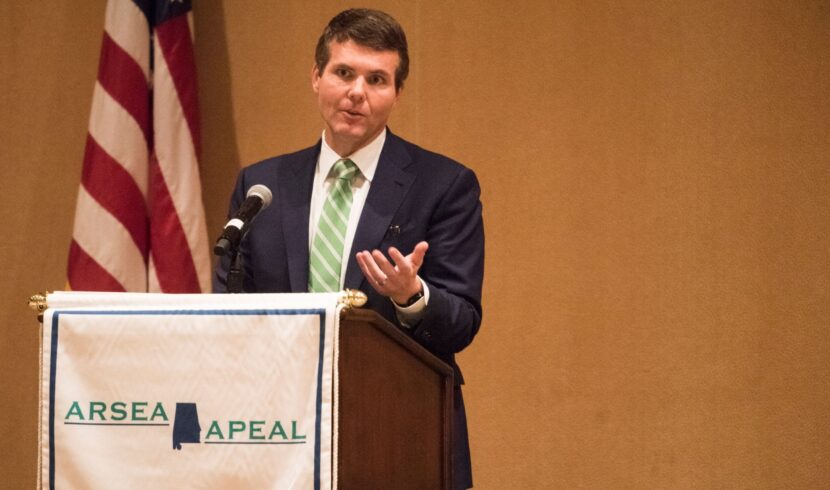
“It is common sense, Tuscaloosa should keep what it earns and our small businesses should have the same advantages as out-of-state corporations,” Mayor Walt Maddox said in a statement to Alabama Daily News. “This is why we intend to file a lawsuit to address the long-standing concerns of Alabama’s Simplified Sellers Use Tax.”
The Tuscaloosa City Council recently voted in favor of a lawsuit. So did the city’s school system. And the Mountain Brook City Council voted this week to join it.
The 8% sales tax on purchases made online has been a requirement for about six years. Complaints about the revenue distribution and lower tax rate than brick-and-mortar store sales are almost as old.
“If common sense prevails, our small businesses win which will only strengthen our schools, public safety and infrastructure,” Maddox said. “This is not a step we take lightly, but feel is necessary to ensure that Tuscaloosa’s schools, community and small businesses are treated the same as corporations in California, New York and other states.”
The issue
The 8% tax on online purchases began in 2016 and became a requirement in 2019. Fifty percent of online sales tax revenue collected goes to the state where it is further split, 75% to the state General Fund and 25% to the Education Trust Fund. The other half is split among local governments, 40% to counties on a population basis and 60% to municipalities on a population basis.
Meanwhile, all of the state’s 4% sales tax collected on in-store purchases goes to the state’s Education Trust Fund, which supports K-12, community colleges and universities in the state. And cities and counties have the option of local taxes on brick-and-mortar purchases. Tuscaloosa, for example, has a 3% sales tax, and the county has a separate 3%. So, a total tax of 10% is added to in-store purchases there.
Tuscaloosa and others argue they’re losing out because their populations do a significant amount of online shopping and too much of their tax dollars are going elsewhere. Returning more tax dollars to where the purchases originated would be a more equitable system, cities argue.
Complaints about the SSUT structure aren’t new, but their stakes are growing. The SSUT was worth a total of $851.1 million in 2024, up from $386.3 million in fiscal 2020, according to the Alabama Department of Revenue.
“Our residents are already paying this tax, and yet much of it never makes it back to support the services they rely on,” Mountain Brook Mayor Stewart Welch said in a written statement. “This is about fairness. Cities like Mountain Brook should receive a more equitable portion of the revenue generated by their own citizens.”
A 2023 report from the Public Affairs Research Council of Alabama supports the cities’ argument and said school systems, large cities and counties, and brick-and-mortar stores may be losing out on the current structure, compared to other distribution options.
‘There will be a loser’
House General Fund budget committee Chairman Rex Reynolds, R-Huntsville, said some lawmakers met with city mayors during the 2025 session and their focus was returning revenue to the ZIP code from which it originated. He said he understands mayors’ concerns.
Changing the current 8% distribution means someone in the equation would get less, whether its other cities, counties or the state.
The SSUT has been a growing revenue source for the General Fund and was especially helpful during the COVID-19 pandemic.
Last year, the tax was worth $316.1 million to the General Fund, an increase over the previous year of more than 14%. The General Fund’s total revenues grew by 7%.
Sen. Greg Albritton, chairman of the Senate General Fund budget committee, said the SSUT revenue distribution plan was decided a decade ago in a laborious negotiation process among all parties. Attempts to change it now are “another money grab on the part of municipalities.”
Albritton, R-Range, compared it to a recent dispute in Baldwin County where city school systems argue they should receive part of the countywide sales tax to support education. He represents part of Baldwin County.
“Cities make a deal and then they get dissatisfied with it and want a redo,” Albritton said. “Meanwhile, counties and state and other government entities are too busy just trying to make ends meet and meet the demands that are there. Yet, cities want everything.”
The online sales tax could be raised to direct additional funding to municipalities. But that’s been tried in recent sessions and failed. And it’s especially unlikely in next year’s legislative session that will end about a month before the GOP primary election.
“No one wants to raise taxes,” Albritton said. “And we’re cutting taxes in the (Education Trust Fund.)”
One percentage point will come off the state’s sales tax on groceries in September.
“If we can afford to do that, why can’t the cities figure out a way to watch their spending?
“… The cities have a spending problem.”
If cities do get more as a result of a lawsuit, someone will get less, Albritton said.
“There will certainly be a loser somewhere,” he said.
Past attempts at change
In the 2024 session, an effort to increase the sales tax on online purchases was approved in the House education committee but died in the House without a vote after opposition was raised. Critics, including some Republicans, called it a tax hike and questioned why a large portion of the new proposed revenue was dedicated toward the state’s largest cities. The bill was amended to include schools but still stalled.
This year, Rep. Chris England, D-Tuscaloosa, proposed to increase the online sales tax by 1.25% and dedicate the revenue to public schools. It did not get a committee vote. And Rep. James Lomax, R-Huntsville, filed House Bill 364 to take local deliveries out of the SSUT system and apply the local and state sales tax rates to them. It didn’t get a committee vote either.
Statewide interest
Though not filed yet, the threatened lawsuit has the attention of municipal leaders across the state. The Alabama Big Ten Mayors, a group of the state’s largest city leaders, put out a statement in support of change.
“Between these lawsuits and numerous legislative efforts to address our state’s unfair online sales tax structure, it’s clear that there is a growing consensus to address SSUT,” the mayors said. “Its current structure is a problem for Alabama – it’s bad for municipalities, bad for schools, and bad for small businesses. It’s time to fix it.”
The Alabama League of Municipalities said the lawsuit would impact the state’s 465 towns and cities.
“Throughout the last few legislative sessions, the league has voiced its support of alternative distribution methods for the collection of sales taxes from online transactions that more accurately reflect the consumers’ buying practices,” Executive Director Greg Cochran told ADN. “We realize the complexity of this issue and remain in conformity with the federal guidelines of how the sales taxes on online transactions may be implemented by states and local governments.
“To complicate matters, more businesses within Alabama are establishing online retail platforms which circumvent local nexus laws and allow for them to collect and remit sales taxes through the SSUT portal. Additionally, we have online delivery platforms acting as middlemen in picking up goods from Alabama businesses and delivering these goods to Alabama citizens, again, circumventing local sales tax laws.”
Whatever happens with the proposed lawsuit, the SSUT issue isn’t likely to go away soon.
“We’ve watched this imbalance for years while continuing to invest in public safety, infrastructure, and quality of life. Joining this lawsuit is a necessary step to advocate for the fiscal future of our city and ensure our ability to serve the community well,” Mountain Brook City Council President Virginia Smith said.