
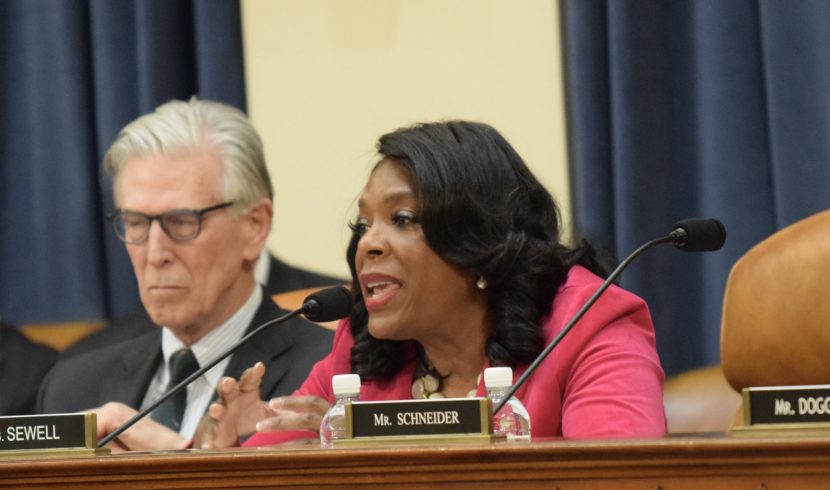
WASHINGTON — U.S. Rep. Terri Sewell, D-Birmingham, is leading bipartisan legislation to expand medical residency positions nationwide to address the physician shortage.
Sewell, joined by Republican Rep. Brian Fitzpatrick of Pennsylvania, reintroduced recently the Resident Physician Shortage Reduction Act to add 14,000 Medicare-supported residency slots gradually over the next seven years.
The congresswoman said the “commonsense bill” will help train the next generation of doctors to meet the growing demand and increase access to healthcare.
“Our nation’s doctor shortage threatens to make it harder for millions of Americans to access the lifesaving care they depend on,” Sewell said in a statement. “The situation is especially dire for rural communities like the ones I represent.”
A cost estimate for the proposal isn’t available.
Alabama needs an additional 263 primary care doctors in 55 cities and towns to eliminate the current primary care physician shortage in the state, according to data from the Alabama Office of Healthcare Workforce. The doctor shortage continues to plague communities as doctors retire, the United States’ population ages and rural areas struggle to attract physicians.
The state is not alone in facing this shortage. The United States could have a shortage of up to 86,000 doctors by 2036, according to the Association of American Medical Colleges. The organization supports the bill.
The legislation aims to add 2,000 residency positions every year for seven years to reach the goal of 14,000 new positions to train doctors. The bill designates that the slots should be distributed across hospitals, with at least 10% of them designated for rural hospitals, hospitals in states with new medical schools, hospitals that serve areas designated as health professional shortage areas, and those that are training more residents than their Medicare-funded residency slots cap.
The American Medical Association also applauded the lawmakers for introducing the legislation.
“As more Americans become eligible for Medicare each year, the demand for physician care continues to rise,” Dr. Bruce A. Scott, AMA president, said in a statement.
“This bill—by expanding federal support for graduate medical education over the next seven years—represents a critical step toward ensuring patients nationwide have access to well-trained physicians in their communities.”
The bill would also codify the Rural Residency Planning and Development Program. It’s a federal grant program that provides funding to cover the initial costs of a residency program in rural areas.
“Reducing barriers to establishing residency programs will allow rural teaching hospitals to train more physicians,” Dr. Davis Skorton, president of AAMC, said in a statement. “Doctors who train in rural communities are more likely to practice in rural communities.”
In 2023, Alabama had 15 teaching hospitals and 895 Medicare-supported residency slots, according to data from AAMC.
The Alabama legislature has also taken steps to address the doctor shortage in the state. The Physician Workforce Act of 2023 provides limited and supervised training for individuals who were not accepted into a residency training program for the first year after medical school graduation.
Sewell’s legislation has been referred to the House Ways and Means and Energy and Commerce committees.