
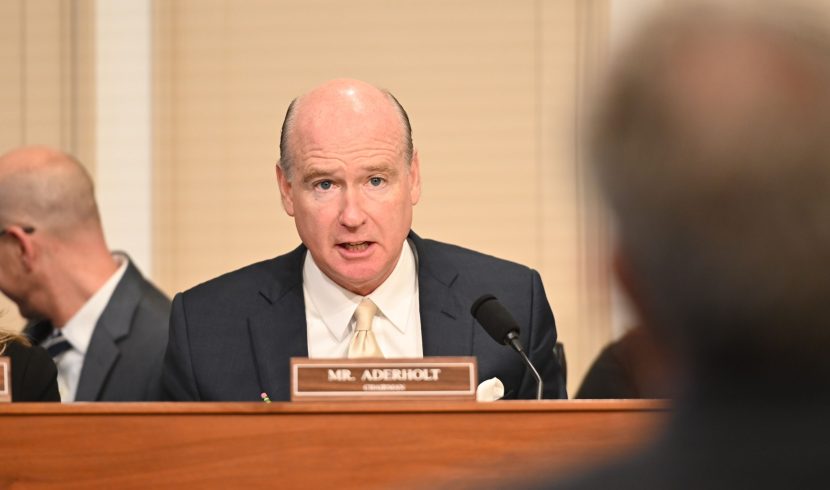
WASHINGTON — Congressman Robert Aderholt, R-Haleyville, defended Robert F. Kennedy Jr.’s plans to reshape the Department of Health and Human Services, which has resulted in thousands of fired workers, during the secretary’s first congressional appearance since he was confirmed.
Kennedy appeared before Aderholt’s Appropriations Subcommittee on Labor, Health and Human Services and Education on Wednesday, where he stood behind the health department’s fiscal year 2026 budget request. President Donald Trump’s budget proposal calls for about $94 billion for HHS, a reduction of more than $33 billion.
Aderholt said he looked “forward to learning more about the secretary’s plans to reform and reorganize HHS.”
Democrats on the committee slammed Kennedy for the cuts to the health department. The committee’s top Democrat, Rep. Rosa DeLauro, D-CT, said Kennedy’s plan for the department and shrinking the budget is “jeopardizing the health, safety and well-being of millions of American families.”
Aderholt applauded Kennedy’s focus on the movement to “Make America Healthy Again.” The initiative is set to get $500 million under the budget for the next fiscal year to address nutrition, healthy lifestyles and food and drug quality.
“Secretary Kennedy brings fresh eyes and a new perspective on public health and the state of the health care system in America – what is working and what is not working,” Aderholt said.
During his opening statement, Kennedy outlined some of his priorities for the department, including consolidating “programs to better tackle mental health and addiction” and cutting “experiments and research based on radical gender ideology.”
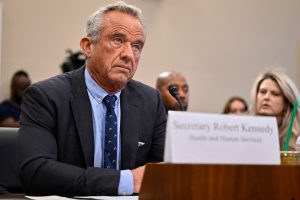
The secretary also said he would defend research at the National Institutes of Health, drawing pushback from Democrats.
“Excuse me, but that’s B.S.,” DeLauro said. “You are not rescaling NIH research. You are proposing to cut it by $20 billion.”
Aderholt highlighted health care challenges rural Alabama faces, including high rates of “heart disease, diabetes and cancer” and financially struggling rural hospitals. He said since 2010, Alabama has lost at least 14 hospitals.
“I look forward to working with Secretary Kennedy on these critical challenges facing rural America,” Aderholt said.
During his questioning, Aderholt said the area wage index is “one of the most significant challenges facing rural hospitals.” The Centers for Medicare and Medicaid Services uses the wage index to determine Medicare payment rates for hospitals based on regional differences in labor costs.
“This system has the perverse result of preventing low-wage hospitals, many of which are in rural areas and underserved communities from paying higher wages,” Aderholt said.
“By keeping these hospitals at the lower end of the wage spectrum, they cannot compete against higher-paying hospitals, increasing their risk of closure… and locking them into a downward spiral.”
Kennedy committed to looking at the issue and addressing the disparity with Congress.
Aderholt also focused some of his questioning on “upholding the sanctity of human life” and asked Kennedy how HHS is taking steps to protect the right to life.
“Under President Trump’s leadership, I have ended federal funding to… overseas programs that fund abortions or counsel abortions,” Kennedy said.
The health secretary also appeared in front of the Senate Health, Education, Labor and Pensions Committee Wednesday.