
MONTGOMERY, Ala. — Two of the nearly dozen bills targeting illegal immigration in Alabama filed this year were heard Wednesday in public hearings, both of which received considerable push back from a number of stakeholders, including advocacy groups, grocers and money service businesses.
Republican state leadership has named addressing illegal immigration as a top priority this year, filing four bills on the issue early in the legislative session, and five on a single day in late February. A number of state lawmakers traveled to the U.S.-Mexico border last year and shortly thereafter announced their intent to draft legislation to further curb illegal immigration.
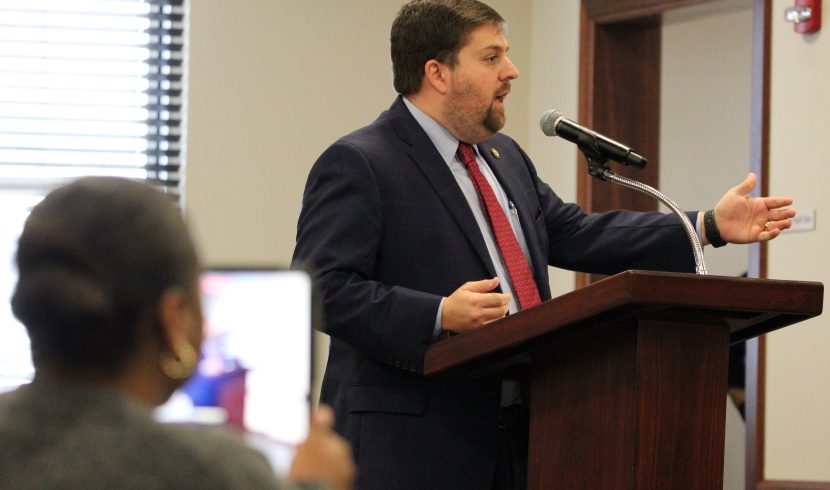
Among those bills is Senate Bill 53, carried by Sen. Wes Kitchens, R-Arab, which would both require law enforcement to determine citizenship of those arrested and taken to jails, as well as criminalize the act of transporting an undocumented immigrant into the state, a Class C felony under the bill, punishable with up to ten years in prison.
“If someone is brought into a jail, this provides (sheriffs) with really the process, the clarity that they need to determine immigration status,” Kitchens said, explaining his bill to the House Judiciary Committee. “It also creates the crime of human smuggling; if you knowingly bring someone who is illegal into the state of Alabama, it provides the penalties for that.”
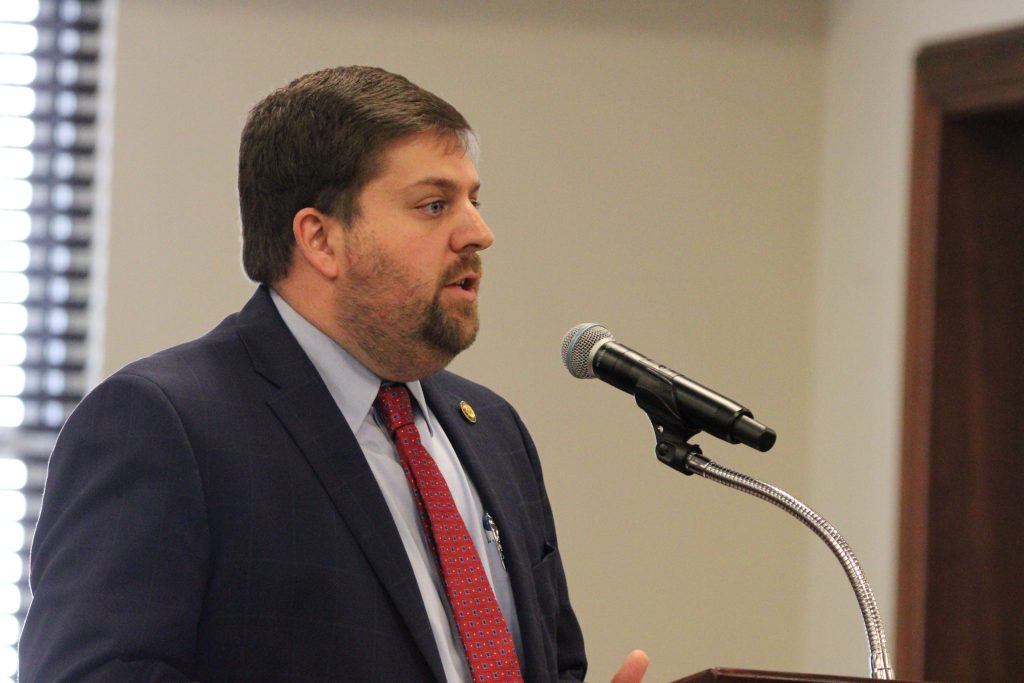
Kitchens noted that exemptions existed for the human smuggling provision of the bill that would exclude attorneys transporting clients and educators transporting students.
Birmingham resident Allison Hamilton, director of the Alabama Coalition for Immigrant Justice, spoke during the public hearing in opposition to the bill, particularly the human smuggling provision, noting that it could exacerbate family separation for undocumented immigrant parents with children born in the United States, and thereby, full U.S. citizens.
“These families right now are preparing for the imminent threats of deposition and separation, many of whom have U.S. citizen children,” Hamilton said. “These children cannot return to the home country with their parents if they’re deported, they need double nationality to do that.”
Alabama does not have an immigration court and Hamilton said that any family with undocumented immigrant parents seeking to avoid being separated from their child would be putting themselves at risk.
“So any family that is trying to make sure that their family is not separated in the case of deportation has to leave the state in order to make sure that happens,” she continued.
“This provision would make that impossible. Not only is it a huge risk for families to drive themselves across state lines, but also to criminalize anybody who just wants to be a good Samaritan and help… to make it a felony for someone to do that is extremely concerning to us.”
Two other speakers spoke out against the bill, including Shane Isner, pastor of First Christian Church in Montgomery, who called the bill “anti-Christian” for its provision criminalizing an Alabamian transporting an illegal immigrant to and from an out-of-state immigration court.
“Compassion is not a crime, compassion in the scripture of my religion is a command, it is a duty,” Isner said.
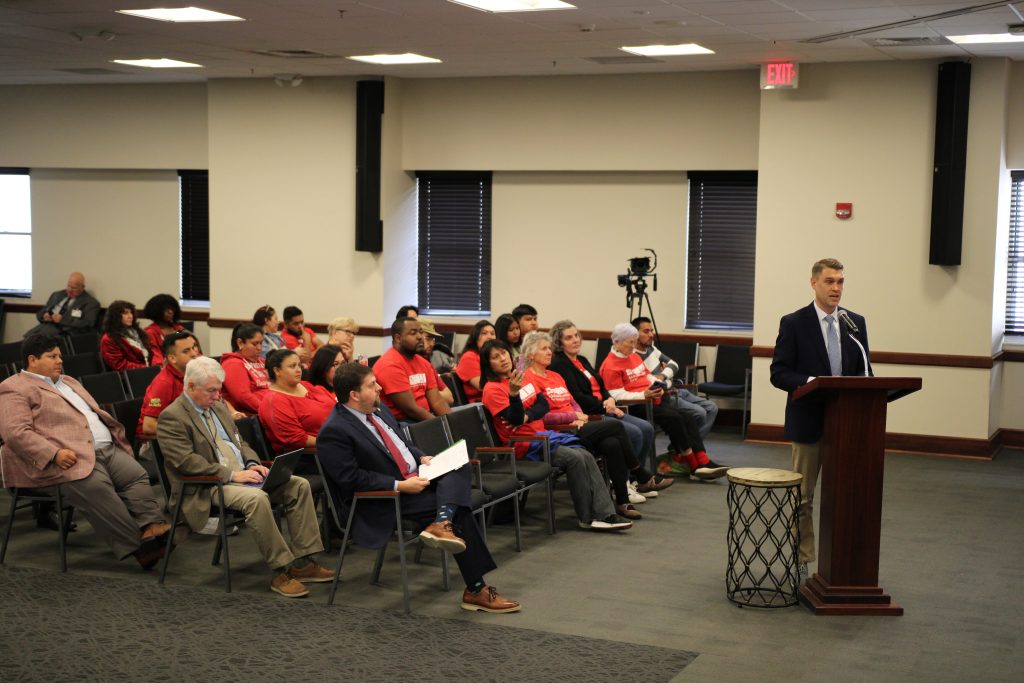
Sen. Tim Wadsworth, R-Arley, the vice chair of the committee and attorney, voiced concerns of his own about the bill, again on the human smuggling provision. He said that in most cases, attorneys do not personally transport their clients, and instead facilitate their transportation by others. Under the bill as written, Wadsworth noted, someone transporting an undocumented immigrant on behalf of an attorney would be committing a Class C felony.
“That concerns me,” Wadsworth said.
Kitchens said he would be open to expanding the exemptions in the bill to include the transportation of undocumented immigrants for legal purposes, though told Alabama Daily News that he would proceed on altering his bill with caution.
The bill is set to be voted on next week, said Rep. Jim Hill, R-Odenville, the chair of the committee.
Also on Wednesday, a public hearing was held for House Bill 297, sponsored by Rep. Jennifer Fidler, R-Silverhill, in the House Financial Services Committee.
Under HB297, a 4% fee would be imposed on all outgoing international electronic wire transfers, eligible to be recouped for up to $5,000 in tax credits for legal residents.
Revenue from the fee would be split between sheriff’s offices across the state and the municipality the transfer originated from. The bill does not apply to payment processors like PayPal or Venmo, as well as transfers originating from a banking institution.
The bill was designed, Fidler said, to offset the costs incurred by communities experiencing an influx of illegal immigration, which in some communities have exhausted resources at schools and have been a longstanding source of frustration for Alabama lawmakers and officials.
“Some of the issues were that we were seeing burdens in our communities that were caused by this influx, whether it be non-English language speaking students in our schools or issues with our law enforcement where they weren’t having enough money to house some of the immigrants that they had to deal with, or our hospitals, having uncompensated care costs,” Fidler said.
The bill saw a mix of both support and opposition during the public hearing, with those in favor of the proposal being Hoss Mack and Randy Hillman, executive director and legal consultant, respectively, for the Alabama Sheriffs Association.
Mack called the bill “important,” and said that in Baldwin County, he had seen hundreds of cases of wire transfers intended for funding illegal activity.
“We know from investigative facts that a lot of these cash transfers that are going out of the country are going to drug cartels, and they’re going out to illegal aliens activity crossing the border,” Mack said.
The bill saw strong opposition, however, from two individuals representing trade associations; Kathryn Tomasofsky, executive director of the Money Services Business Association, and Patrick McWhorter of the Alabama Grocers Association.
Tomasofsky argued that the bill would have unintended consequences of both burdening law-abiding citizens, who under the bill would have to retain receipts for international wire transfers and wait months before being reimbursed, and shifting the movement of money for illegal purposes to “underground channels,” and thereby, compromise law enforcement’s ability to monitor such transactions.
McWhorter said he was not outright opposed to the bill, but had concerns on its potential effect on Walmart’s customers, which McWhorter said 25% of whom have no bank relationship, and would thereby incur the 4% fee on all international wire transfers.
Rep. Chris Blackshear, R-Smiths Station, the chair of the committee, appeared to share in some of the concerns expressed during the hearing.
“We’re just striking across the board saying that one size fits all,” Blackshear said. “Some people are doing this illegally, but a lot of them aren’t. We’re going to tell them ‘sorry, you’re doing it the right way, but we need you to do a little bit more to get your money back at the end of the year.’”
The bill could receive a vote next week.