
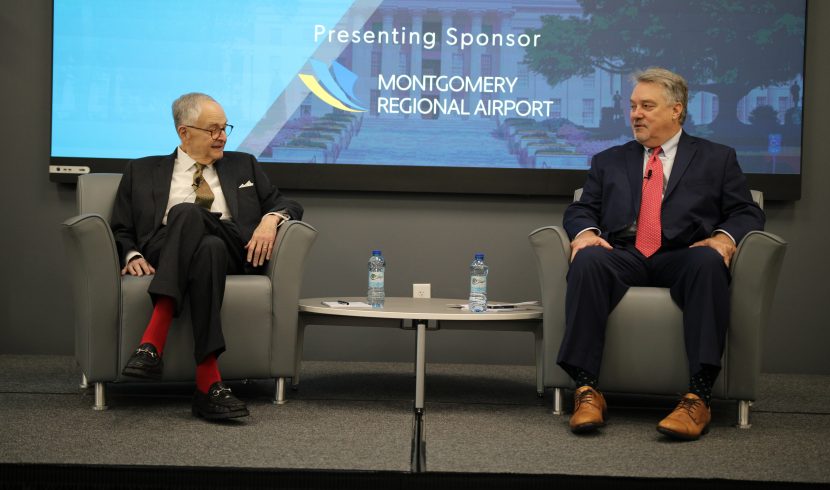
MONTGOMERY, Ala. — Alabama House Speaker Nathaniel Ledbetter, R-Rainsville, said Thursday a bill package designed to address crime in the state will be among the first matters addressed in the coming 2025 legislative session.
Speaking at a Montgomery Area Chamber of Commerce event, Ledbetter said the package of bills would “come out pretty quick” into the session, which begins Feb. 4, and that it would include measures to increase law enforcement hiring and retention and potentially expand crime suppression group programs throughout the state, among other things.
“The police officers have been beat to death; it’s time we started backing them and quit dogging them, and I think you’ll see from the state’s standpoint this year,” Ledbetter said to applause. “We’ll come out with a strong package that shows that we appreciate what they do for us.”
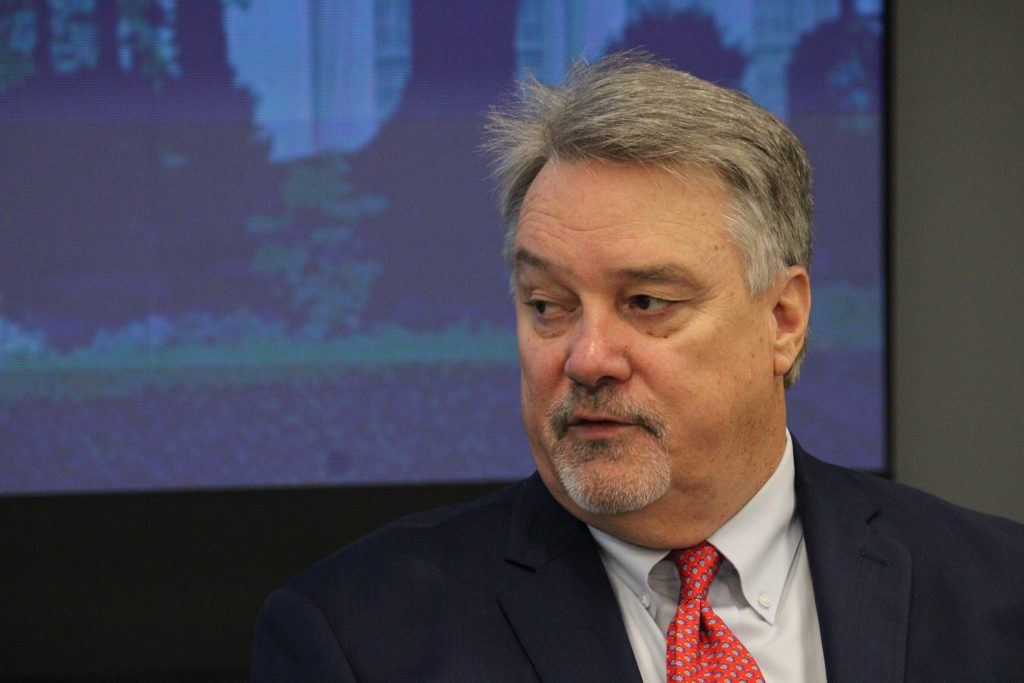
A number of Alabama’s larger cities are currently experiencing a shortage of police officers; Birmingham is more than 220 officers short as of last October, and Montgomery, around 200 officers. Coupled with rising instances of gun violence in some of the state’s metro areas, particularly Birmingham, calls to recruit more law enforcement have increased in recent years.
One measure state leaders have taken to address rising gun violence and short-staffed police departments is the creation of the Metro Area Crime Suppression Unit in Montgomery, a coalition of federal, state and local law enforcement officers. Making the unit permanent, and potentially expanding it to other cities, was another potential inclusion in the legislative package, Ledbetter said.
“That task force has done such a good job, I think we’re going to make it permanent, and not only will it be permanent here (in Montgomery), we can use it in Birmingham, Mobile, Huntsville, wherever,” he said. “We’ll have a group of (Alabama Law Enforcement Agency) officers that that’s their job.”
Ledbetter said that since its establishment in June of 2024, the Crime Suppression Unit in Montgomery has made nearly 1,900 contacts, during which they have recovered more than 35 stolen vehicles and made around 500 drug charges.
Ledbetter also floated the idea of banning trigger activators, also known as Glock switches, which are weapon modifications that allow a semi-automatic firearm to fire at rates similar to that of a fully automatic weapon. Rep. Phillip Ensler, D-Montgomery, sponsored a bill banning Glock switches last year that passed through the House but failed to make it through the Senate.
Ensler, who attended the chamber event, told Alabama Daily News that he had participated in talks with legislative leadership about bringing the bill back this year, and that it remained a high priority of his.
“It’s so important, and the main reason is that I have families in my district that have lost loved ones to gun violence where these Glock switches have been used,” Ensler told ADN. “So it’s not just crime numbers, it’s not just statistics, these are mothers that have come up to me at neighborhood meetings that know that they will never get their son or child back, but that they can prevent another loss of life.”
While Ensler will carry the bill in the House, Sen. Will Barfoot, R-Pike Road, will likely carry the bill in the Senate, Ledbetter said.
“I feel strongly we’ll get (the bill banning Glock switches) out this year, right?” Ledbetter asked Barfoot.
“Yes, sir,” Barfoot answered.
Barfoot is also expecting to carry a number of other bills in the legislative package, which Ledbetter told ADN would likely be around seven bills.
Among the other bills that will be filed by Barfoot as part of the package include requiring the Alabama Bureau of Pardons and Paroles manage juvenile electronic monitoring, a bill he’s currently drafting alongside Rep. Reed Ingram, R-Matthews.
Barfoot explained that while electronic monitoring of juveniles is already permitted by state law, it is sometimes underutilized due to smaller municipalities lacking the funds or technical capabilities to facilitate electronic monitoring. By shifting the management of electronic monitoring to ABPP, more juveniles facing criminal charges may be released from youth detention facilities.
Ledbetter told ADN that he, representatives from the governor’s office, members of law enforcement and other stakeholders have already had at least four meetings on developing the legislative package, and are planning to hold another meeting next week to finalize it.
“The crime in Alabama has become hurtful to our economy,” he told ADN. “It hurts our economy, it hurts our property sales, it’s just something that we’ve got to look at.”