
The state on Thursday sold $730 million in bonds to support a major, somewhat controversial highway project in west Alabama.
Alabama Daily News previously reported that revenue from the state’s 2019 gas tax increase will be used to repay the bonds funding the West Alabama Corridor.
“Today, the Alabama Highway Authority issued bonds at a par value of $730 million to support the planning, design, and construction of the West Alabama Corridor project. The term of the bonds is 20 years,” the Alabama Department of Finance told ADN on Thursday.
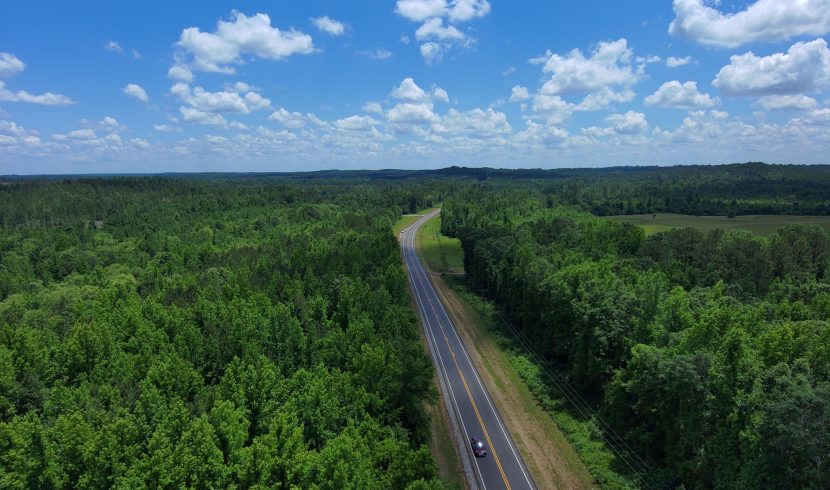
Proceeds from the issuance will fund the widening of the existing two-lane highway to a four-lane highway from Thomasville to Moundville, Alabama. This project will complete a roughly 200-mile four-lane corridor connecting Mobile and Tuscaloosa, finance said.
Some lawmakers have questioned why Alabama is using only state funds for the large project, rather than the usual 80/20 federal and state split used for most road projects. The project was announced by Gov. Kay Ivey in 2021 and is a priority for her and her administration. At least one lawmaker this week told ADN he thinks the project is being fast-tracked before the state’s next governor can undo it in a year.
The Alabama Department of Transportation has previously said that using state funds for the project frees up federal funds for other projects across the state.
Other state leaders have balked at committing so much of the gas tax revenue to debt services on one wholly state-funded project.
Lt. Gov. Will Ainsworth, who has previously questioned the project and called for the widening of I-65 through Alabama, posted X Thursday saying the project is “the biggest abuse of taxpayer funding in Alabama history.”
Spending $750 million state dollars on the West Alabama Corridor with ZERO federal match is the biggest abuse of taxpayer funding in Alabama history. ALDOT Director John Cooper should be embarrassed. When your local potholes, roads, and bridges can’t be repaired for lack of… https://t.co/qwY5kYjLh7
— Will Ainsworth (@willainsworthAL) December 11, 2025
Gina Maiola, Ivey’s spokesperson, responded to the post in a statement.
“Fortunately, the governor, Kay Ivey, determines the transportation priorities for our state,” Maiola said. “The Rebuild Alabama Act, made possible by Governor Ivey’s leadership, is intended to, in part, bring four-lane access where it is lacking. The West Alabama Corridor will do exactly that, providing real economic opportunity to rural Alabama and beyond. It is one of hundreds of Rebuild Alabama projects across all 67 counties.”
Passed in 2019 to improve road infrastructure around the state, the Rebuild Alabama Act raised the gas tax by 10 cents per gallon. Because it also allows for a 1-cent hike every two years, the increase is now up to 12 cents.
Total revenue collected has increased from about $203.8 million in 2020 to $405.8 million last year. The state receives 66.67% of the new revenue; counties get 25% and municipalities get 8.33%.
In 2025, the state had $173.9 million in gas tax revenue after meeting other infrastructure obligations outlined in the law.
The act limits how much of the state’s share can be pledged to debt services any year. It’s currently about $128 million. The Finance Department this week said after the West Alabama Corridor Bond sale, it expected more than half of the bonding capacity to still be available for other projects.
Thursday’s bond sale is more than the $509 million the state bonded for the construction of two men’s prisons, though it recently began the process of potentially selling more.
In 2020, the state bonded $1.25 billion to help fund capital improvement projects at schools and colleges.
Because the project is design-build, an updated estimated final price tag on the multi-part project isn’t available. In design-build contracts, a single entity performs both the design and construction under one agreement.
When first announced, cost estimates on the project were about $760 million. Later estimates put the cost at $800 million to $1.1 billion.
“This expansion advances one of the State’s primary transportation objectives: ensuring four-lane access to an interstate for counties currently lacking such access, thereby strengthening the State’s economic development efforts, and supporting infrastructure capacity necessary for growth,” finance’s Thursday statement said.