
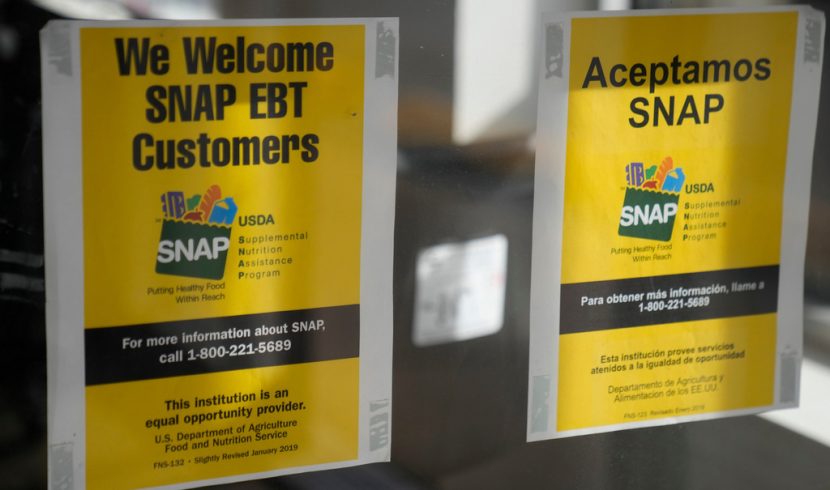
MONTGOMERY, Ala. – The Alabama Legislature’s Contract Review Committee on Thursday approved a more than $12 million contract for a company to provide “quality assurance” on a system that administers food assistance programs.
Funded in equal parts by the state and the U.S. government, the $12.1 million contract renewal deals with Alabama’s integrated eligibility system for the Supplemental Nutrition Assistance Program (SNAP) and Temporary Assistance for Needy Families (TANF) program.
New Jersey-based software company Tetrus Corporation’s one-year quality assurance contract renewal will begin on July 1. The contract ends on June 30, 2027.
The state previously selected Tetrus through a request for proposal process but has subsequently made sole source renewals with the company.
Representatives from the Alabama Department of Human Resources, which administers SNAP and similar programs, told committee members on Thursday that having a quality assurance program to oversee the new computer system is a federal requirement.
“This contract was mandated by the federal government for us to develop and implement our new SNAP system,” said Stan Landers, special assistant to the commissioner of DHR. “I say new, but it’s still used. We bought it used as well. We’re replacing the system that we bought used back in 1983 from the state of New Mexico… You can imagine what we’ve been dealing with because it costs so much to replace a system like that.”
Landers also said that DHR has been working with the Legislature for the last 15 years to set money aside for the implementation of the new system, which will allow lawmakers to pass more advanced bills to combat SNAP fraud.
A summary of the contract in the committee’s agenda also said that DHR does not have enough employees with the appropriate skills to perform the required quality assurance services.
House Speaker Pro Tem Chris Pringle, R-Mobile, brought up how much the state has already paid Tetrus and other corporations for quality assurance and the prevention of SNAP fraud in recent years. He asked if the state has seen any return on this investment.
Jennifer Bush, who works in legal for DHR, explained that one of the companies, Conduent, was in charge of creating and customizing the new computer system and that Tetrus has since been tasked with quality control.
“So we’re spending $12 million to ensure that the person we paid to write the program did it right?” Pringle asked.
“I’m just stunned. When you add it up… that’s a lot of money that we’re spending on SNAP money behind the scenes to ensure they’re properly administered,” he continued.
Bush reiterated that having a quality assurance contract is a federal requirement.
Landers later explained that a lot of the contracts Pringle listed had to do with mitigating fraud. He said that the state’s efforts to combat fraud related to food assistance have been mostly successful. He mentioned that fraud was more common in the recent past, with scammers using card skimmers and robocalls.
The contract renewal comes after lawmakers asked state officials earlier this year for their plan to lower the payment error rate within the SNAP program. Under the Trump administration’s One Big Beautiful Bill Act, the federal government can shift up to 15% of SNAP benefit costs to states, depending on how accurately they administer the program commonly referred to as food stamps.
In fiscal year 2024, Alabama’s payment error rate was 8.32%, placing it in the 10% cost-share bracket. Based on that rate and Alabama’s $1.77 billion in SNAP benefits paid out last year, the state would be responsible for about $177 million in additional costs in fiscal year 2028.
Under a separate change in the law, the federal government’s share of SNAP administrative costs will drop from 50% to 25% beginning in fiscal year 2027, meaning Alabama must cover an additional $39 million in administrative spending annually. That cost is coming regardless of what happens with the error rate.
ADHR Commissioner Nancy Buckner said the newest error rate is about 9%. About 740,000 Alabamians receive food assistance.
That cost-sharing will begin in 2028.