
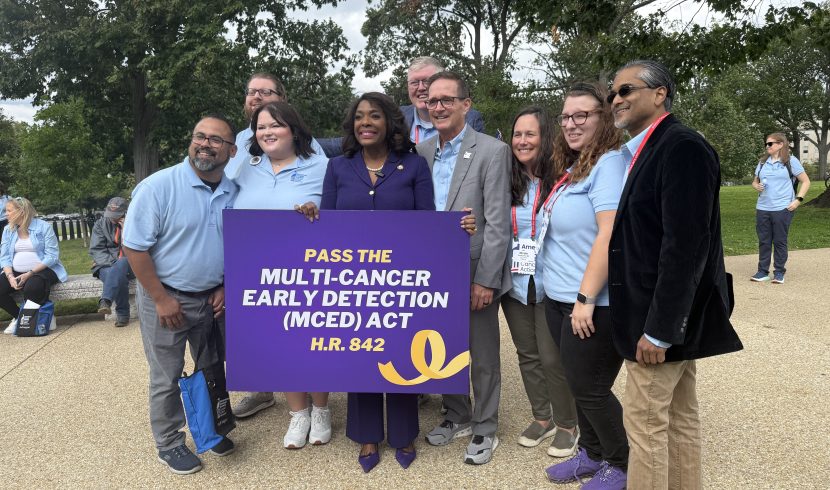
WASHINGTON — On her late mother’s birthday, Congresswoman Terri Sewell joined Alabamians and hundreds from across the country to advocate for cancer research and push for her cancer screening bill.
In the shadow of the U.S Capitol Tuesday, Sewell spoke on how she’s been personally touched by cancer, losing her mom to pancreatic cancer, only eight weeks after she was diagnosed in 2021.
“It was a devastating loss to my family,” Sewell, D-Birmingham, said at a rally of cancer prevention and research advocates. “In Congress, I have made it a mission to reduce the glaring racial disparities in this disease and to double down on our nation’s efforts to prevent, to screen, to treat and eventually find a cure for cancer.”
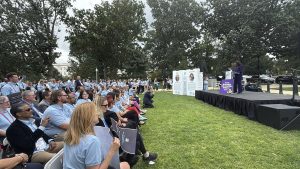
Sitting in the audience at the event were several Alabamians who traveled to the nation’s capital with the American Cancer Society Cancer Action Network to share their stories and argue for investments in cancer research.
House and Senate appropriators have rejected proposed Trump administration cuts to the National Institutes of Health and the National Cancer Institute. However, uncertainty over funding and grants still hangs over patients, doctors and researchers, including at research universities like the University of Alabama at Birmingham.
“If I submit a grant (to the National Cancer Institute) right now, in good times, there’s about a 90% chance it’s going to be rejected because it’s not good enough,” Dr. Ankur Saxena, a cancer researcher and associate professor, told Alabama Daily News.
“So once you cut dollars, it gets even harder and harder. So it’s 95-96% are rejected. So we put a lot of work into those grants. They’re great ideas, and we want to have an opportunity to have them funded to do the work we need to do.”
Saxena, part of the group from Alabama advocating for cancer research in DC, said a lab is similar to a small business in that it requires long-term planning to be successful. However, he said it becomes difficult to do that when there is an overall unpredictability surrounding funding.
“To have a small business means you have to be able to hire properly,” Saxena told ADN. “You have to be able to nurture people. That takes planning. You can’t just adjust every day to some new idea that comes through.”
On Wednesday, the House is set to advance a cancer-fighting initiative as the Ways and Means Committee will markup the Nancy Gardner Sewell Medicare Multi-Cancer Early Detection Screening Coverage Act. Rep. Jodey Arrington of Texas, the Republican sponsor, named the bill after Sewell’s mother.
The legislation, which was unanimously passed out of committee last year, would allow Medicare to cover access to blood tests that could screen for up to 40 cancers at once. It has significant bipartisan support with nearly 300 cosponsors in the House and more than 60 in the Senate.
“So much of the research that goes into a lot of these new technologies (is) funded by the American public, by NIH and National Science Foundation, and so I think it’s befitting that when these screening tests become FDA approved, it should immediately become covered by Medicare,” Sewell told ADN.
Advocates from Alabama spent much of their time in DC this week visiting with members of the congressional delegation, championing the need to invest in cancer research to help find cures and save lives. For Saxena, a pediatric cancer researcher, much of that focus is on kids.
“I would just ask people to think about the kids in your lives, your nephews, nieces, sons, daughters, and consider that let’s give them the best opportunity we can by helping them grow and be healthy and live productive lives,” he said.
Part of his advocacy is also aimed at boosting morale for researchers and scientists, especially young ones, who have become wary of entering or staying in the field in the face of uncertainty.
“These are people who are at the exciting beginning of what should be a momentous career where they make a big difference for people, and it’s really hard to do that right now when you see what’s happening,” Saxena told ADN. “So the hope is that we can make a bit of a difference here and get some progress.”