
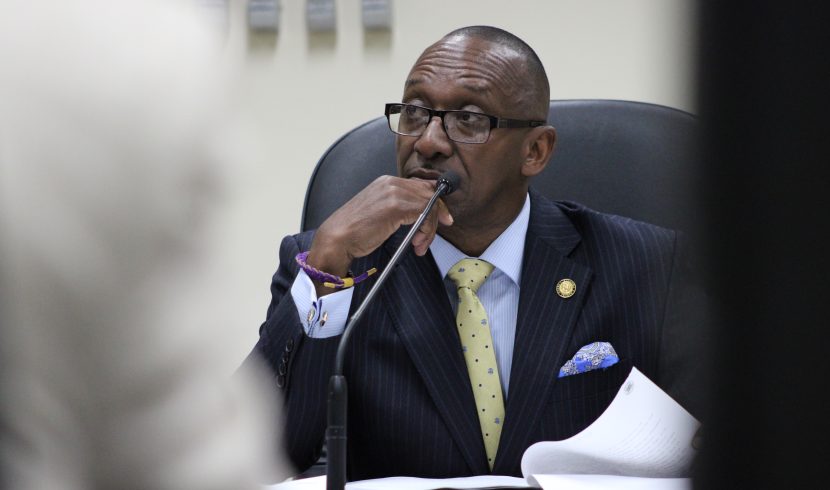
The Alabama Senate approved a bill on Tuesday afternoon to raise reimbursement rates that insurers must pay to ambulance services.
Advocates have said the legislation is vital to saving financially struggling and under-staffed EMS services in the state.
Inside Alabama Politics reported Tuesday that many of the largest and most influential business and insurance groups in the state are raising concerns about the number of health care-mandate bills in the Legislature recently. Their message is that mandates cost money, and those costs are passed on to Alabama employers and consumers.
Senate Bill 269 Sen. Bobby Singleton, D-Greensboro, would require health insurers to reimburse ambulance providers a set percentage of the federal Medicare rate and establish coverage when EMS provides care without transporting a patient to a hospital. This is known as “treat in place” coverage that allows EMS to address the medical issue on site and avoid what can be lengthy transport times to hospitals, freeing up the EMS staff for the next emergency. The bill also would prohibit “balance billing.” Ambulance providers could not charge an individual more than the in-network cost-sharing amount under an insurance contract.
Rep. Ed Oliver, R-Dadeville, is sponsoring a similar bill, House Bill 400, in that chamber.
During a public hearing in a House committee on Feb. 18, proponents of Oliver’s bill spoke about low pay for EMS staff and critically long response times to emergencies.
“This will help with our rural health care crisis,” Steven Wilson, director of operations for Haynes Ambulance Service based in Montgomery, told the committee at its Feb. 18 meeting. Some of the counties Haynes serves don’t have hospitals and ambulances are the primary emergency care providers.
“This bill will help by addressing the massive shortage of EMS personnel we have,” Wilson said. “We are grossly underpaid in EMS. Our providers out there don’t make competitive wages.”
Inside Alabama Politics reported insurers and business advocates including Blue Cross and Blue Shield of Alabama, the Business Council of Alabama, the Alabama Farmers Federation and the National Federation of Independent Business are pushing back on multiple mandate bills.
“Since 2024, at least thirty healthcare mandates – measures dictating coverages or reimbursement amounts or costs – have been introduced in the Alabama Legislature,” Blue Cross told Inside Alabama Politics. “Many of the proposed government mandates are sympathetic, and the people advocating for them make it difficult to say no.”
Mandate bills this year have ranged from requirements on breast cancer and colon cancer to raising reimbursements for vital ambulance services.
“… The problem with a government mandate is that every one of them adds costs – and those costs have to be paid by the Alabama employers and families that pay health insurance premiums. While some may add less costs than others, the cumulative impact is significant, particularly in an environment where the price of services is increasing every year,” BCBS said.
Some lawmakers raised those points on the Senate floor Tuesday.
“With the ambulance issues, we’re cost-shifting more of the cost to a smaller percentage of the people, we’re shifting it to the people who are trying to pay for everyone else,” Sen. Larry Stutts, R-Tuscumbia, said on the Senate floor. “I understand that ambulance services operate at a loss a lot of times, they struggle to make ends meet, they’re needed in rural areas.”
Singleton said on the Senate floor ambulance services are a needed part of health care and noted that several insurers don’t want to have to provide the coverage.
His bill passed the Senate 26-2 — Stutts and Sen. Chris Elliott, R-Josephine voted no — and it now moves to the House.
There is a significant difference between Singleton’s and Oliver’s versions of the legislation.
While the Oliver’s House version exempts the state’s employee and educator health insurance programs from the mandate, Singleton’s includes them. A fiscal note on that bill says it would increase costs for the Public Education Employees’ Health Insurance Board by about $1.6 million per year and the State Employees’ Insurance Board by about $640,000.
Singleton told IAP he’s not interested in exempting the state health plans from the coverage mandate because teachers and state employees need ambulance care too and their plans should help pay for it.
“I’m trying to save lives, whether it’s rural or urban, it is a matter of saving lives because these ambulances are going out of business,” Singleton said.