
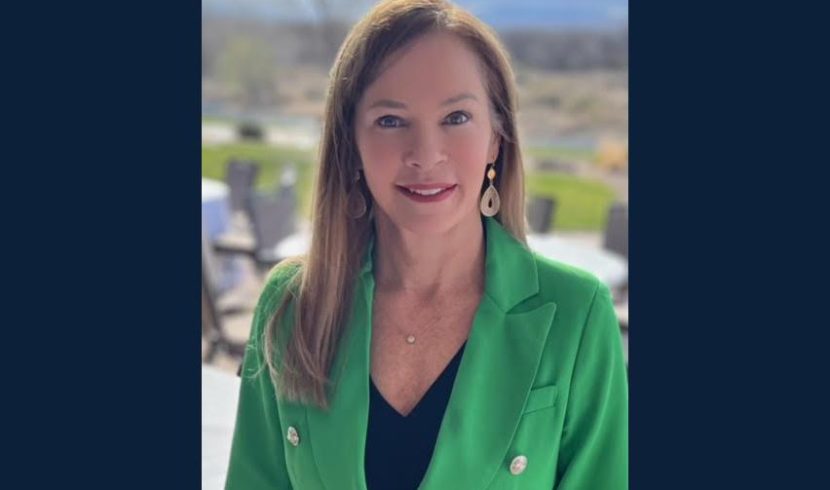
BIRMINGHAM, Ala. — Tracye Strichik became the new executive director of VOICES for Alabama’s Children Aug. 1, bringing decades of education experience – from the classroom to state-level policy – to the role.
Strichik says she wants VOICES to be a bridge between policymakers and realities faced by children and their families. She describes the nonprofit’s mission as advocating for the “whole child” – from health and safety to education and out-of-school time – and using the state’s Kids Count Data Book to help shape policy that reflects what children and families truly need.
A Prattville native, Strichik attended Birmingham-Southern College on a ballet scholarship before transferring to Auburn University after a knee injury. She later earned her doctorate and built a career that spans public schools, higher education, state agencies and nonprofit leadership.
She began by teaching kindergarten, first grade, third grade and gifted classes before moving into early childhood program leadership at Auburn University at Montgomery. From there, she joined the Alabama Department of Early Childhood Education, where she helped lead the state’s pre-K expansion from 200 to 800 classrooms.
Strichik later worked on the Literacy Act at the Alabama State Department of Education and led the Alabama Expanded Learning Alliance, which focuses on after-school and summer learning. That role brought her into regular contact with VOICES, which served as the Alliance’s fiscal sponsor – a connection she says helped lay the groundwork for her new position.
She spoke with Alabama Daily News about her path, the organization’s mission and how VOICES is responding to challenges that impact Alabama’s kids.
What follows is an edited version of ADN’s interview with Strichik.
Q: You’re most recently a board member of Autauga County Schools, but you have years of education experience beyond that. Can you talk about your professional path that led you to VOICES?
“I started off teaching kindergarten — kindergarten is the best — for six years, and I taught first grade and third grade and gifted. I never wanted to be a school administrator. I always wanted to do policy… I was that person in school that all the teachers came to saying, ‘Can you believe this?’ And I was trying to fix it all the time. What does the data show and how can we fix it?
“The Department of Early Childhood… said, ‘We need someone in the Montgomery area that has public school experience, higher ed and private child care.’ And I had all three. We only had 10 people in the office and 200 classrooms… I was there when we started growing the program… We grew to about 800 classrooms… I moved over to professional development and they needed someone in home visiting, so I went and did home visiting for a while…
When (Department of Early Childhood Education) Secretary (Jeana) Ross retired, (Alabama State Superintendent Eric) Mackey called and said, ‘Do you want to come do the Literacy Act?’
“Later, I started working part time for the Alabama Expanded Learning Alliance, doing professional development… When VOICES became our fiscal sponsor, I would come to the office and work with them, and I noticed that it was a lot of the same thing I was doing — pushing for after-school and summer high-quality learning. That connection is part of what eventually led me here.”
Q: What drew you to this position and working for VOICES?
“VOICES has been on my radar for a long time, because of the Kids Count Data Book… anytime in state government that you write a federal grant, you have to show a needs assessment. The Kids Count Data Book was that go-to… I’ve always admired it.”
“As a classroom teacher, I know how hard policy is. I can see when you’re a school board member, or when you’re a teacher, you’re right there… and you’re seeing how hard it is to implement. I think VOICES is kind of like that bridge that connects the educators to the policy… Hey, this really sounds good in policy, but how is it going to work?”
Q: What would you like people to know about VOICES, likely best known for its annual Kids Count data book?
“I definitely want them to know about the Kids Count Data Book… We have the Kids Count Data Book as the data and then we say ‘How could VOICES help?
“Meaning, can we hold some focus groups in your local districts to find out what those communities think or what they’re experiencing? What can we learn from this data set to inform the policy? I like them to see us as a bridge. How can we be that steady, informed, persistent advocate at the State House that is the voice of the children – not playing politics, but the voice of the children – and using that data to really drive those policy decisions?
“Advocacy is at the heart of what we do.”
Q: You’ve taken on this new role at a time where federal changes are afoot where Medicaid and SNAP are concerned. Do you see VOICES needing to be a part of that discussion?
“I think we are feeling our way around, but we’ll have to be involved in it, because it’s going to affect children… In the Kids Count Data Book, 355,000 kids participate in SNAP. So those are children that won’t have access to healthy foods… It’s $39 million the first year… and possibly $265 million in 2027. I’ve been following it because it will have a huge impact in Alabama because of our demographics… We’re going to have to urge our leaders to really focus on solutions.”
Q: What do you most want your leadership at VOICES to reflect?
“VOICES works for the whole child – health, safety, early childhood systems, out-of-school time… I just want to be an advocate that can… have an influence on shaping the system and represent those that do not have a voice — children… I see such potential in our state… I want VOICES to represent and reflect what the children and families truly need.”