
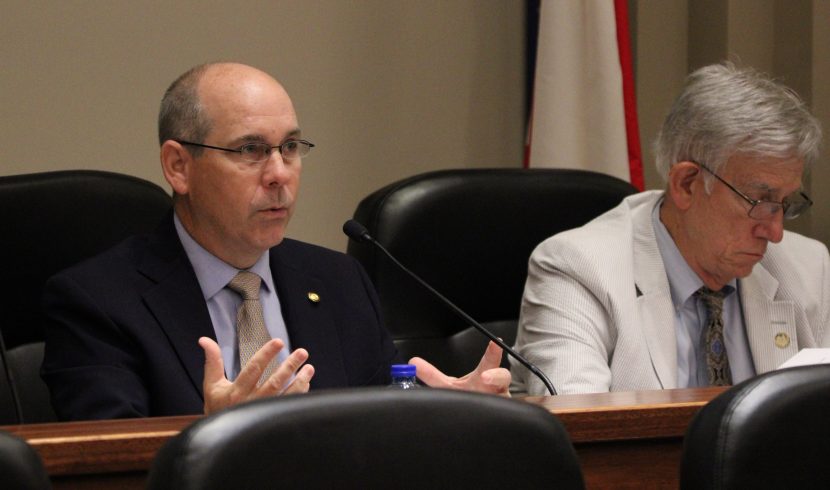
MONTGOMERY, Ala. — Members of the Joint Prison Oversight Committee raised concerns Wednesday over a set of proposed scoring guidelines from the Alabama Board of Pardons and Paroles.
Some lawmakers cited “corrupted” scoring data on which the guidelines were supposedly developed, as well as what they considered to be omissions in scoring criteria and a lack of oversight.
The parole board is required by law to update the guidelines every three years, but they are now roughly three years overdue. They score parole-eligible inmates across six categories and the inmates are either recommended for parole, or not. The decision is ultimately at the discretion of the three-member board.
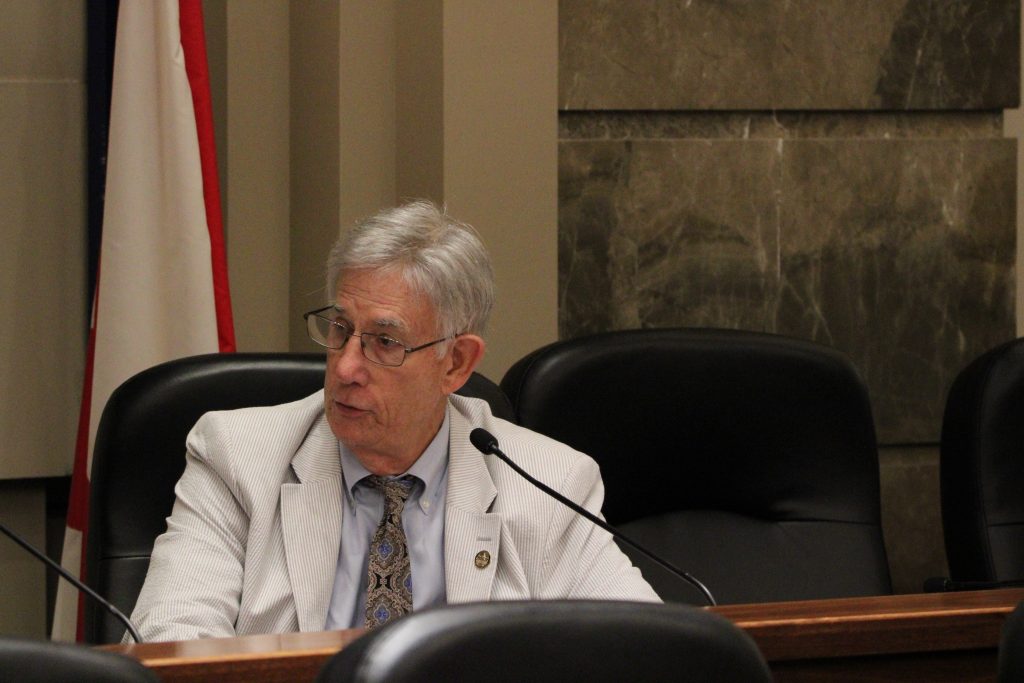
Published earlier this month for public review, the new guidelines would, in some cases, make it harder for inmates to be granted parole, increasing opportunities for inmates to earn marks against them for a variety of infractions. They also would not expand the criteria to increase an inmate’s chances of being granted parole to include things like health, age or participation in work release programs, something Rep. Jim Hill, R-Odenville, cited as a notable omission.
Hill also took issue with the lack of oversight of the board that may deny an inmate parole regardless of their score and without explanation.
“If we get to the point where we decide something other than the guidelines, I think there ought to be an explanation given, and there can be legitimate reasons,” said Hill, chairman of the House Judiciary Committee. I think the fact that the parole board doesn’t have any appellate oversight is something that we ought to work on.”
No one from the board was present for Wednesday’s meeting. Scrutiny of the board heated up last year after lawmakers expressed frustration over its continued low conformance rate to its own guidelines, abiding by them just 12% of the time during fiscal year 2023, and about 27% of the time this fiscal year as of April.
It did not go unnoticed during the Wednesday meeting that the tardy guidelines were submitted not long after lawmakers made funding for the board conditional on the body revising and adopting its guidelines.
“The addition of conditioning some appropriations based upon them actually following the law magically produced these proposed guidelines that were three years overdue,” said Rep. Chris England, D-Tuscaloosa.
Though perhaps the most concerning issue for committee members was the way in which the guidelines presumably were produced. The parole board is expected to develop new guidelines using, in part, scoring data over the past three years. The integrity of that data, however, has been called into question after last year it came to light that the board chair, Leigh Gwathney, had sometimes changed inmates’ scores at her discretion.
“We wanted the data so we could determine if the guidelines were working or not, but since the chair took it upon herself to change those guidelines depending on who the person was, the data is corrupted, so I really don’t know what the new guidelines are based on,” England said.
“I think it’s fair for the public to ask what these new guidelines are based on considering that the data we were supposed to be using is being corrupted.”
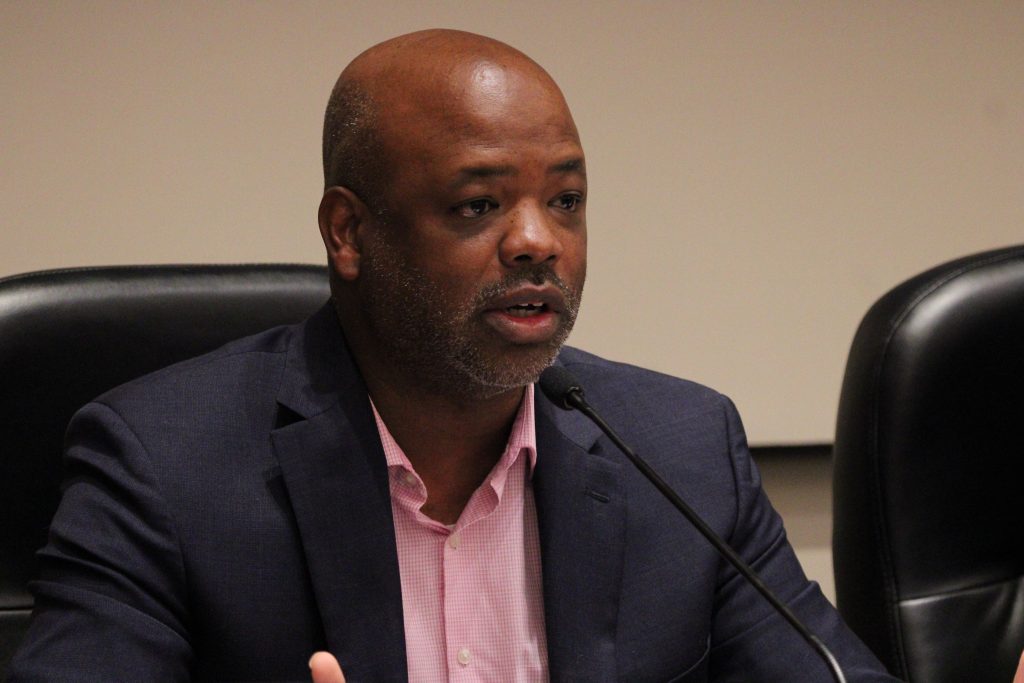
Committee chairman Sen. Clyde Chambliss made an effort this past legislative session to reform the parole board by increasing its members to five members and changing the appointing authority for the chair from the governor to the Legislature, though it ultimately failed. He told Alabama Daily News Wednesday that he was “leaning toward” renewing that effort next year.
Speaking on the “corrupted” parole data, Chambliss, R-Prattville, called it “problematic” for Gwathney to have altered inmates scores, even though she had previously stated she only ever did so to the benefit of the inmate. On the totality of the proposed guidelines, Chambliss said he was thankful for the process to be moving forward, and that establishing clear and consistent guidelines was necessary for both inmates and crime victims.
“Those who have a legitimate chance for parole, they need to know what the rules are, their families need to know what the rules are, the victims of those crimes need to know what the rules are, and that’s where I come from and I’m glad we’re moving in that direction,” he told ADN.
The sole committee member with exclusively positive feedback on the proposed guidelines was Rep. Matt Simpson, R-Daphne, who told ADN that among his hopes was that the parole board is able to maintain discretion in its decision making, and not be bound to a scoring sheet.
“I like the steps that they’ve taken, I like some of the pluses that they’ve added to the score,” Simpson told ADN. “I think they’ve taken the right steps on some of these things.”
The motivation behind proposing guidelines that in some cases made parole less likely for inmates was another topic of discussion, both during and after the meeting.
England argued that the board’s proposal was merely an effort to make the scoring guidelines more closely align with the board’s low parole grant rate, which dropped to as low as 10% in fiscal year 2023, and thereby, arbitrarily increase their conformance rate.
“I hope everybody in the public takes advantage of the opportunity to make public comments to point out that we shouldn’t be creating guidelines to increase our conformance rate to make sure our denials look legitimate,” he said. “We should actually create guidelines that effectively assess the person before them.”
England’s assessment was shared by Jerome Dees, policy director for the Southern Poverty Law Center, who called the proposed guidelines “purely a cosmetic change.”
“It’s the equivalent of taking a pop quiz, failing, and instead of seeing what changes you need to make, you just re-write the questions to the quiz so that it aligns with the wrong answers that you previously had,” Dees told ADN.
The parole board will accept public comment on the proposed guidelines through July 4, afterwhich, the board can decide to amend the guidelines based on public feedback, or disregard them entirely and adopt the guidelines as currently written.