
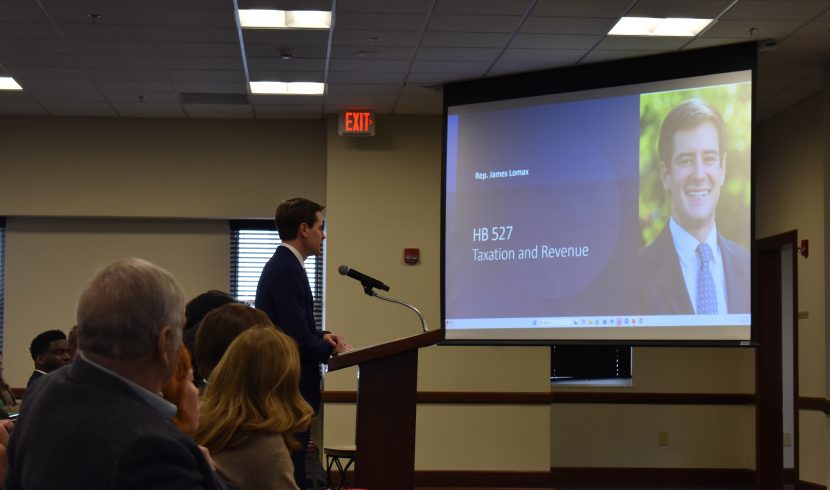
MONTGOMERY, Ala. – A bill to cut taxes on Alabamians’ overtime wages received its first vote Wednesday, clearing the House education budget committee.
House Bill 527, sponsored by House Majority Whip Rep. James Lomax, R-Huntsville, would establish an individual income tax deduction of up to $1,000 on Alabamians’ overtime pay per year.
Lomax said while introducing the bill to the committee on Wednesday that he estimates the bill could impact 800,000 Alabamians.
“This is a responsible bill,” Lomax said. “It’s a bill that I think gives targeted relief to overtime workers and has the original intent of what we did a couple of years ago but in a way that doesn’t take away a large amount from our education budget.”
Income taxes paid in the state benefit the Education Trust Fund, which supports K-12 and higher education. The fiscal note for Lomax’s bill estimates that it would reduce income tax receipts to the ETF by $37.4 million annually.
Lomax said his bill is different from previous law because it sets a cap on the deduction and mirrors federal legislation.
The state first adopted an overtime tax cut, carried by House Minority Leader Anthony Daniels, D-Huntsville, in 2023. Initial estimates said the cut would cost the state about $34 million in lost revenue annually, but the final cost for the cut’s 18-month existence ballooned to more than $400 million.
The law expired in June of 2025, and despite bipartisan support, the House never put Daniels’ proposed permanent extension to a vote. Republican leadership instead prioritized a four-bill package of tax cuts sponsored by Education Budget Chair Rep. Danny Garrett, R-Trussville.
If passed, the new deduction would be valid for money earned between Jan. 1, 2026 and Dec. 31, 2028.
The bill now heads to the House floor.
Garrett said that passing a large tax deduction like the Lomax’s overtime bill might impact if other, smaller tax cuts get approved. The committee passed on Wednesday several bills relating to taxation, including one to remove the state sales tax on eyeglasses and contacts.
“With the overtime bill, that may preclude some of these getting across the finish line. We’ll see how things move, but we understand how things are tightening and we’ve been pretty judicious in our tax credits… The overtime bill coming up may impact what gets across the finish line (in the Senate) and even down here (in the House).”
Garrett also confirmed during the meeting that the budgets will move to their second chamber when the Legislature returns from next week’s spring break. The ETF Budget now heads to the Senate, and the General Fund Budget now moves to the House.