
In moonless darkness, we turned off the main river, entering a small, shallow ditch leading to an oxbow lake.
Around the bend, we pulled under some overhanging trees and tied up the small, camouflaged aluminum boat. We covered the outboard and gas tank with an old camouflaged poncho and added Spanish moss around the boat edges to break up our outline. Then, we waited for shooting hours to begin.
The glow on the eastern horizon backlighted trees on the far shoreline. Festooned with Spanish moss, trees looked like bearded skeletons. In the darkness, fluttering wings already beat rapidly over our heads. As light began to brighten, glimpses of ghostly gray and black images flashed past us.
Finally, shooting hours began. Several twisting, whistling shapes materialized over the water and then rocketed through nearly impenetrable tree canopies. For the next 15 minutes, we couldn’t reload our shotguns fast enough as birds instantly appeared and just as abruptly vanished.
Almost as suddenly as the morning flight began, it ended. We cupped our chilled hands around our glowing shotgun barrels for warmth. The air so full of activity just moments ago now seemed devoid of life. Only the distant staccato hammering of a pileated woodpecker echoing through the swamp and a chattering squirrel annoyed at our presence punctuated the stillness.
“Wood ducks are doing really well in Alabama, but the population fluctuates from year to year,” advised Seth Maddox, assistant chief of the Wildlife Section for the Alabama Division of Wildlife & Freshwater Fisheries. “We have a good population of resident wood ducks that reproduce in Alabama. They are found throughout the state from big rivers and lakes to small beaver ponds and swamps.”
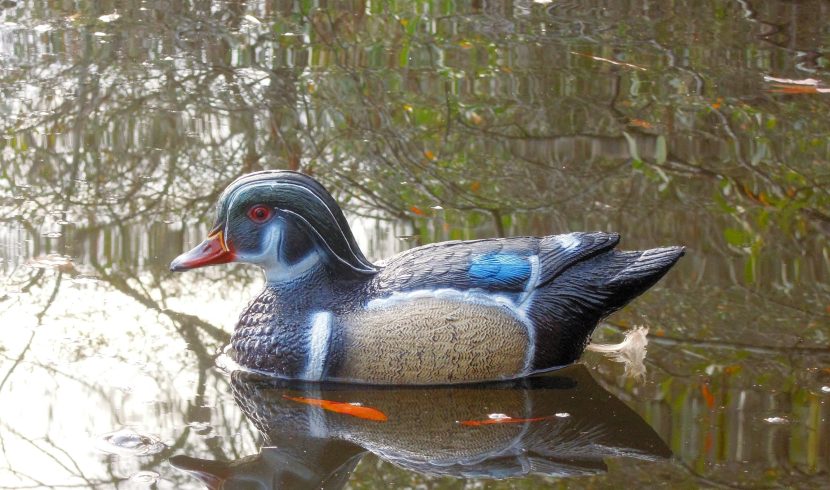
Among the most striking waterfowl in North America, wood ducks flourish wherever they can find abundant food, cover and water. Although sportsmen occasionally bag woodies in fresh to brackish marshes, the multihued waterfowl prefer quiet streams, oxbow lakes, sloughs, swamps, creeks, green-tree reservoirs, beaver ponds, bayous and any other sluggish freshwater systems lined with hardwood trees.
“Studies on habitat usage indicate that wood ducks prefer to be in wetlands with more than 60 percent cover,” Maddox said. “They like more closed canopy than most other waterfowl.”
The birds eat various nuts, berries, fruits, wild grasses, sedges and seeds, but above everything else, they relish acorns. They prefer white oak acorns. Find white oak acorns over or near water and sportsmen will find woodies.
Most woodies breed and live out their lives in their home swamps, but some migrate. When states farther north freeze, more woodies head south. After a good cold front, sportsmen might spot more woodies in their favorite hunting locations.
“Alabama has a lot of good forested wetland habitat for wood ducks,” Maddox stated. “Anywhere in Alabama, hunters could find wood ducks within 30 minutes of home. In some years, we get significant increases in the population as migratory birds come down the Mississippi and Atlantic flyways to augment our resident population.”
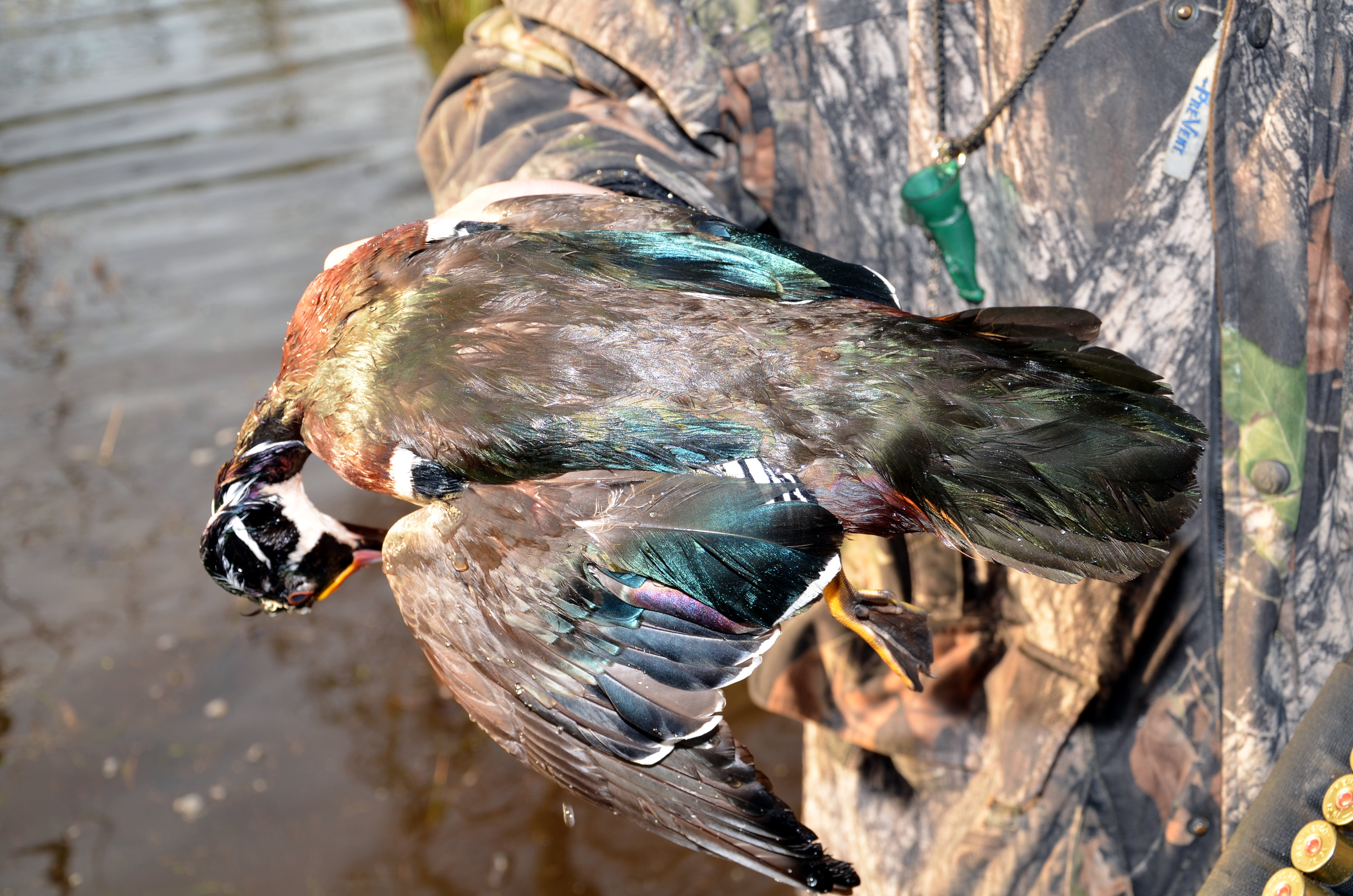
While woodies thrive throughout the state, sportsmen still need to find them. That requires extensive scouting. Wood ducks habitually follow the same flight patterns each morning from their roosting areas to their feeding locations and back in the evening. Morning flights normally just last a few minutes, but in the right spot at the right time, waterfowlers can enjoy intense, but brief, action. In low-light conditions, waterfowlers must spot, identify targets and fire in microseconds before the swift birds disappear behind trees or out of range. Evening flights frequently occur after shooting hours.
“At night, wood ducks tend to fly into a roost where many birds come together,” Maddox explained. “In the morning, they disperse to forage for food. They tend to feed and loaf in areas with good cover during the day. Wood ducks know where they want to go and will use a foraging area many times to feed.”
Look for places where woodies find good shelter away from predators with sufficient water and food sources. Once people figure out where the ducks already want to go, they can enjoy fast shooting. Don’t set up in roosting or feeding areas because that might chase the birds elsewhere. Instead, find a spot under the flight route between roosting and feeding areas.
Any rivers lined by hardwoods can provide excellent wood duck habitat. Navigable waterways belong to the public, so people can hunt practically anywhere they can reach by boat unless otherwise prohibited. Just don’t trespass on private property.
Some sportsmen use boats with pop-up blinds, but hunters in small camouflaged craft don’t really need blinds. Woodies often use waterways for navigation and fly down the middle of channels. Bends in streams where people can see well in both directions make superb shooting areas. Tie the boat against a dark background, cover any bright objects. Remain quiet and motionless. By the time the ducks can see the boat, the morning flight usually ends.
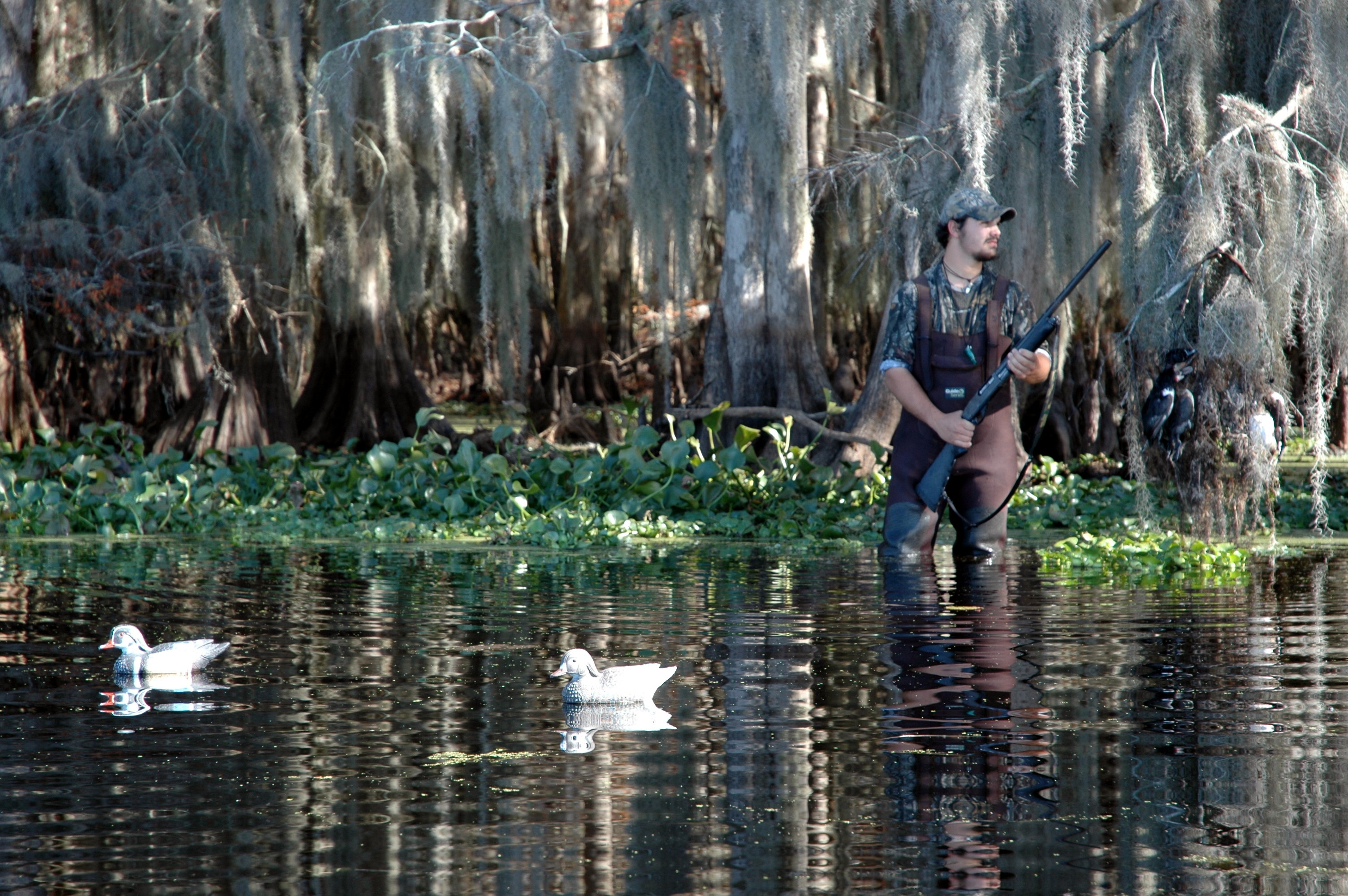
Some hunters use decoys. A few wood duck, mallard or teal decoys can’t hurt, but hunters won’t need them in a great spot. Woodies know where they want to go. When a wood duck decides to land, it crashes down. Woodies don’t really respond to calling either, but might investigate whistling.
After woodies finish breakfast, they seek thick cover to hide from predators before making their late feeding flights. Then, they fly back to their roosts. Later in the morning, some people jump woodies from canoes or other human-powered craft. Others look for squirrels or go fishing.
Alabama sportsmen might find wood ducks wherever nut-bearing trees grow near water. The Mobile-Tensaw Delta probably offers the best public wood duck hunting in the state. The two wildlife management areas offer nearly 100,000 acres for public hunting. Other good WMAs include Barbour near Clayton, Coosa near Rockford, David K. Nelson near Demopolis, the Jackson County WMAs, Lauderdale near Waterloo, Lowndes near White Hall and Seven Mile Island near Florence.
Regulations could differ on some public properties. For season dates and more information, see www.outdooralabama.com/seasons-and-bag-limits/waterfowl-season.
**********
Felsher is always looking for ideas or outdoors adventures that will make good stories. If you have a good idea, contact Felsh at [email protected] or through Facebook. He also hosts an outdoors tips show for WAVH FM Talk 106.5 radio station in Mobile.