
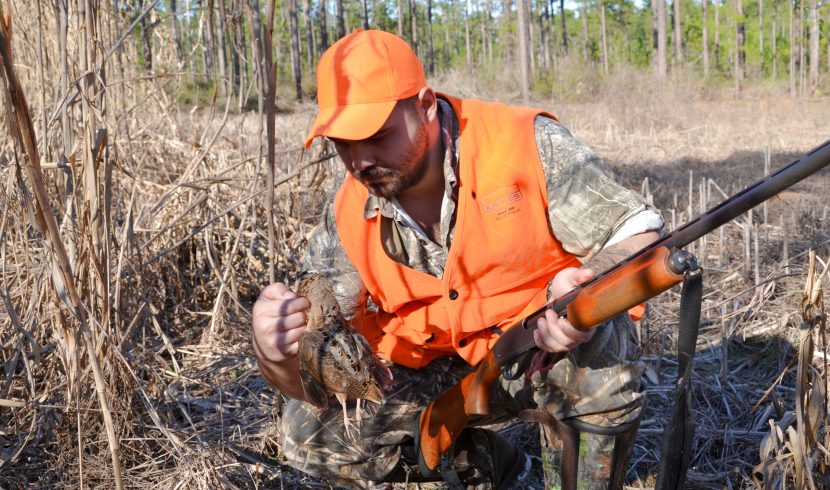

Slipping quietly through the forest, I kicked a grass clump. Suddenly, a small screeching brown object exploded at my feet and leaped for my throat.
The shrieking chestnut-colored beast levelled off at eye level and zipped through the trees and thickets like a miniature smart missile on afterburners. Such startling explosions mark many a hunter’s first experience with woodcock.
After putting my heart back in its proper place and calming my nerves, I spent the rest of the morning trying to repeat the experience by kicking every bush and weedy clump I could find. Expending copious ammunition loads, I “killed” numerous leaves, tree limbs and trunks trying to hit these speedy specters that seemingly hovered in midair micro-moments before I pulled the trigger only to veer off in another direction.
“In Alabama, most woodcock are probably shot incidental to other types of hunting when someone just happens to jump one,” advised Seth Maddox, assistant chief of the Wildlife Section for the Alabama Division of Wildlife & Freshwater Fisheries. “The northern tier of the state probably has the best woodcock populations, but that depends upon the weather.”
Woodcock migrate to the Gulf Coast every winter, often staying just ahead of the ice. The best hunting normally occurs right before or after a severe cold front passes through northern states and Canada, pushing birds southward.
“Alabama is kind of a funnel for woodcock,” Maddox detailed. “Woodcock usually migrate to Alabama between October and December to escape the harsh winters up north. The birds come from Minnesota all the way over to Quebec and Newfoundland.”
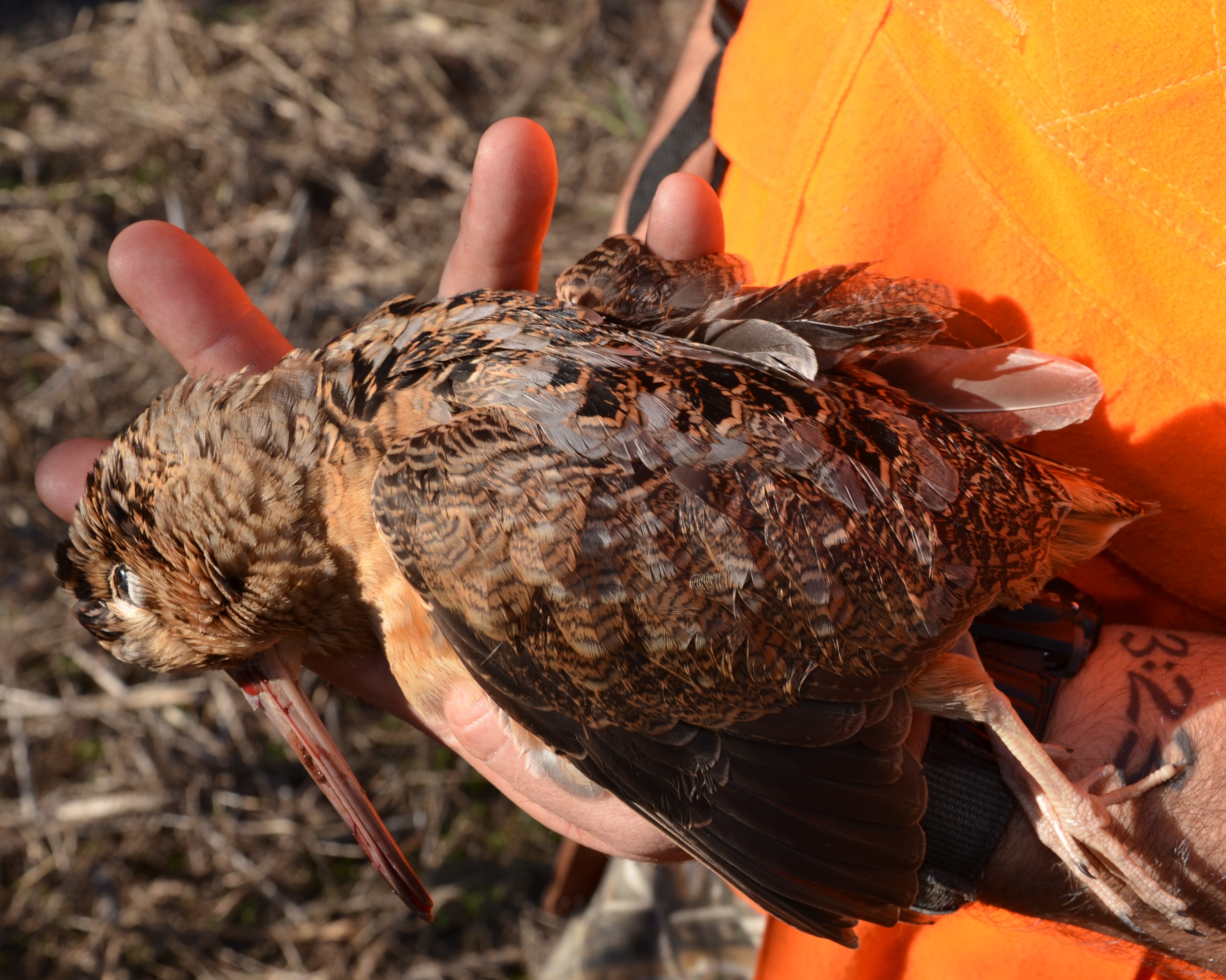
Weighing only a few ounces, woodcock offer challenges to sportsmen that far outweigh their minuscule size. Finding the long-billed birds requires intensive scouting. Woodcock thrive in hardwood bottomlands with damp soils and dense underbrush that gives them good cover. Look for woodcock along hardwood streams with abundant thick vegetation or in transition areas from hardwoods to the uplands. A recent clear-cut regrowing with weeds creates excellent woodcock habitat.
“Woodcock prefer really dense cover,” Maddox explained. “They are typically found in early successional hardwood habitat like bottomlands close to water. Streamside management zones in forested habitat are very good because they’re typically a little more grown up. Anywhere that woodcock can find a stream or a water source with thick cover would be a good place to look for them.”
To find woodcock, go where they feed. Woodcock don’t eat in standing water. They prefer slightly higher ground along lake and river shorelines or swampy edges with soft, damp soil. They use their long, dexterous bills to probe soft earth for their favorite food, earthworms. A woodcock can detect earthworms moving underground. When it locates a worm, the bird can open and close the flexible tip of its bill to grasp the morsel.
With tremendously high metabolic rates, a woodcock eats its weight in worms each day. They eat about every eight hours around the clock, but become most active at dusk and dawn. The small birds habitually fly to open fields to feed at night and return to their thickets at daybreak.
“People find woodcock in moist or damp, but not wet, habitat where they probe the soil for earthworms,” Maddox said. “They need a lot of food to keep up their energy levels to survive the winter.”
When scouting, look for “probe holes.” A place where woodcock feed regularly could look like someone shot the ground with buckshot. After eating so many worms, they leave white “splashings” as if someone rubbed chalk on the ground or spilled white paint. What attracts one bird to an area could entice hundreds.
Splashings and probe holes indicate that woodcock recently visited the area, but do not guarantee that they remain there. In even the best habitat, these brown ghosts of fields and forests can disappear and reappear overnight.
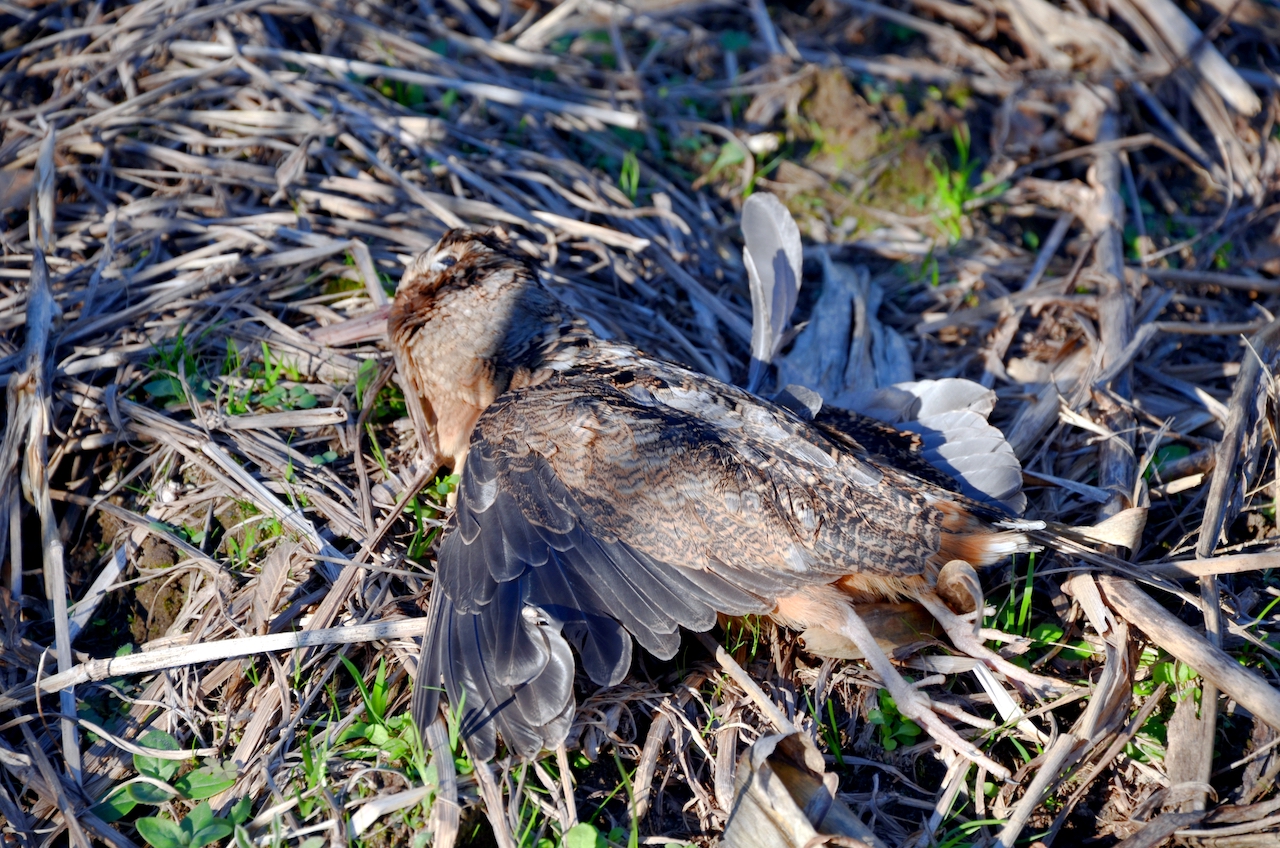
Woodcock use their outstanding camouflage to virtually vanish among the leaves and forest floor debris. In thick cover, well-camouflaged woodcock frequently remain motionless. Sportsmen could almost stand over birds without ever seeing them. Quail hunters using dogs to sniff out the birds probably bag more woodcock as bonus game than other sportsmen.
“Because of their superb camouflage patterns, woodcock are hard to find and they don’t flush until absolutely necessary,” Maddox commented. “I’ve almost stepped on them before they flushed. Good dogs are the key to finding the birds.”
Without a good dog, go through an area kicking every log, brush pile and grass clump that can hide a bird. Fortunately, when woodcock do flush, they seldom fly far. Sportsmen can often mark where the bird lands and flush it again.
With tremendously erratic, swift flight patterns, woodcock commonly embarrass even the best shots. They zigzag through nearly impenetrable thickets with ease and seemly sense where someone will shoot. Pellets smack into brush where a woodcock vanished microseconds earlier.
“Woodcock are very challenging to hunt and incredibly hard to hit,” Maddox stated. “They’re extremely agile in the woods. They must get through that thick understory in the habitat they like, so they make a tough target. It’s definitely a tough bird to hunt.”
Sportsmen might find woodcock in any suitable habitat across Alabama. Some of the best public hunting in the state occurs in the Mobile-Tensaw Delta near Mobile. Two wildlife management areas offer sportsmen nearly 100,000 acres for public hunting.
“The Upper Delta WMA is probably a little better than the lower delta because it’s more forested, but people can find woodcock in both areas,” Maddox opined. “Alabama gets a good wintering woodcock population, but a few birds stay in Alabama all year long and nest in the state.”
Sportsmen might also try Blue Spring WMA or Geneva State Forest. Other good areas include Barbour, David K. Nelson, Freedom Hills, James D. Martin-Skyline, Lowndes, Oakmulgee, Seven-Mile Island and the Jackson County WMAs.
The 2025-26 Alabama late woodcock season runs from Dec. 20 through Jan. 31, 2026, with a daily limit of three. For more information on public hunting lands, see www.outdooralabama.com/hunting/where-hunt-alabama.
**********
An avid sportsman, Felsher is professional writer, photographer and radio show host who has written thousands of articles for many publications. He’s always looking for ideas or outdoors adventures that will make good stories. Contact Felsh at [email protected] or through Facebook. He also hosts an outdoors tips show for WAVH FM Talk 106.5 radio station in Mobile.