
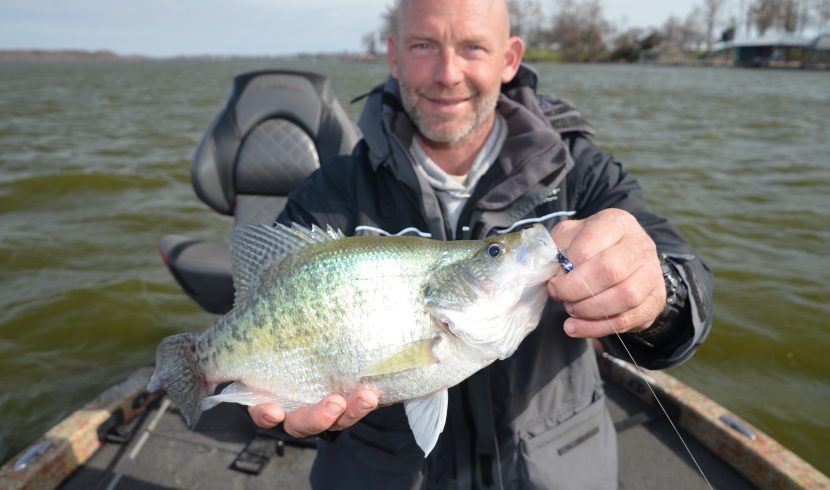
Alabama anglers can catch big crappie all year long, but for the fattest ones, head out before the spawn begins.
Crappie fatten up on minnows, shad and other morsels to build up energy reserves before enduring the rigors of spawning. Depending upon the location in Alabama and the temperature, this usually occurs in early to mid-March. With females swelling up with roe and gorging themselves, anglers could catch the biggest crappie all year at this time.
“During the prespawn, I look for warming water temperatures and flats near a channel,” advised Dan Dannenmueller, a professional crappie angler from Wetumpka. “I like to find hard bottoms and cover, such as timber or stumps. Usually, the bigger females sit back in slightly deeper water. Before the spawn, we might put our baits down as deep as 16 to 18 feet.”
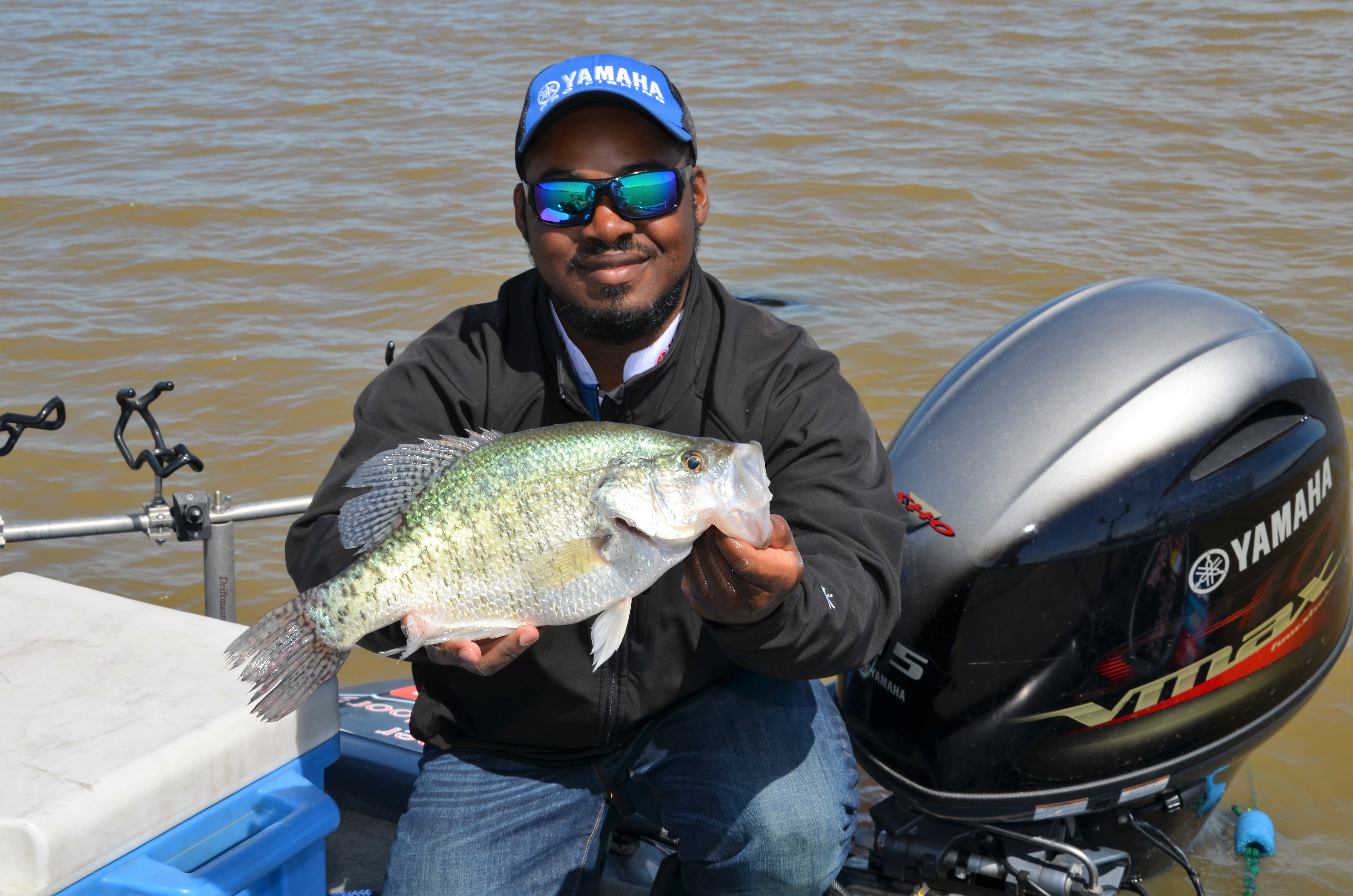
To find crappie in late winter or early spring, anglers must search substantial tracts of water. Most anglers use their electronics to find fish. After finding fish, many crappie anglers hang multiple rods from holders off their boat bows in a pattern that resembles a spider web. With a spider rig, anglers can vertically fish multiple baits at several depths simultaneously.
While crappie stage in deeper water before spawning, they regularly head shallow to feed. Move along slowly with the electric motor. Put the bait as close to stumps, fallen logs, brush tops and other cover as possible. After catching a few crappie, fish that area more thoroughly. Try various artificial and natural baits to see what works best that day. When fish stop biting in that spot, move to the next honey hole.
When water temperatures hit about 65 degrees, male crappie start moving into the shallow flats to look for suitable spawning places. Males clear out a place near cover, but don’t make beds like bass or bluegills. Instead, crappie spread out around cover. Crappie normally spawn in water about two to four feet deep around brush piles, weed beds, stumps, fallen trees or other types of submerged cover in backwater areas out of the current. On complex river systems, crappie sometimes spawn on deeper shelves in major channels.
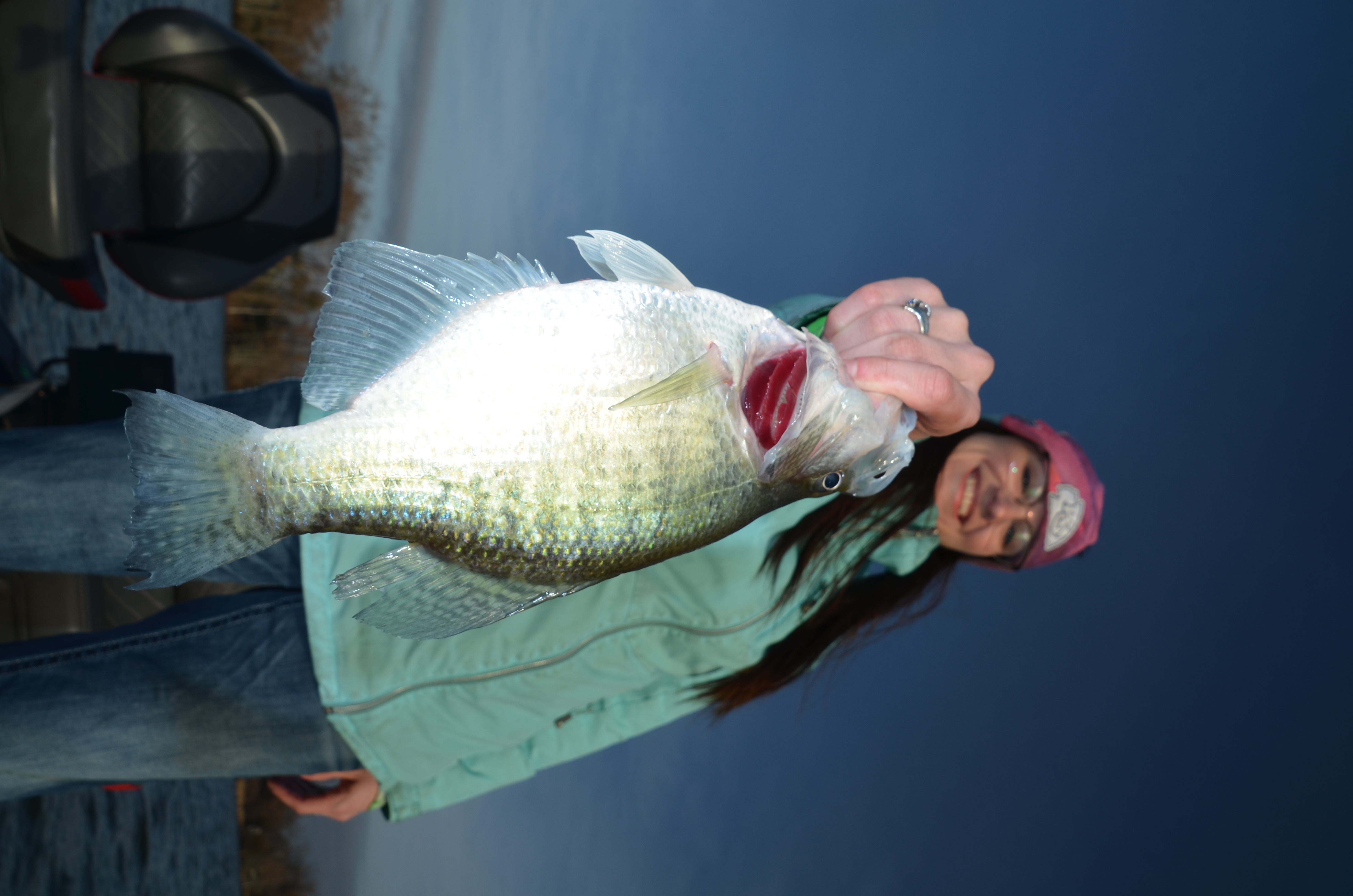
Highly prolific fish, each female crappie could produce between 5,000 and 40,000 eggs. After females lay their eggs, the eggs and developing fry must fend for themselves. Male crappie do not protect their beds, eggs or offspring the way bass do.
“When fishing the spawn, we try to put the baits right up against the stumps that line the river and creek channels,” Dannenmueller detailed. “We use Bobby Garland and Road Runner heads tipped with plastic. We also use live minnows as an extra enticement. I like a two-bait rig. I put a live minnow on a Tru-Turn hook on the top to attract the fish. On the bottom, I tie a jighead tipped with plastic, usually a Bobby Garland Swim-R or a Minnow Mind-R.”
On big river systems, the spawn could last for weeks because waters don’t all warm at the same rate. Placid, shallow backwaters heated by the sun warm quicker than deep main river channels that carry colder water from farther north during early spring. Even on the same system, crappie don’t all spawn at the same time. In an area, anglers might find some crappie in prespawn mode, some actively spawning and others already finished spawning.
When a late winter or early spring cold front roars through Alabama, significant cold rainfall could cause water levels to rise rapidly in major river systems. A drastic influx of chilly water could delay spawning. Fish might pull off the banks into deeper water until the system stabilizes again.
To search for crappie over wider areas, try pulling planer boards. Essentially brightly colored floating plastic blocks, planer boards come designed specifically angled to run either to the left or right when towed behind a boat. With planer boards, anglers can search farther away from the boat and fish varied baits at multiple depths. Running behind and well off to the side of the boat, temptations suspended under planer boards pass through water undisturbed by the engine.
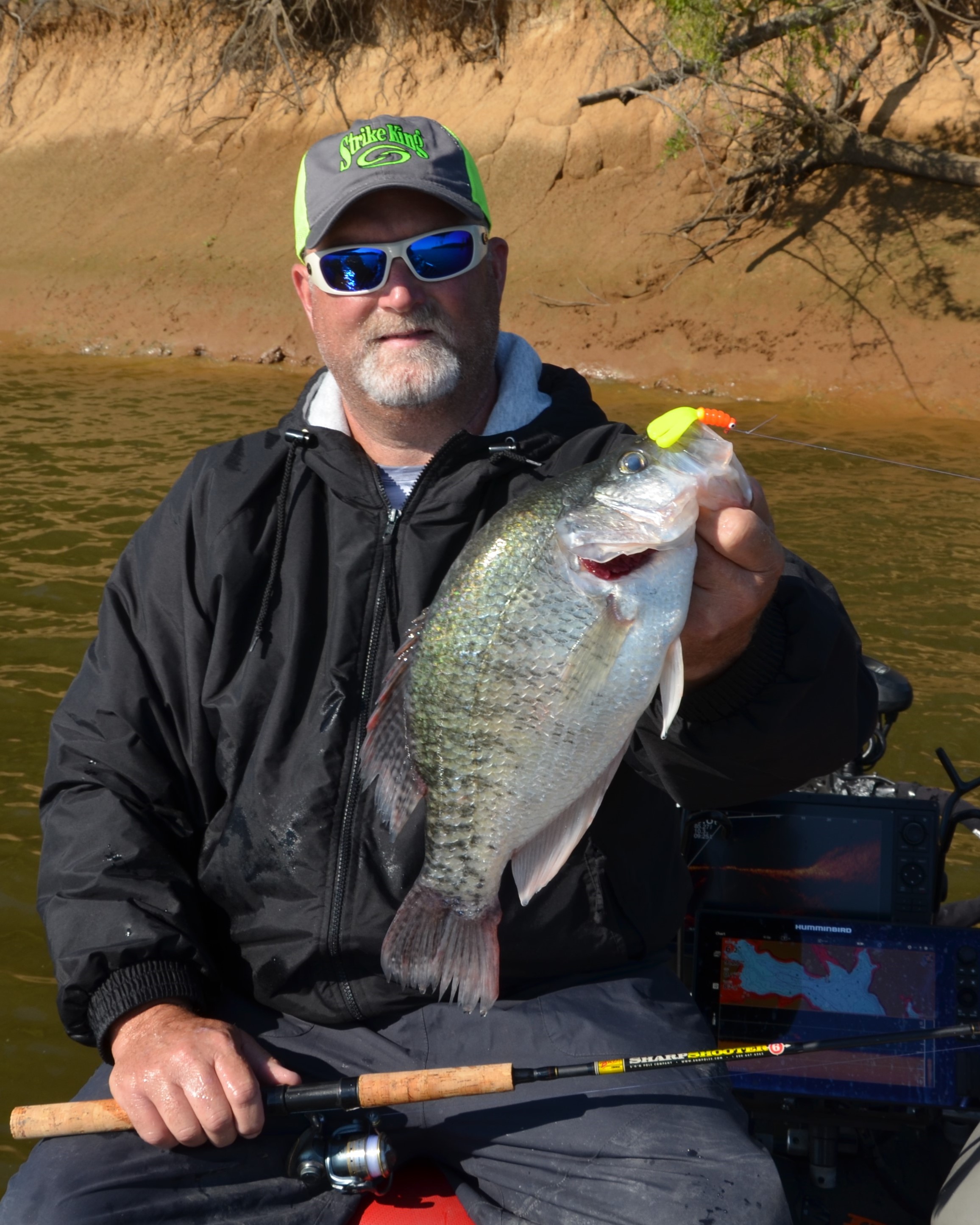
“People can pull many different baits with planer boards, such as jigs, hair jigs, crankbaits and spinnerbaits,” Dannenmueller said. “We also catch crappie on blade baits and spoons. I pull a lot of Johnson Thinfishers and 1/8-ounce Rat-L-Traps. Many people use small Road Runners or Bobby Garland baits with 1- to 3-inch plastic trailers. Sometimes, we’ll use bigger grubs when targeting larger crappie.”
Pull boards or work spider rigs along drop-off edges. In open water, fish some baits on the shallow side of a drop-off, some right at the edge and others along the bottom of the drop to determine where fish want to stay.
When crappie move up shallow, tempt them by dangling 1/16- or 1/8-ounce jigheads tipped with plastic trailers or sweetened with live minnows. Place baits next to trees, stumps and other structure. Using a single pole, hit cover from as many angles as possible.
“I always fish a single pole around really thick cover,” commented Gerald Overstreet, Jr., a professional crappie angler and guide (251-589-3225) from Gainestown. “With a single pole, I can work a bait through really thick stuff all the way down into cover much better than with spider rigging. We can also pull hooked fish out of cover easier than with other techniques.”
In flowing water, start first on the downstream side of an object. Crappie frequently hang just outside the current looking upstream. In deeper water, fish completely around trees or other objects to find fish.
On sloping shorelines and ledges, cast rigs baited with minnows or jigs up shallow. Work the bait vertically from the extreme shallows out over the drop-off edge to locate the fish. If anglers mostly catch small crappie, those might be males moving up shallow. Fish a little deeper for the big ones.
Despite the unpredictable weather at this time of year, anglers could find some hot crappie action on cold days.
**********
An avid sportsman, Felsher is professional writer, photographer and radio show host who has written thousands of articles for many publications. He’s always looking for ideas or outdoors adventures that will make good stories. Contact Felsh at [email protected] or through Facebook. He also hosts an outdoors tips show for WAVH FM Talk 106.5 radio station in Mobile.