
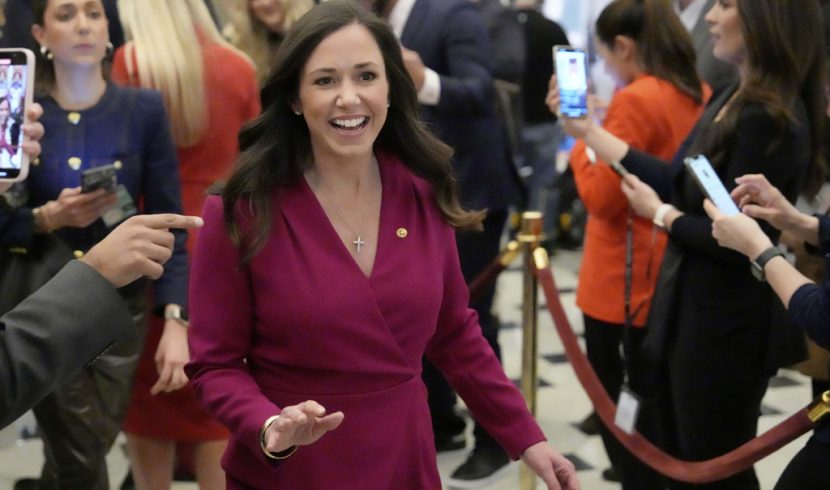
BIRMINGHAM, Ala. – U.S. Sen. Katie Britt announced Friday that some of Alabama’s previously frozen federal educational funding – funds that support after-school and summer learning – will be released.
“I’m pleased to see these funds released to support after-school and summer programs. This was in direct response to a letter I joined in support for this critical funding,” Britt wrote on X, formerly Twitter. Britt and nine other Republican senators wrote a letter Wednesday urging the release of the $6.9 billion in frozen education funding nationally.
“I appreciate President Trump and OMB (Office of Management and Budget) Director (Russell) Vought responding to our request to ensure our local communities can continue to serve students and families.”
The U.S. Department of Education notified state officials of Monday’s release late Friday morning via email, according to EdWeek.
Nationally $1.3 billion of the frozen funding will be released, according to amounts posted on the official U.S. Department of Education website. Alabama’s portion is $21.2 million.
Initially, Alabama had approximately $73 million in total educational funding withheld, according to fiscal year 2025 budget documents. With the $21.2 million in Title IV-B funds now set to be released on Monday, the amount still frozen is approximately $52 million.
That funding, appropriated by Congress in March through a reconciliation bill, is one of four federal funding streams schools expected to receive on July 1. However, Alabama officials were told just one day before the scheduled release that the funds were on hold pending federal review.
Sen. Tommy Tuberville told reporters Thursday that he’s been in communication with Education Secretary Linda McMahon and plans to raise the issue of all of the frozen funds with Trump during a Friday night dinner with fellow GOP senators.
“Hopefully, we’ll have an answer on that in the future,” Tuberville said. “It’s been frozen, but should… in the near future be released in some form or fashion.”
The Title IV-B funds set for release support the 21st Century Community Learning Centers (21st CCLC) program. These grants fund after-school and summer enrichment programs for students in high-poverty areas.
According to budget documents, 30 of Alabama’s 139 public school districts, along with one charter school, were awarded a share of the state’s $21.2 million.
With summer programs already underway, State Superintendent Eric Mackey said many schools had already begun spending the money they expected to receive.
The U.S. Department of Education email said no decision has been made about the remaining three buckets of frozen federal funds, totaling approximately $52 million to Alabama:
- $2.9 million in Title I-C funds for support services for migrant students,
- $5.7 million in Title III-A funds for English learners,
- $48 million in Title II-A funds for teacher salaries and professional development, including efforts to reduce class sizes.
21st Century Community Learning Centers
More than 10,400 Alabama students participated in 21st CCLC programs during the 2023-24 period.
Programs vary by site but can include academic support, physical fitness, STEM activities, arts and music, career exploration and counseling. The goal is to provide learning opportunities beyond the regular school day and support student development.
A recent evaluation of Alabama’s 21st CCLC programs by Troy University and Auburn University’s Truman Pierce Institute showed strong results, including improved student attendance and academic performance.
Organizations such as the Boys and Girls Clubs also rely on 21st CCLC grants. In Alabama, both the Boys and Girls Clubs of East Central and North Alabama have received these funds in recent years. A national statement from Boys & Girls Clubs of America CEO Jim Clark warned that more than 900 clubs could be forced to close without continued funding.
“Up to 926 Boys & Girls Clubs could be forced to shut their doors, and more than 220,000 kids – many of them in underserved communities – will lose access to essential supports like healthy meals, caring mentors, and safe spaces during the most vulnerable hours of the day,” Clark said. “It would also mean the loss of 5,900 jobs at Boys & Girls Clubs around the country.”
Alabama Daily News reporter Alex Angle contributed to this report.
This article was updated at 5:15 p.m.