
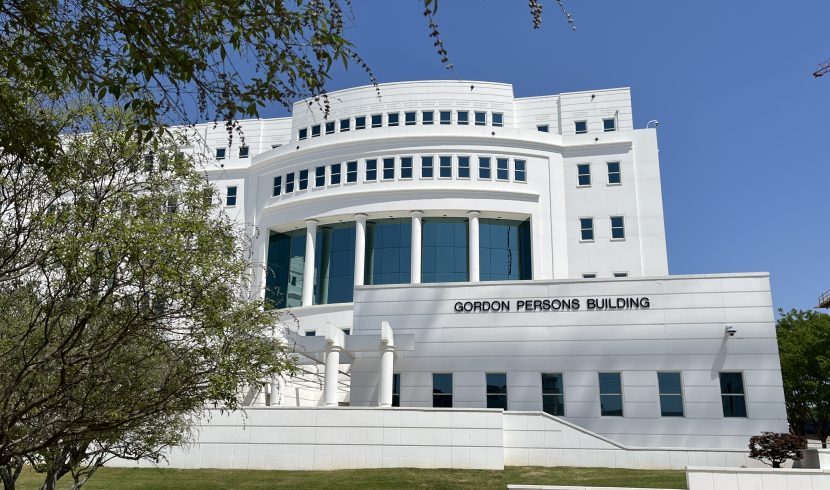
BIRMINGHAM, Ala. – Alabama’s State Department of Education needs to better document how it makes certain contracting and school funding decisions, according to a state audit that also found payments to two vendors exceeded amounts authorized in their contracts by nearly $874,000.
The audit, filed Friday, covered ALSDE’s operations from Oct. 1, 2019, through Sept. 30, 2025 and included four findings involving contract management and the Foundation Program, the formula used to distribute state money to school systems.
State Superintendent Eric Mackey characterized the findings as minor in the context of the six-year time period of the review.
He said his staff provided auditors with more than 10,000 contracts and extensive financial records. Mackey said auditors found no substantial errors, no payments for services that were not performed and no school systems that were underfunded.
“I think that’s a huge win,” Mackey said.
Chief Examiner Rachel Riddle said Friday the vendors were not asked to repay any of the combined $873,925 paid beyond the contract amount because the services were performed. Auditors faulted ALSDE for failing to monitor payments to ensure they remained within contract limits.
Auditors also found ALSDE paid another vendor for data-processing services without an executed contract in place. Auditors said that, without a contract, the department “increased the risk of unauthorized expenditures, inadequate service delivery and non-compliance with procurement requirements.”
In another case, the department failed to submit a professional services contract to the Legislature’s Contract Review Permanent Legislative Oversight Committee, as required by law.
“As a result,” the auditors wrote, “the Committee and the public were not informed of ALSDE’s expenditures for professional services.” The same failure had been cited in an earlier audit.
The audit also identified problems with how ALSDE calculated and documented some Foundation Program funding decisions. The Foundation Program is the primary method used to distribute funding to public schools.
Auditors said weaknesses in ALSDE’s calculations and recordkeeping affected the “accuracy, transparency and statutory compliance of funding calculations.”
The issues involved how the department documented student growth rates, calculated growth funding and documented the local property tax revenue each school system is required to contribute toward its Foundation Program funding, known as the “local match.”
Together, the auditors said, those weaknesses “reduce the transparency of the funding process and increase the risk of funding issues across districts.”
Auditors said the department could not provide documentation about how it established a rate used to fund growth in the number of full-time virtual students.
Mackey told Alabama Daily News that auditors did not object to the method ALSDE used to calculate funding for virtual students or local match amounts. He said the department was directed to explain the methods more clearly in its annual guide describing school funding calculations.
“They said the way we’re doing it is the way it should be done,” Mackey said of the virtual school student calculation. “But it’s not written down in the book, and we should write it in the book.”
In a separate finding, auditors said ALSDE did not follow the statutory method for calculating student growth funding in fiscal years 2024 and 2025. The department acknowledged that prior year student growth amounts were inadvertently included in those calculations for those years, according to the audit.
Mackey said ALSDE will change the calculation so prior year growth is no longer included. He said the change is expected to have a minimal effect on future funding.
Auditors also wrote that ALSDE lacked sufficient documentation explaining why certain school systems were treated as exceptions when calculating their local match for Foundation Program funding.
ALSDE also did not preserve the exact district financial data used in some calculations, meaning the department could not later recreate or verify the amounts, auditors wrote.
Mackey said preliminary local tax figures used to develop the state education budget were sometimes replaced in department records when final figures became available. Auditors wanted ALSDE to retain both figures and document when and why the amounts changed, he said.
Mackey said ALSDE has used the same local-match calculation methodology since the Foundation Program began in 1995 and that previous audits had not identified problems with the approach. He said the department will change how it documents the methodology, but not the calculation itself.
While the audit does not specify whether any school systems received more or less funding because of those issues, Mackey said auditors determined no school systems had been underfunded and that previous allocations would not be recalculated.
Riddle said the Foundation Program finding was primarily about documenting formula decisions in the future, rather than requiring past funding allocations to be recalculated.
Mackey pointed to a statewide audit of federal award programs filed June 26 that included no findings for the State Department of Education. He said the results of both reviews reflected careful work by the department’s program and fiscal staff to safeguard public funds.
The six-year review of the Department of Education can be viewed below or by clicking here.
Alabama Department of Examiners audit of the Department of Education by Trisha Powell Crain