
MONTGOMERY, Ala. – One week after the governor announced nearly $150 million in grants, the administrators behind the Alabama Rural Health Transformation Program provided updates to lawmakers who oversee the funds.
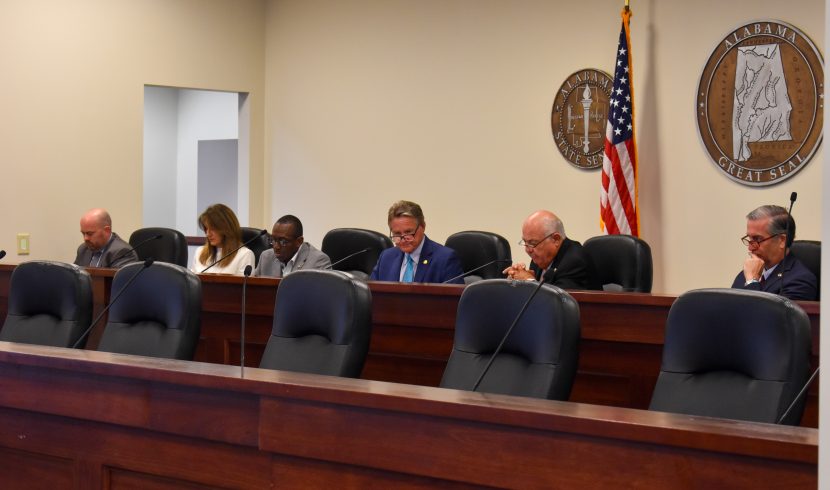
The Rural Health Transformation Advisory Group met at the State House on Monday afternoon, giving lawmakers a chance to ask representatives from the Alabama Department of Economic and Community Affairs and consulting firm BDO about the grant awards.
Last week’s announcement included 138 grants for a total of $144 million. The grants targeted five of the program’s 11 initiatives: Rural Health, $60.8 million; Rural Workforce, $34.5 million; Mental Health, $7.8 million; Rural Health Practice, $7.8 million; Collaborative Electronic Health Record, IT and Cybersecurity, $33 million.
ADECA Director Kenneth Boswell told committee members that the department received more than 390 applications requesting over $600 million in grants for this first round. The department had initially budgeted $140.3 million in grants but was able to award more because of administrative savings.
Boswell said that once grant agreements are signed, all recipients will have to report their progress to the advisory group every 30 days, similar to the format the Alabama Digital Expansion Authority uses.
He said ADECA has learned a lot from the first round of grants, which it will use to adjust next year’s application process.
“Not knowing what we didn’t know, we did not know how we were going to be prescribed to,” Boswell said. “It’s pretty accurate to say we were overprescribed when we had to limit our awards… We will refine the application process, the project process, and instead of shooting with a shotgun, we’ll be shooting with a rifle… The over prescription clearly shows that there’s a lot of need, but we need to make sure that we’re doing what we need to do to accommodate (Centers for Medicare & Medicaid Services).”
Lawmakers question grant impact
Though the grants did touch all 67 of Alabama’s counties, lawmakers on the committee questioned how ADECA is tracking funding to make sure all areas are impacted.
Chair Sen. Donnie Chesteen, R-Geneva, asked Boswell how ADECA is ensuring that funding awarded to larger institutions with a footprint across multiple areas is actually making it to the rural counties in need, using Auburn University as an example.
“How does that money get to these rural counties, to the offices, to the hospitals especially? Show us how that gets there,” Chesteen said. “It has to be transformative and sustainable, so those are the two keys to getting the money where it needs to go. I just want to see it.”
Boswell told Chesteen that ADECA is working on a temperature map – similar to what the ADEA program uses – to show where the funding is going and how institutions are utilizing it. The state awarded 138 grants to 82 different institutions, meaning some received more than one award.
Sen. Bobby Singleton, D-Greensboro, expressed similar concerns.
“I just want to make sure that we are getting out to help fulfill the need, and not just (giving money to) somebody who may not need the money just because they have an operation,” Singleton said. “I need it to go to needs. If this is supposed to be transformational, then I need to see it at least making an effort for transformational. That’s what I want.”
Next steps
The grants announced Monday are the first disbursement of the $203 million Alabama received in December from the federal government to strengthen its rural healthcare system. The funding comes directly from the Rural Health Transformation Program, which is supported by the CMS.
The federal Rural Health Transformation Program was created by the One Big Beautiful Bill Act in 2025. The $50 billion fund, which will last five years, is intended to offset the deep Medicaid cuts made in the legislation.
BDO Principal Jenna Abbey, who is working with ADECA to administer the grant program, said that ADECA is in the process of scoring round two applications.
The applications are related to the Maternal and Fetal Health, Cancer Digital Regionalization, Simulation Training and EMS Trauma & Stroke initiatives. The department received 103 applications requesting more than $70 million in funding, compared to the $24 million budgeted, she said.
The next award notifications should be out in October, Abbey said. The department is still waiting for information about next year’s funding.
“We are anxiously anticipating CMS’ allocation of the (year) two budget, which we expect will be revealed in mid-October of this year,” Abbey said. “As soon as we have the year two budget planning for those year two initiatives… we anticipate getting those (notices of funding opportunities) out as quickly as possible to allow for more time for applicants to apply and respond in year two.”
All applicants, including those who received 2026 grants, are eligible to apply for 2027 funding.