
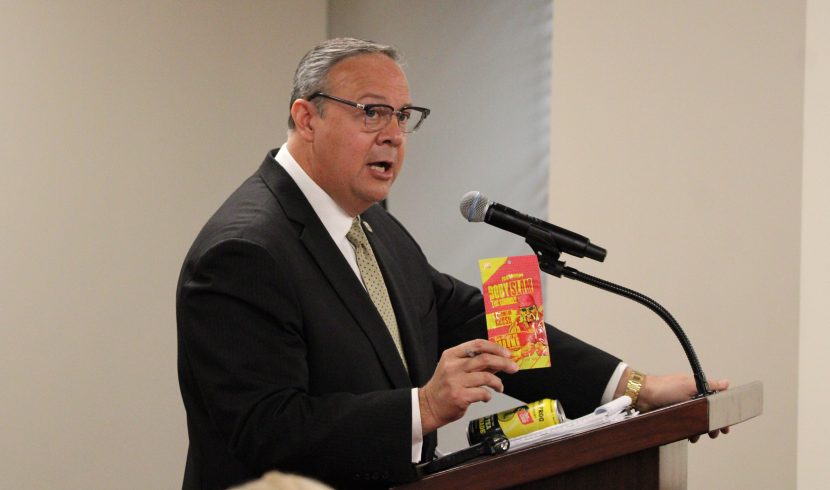
MONTGOMERY, Ala. — The conservative think tank Alabama Policy Institute is urging Gov. Kay Ivey to either veto or amend a bill lawmakers adopted last Wednesday that would tighten regulation around consumable THC products like delta-8.
House Bill 445, carried by Rep. Andy Whitt, R-Harvest, and would prohibit the sale of consumable THC products to those under 21, impose a ten milligram-per-serving limit on products, and limit their availability to specialty shops or in dedicated areas of grocery stores. It would also impose a 10% tax on the sale of all THC products to generate revenue to enforce the new regulations.
While Whitt has championed the bill as a way to curb the use of THC products by minors, and to impose limits on the THC content of said products, API argues the legislation doesn’t go far enough.
“This bill enables recreational marijuana products to be sold in stores that are frequented by minors,” reads a press release from API published on Friday. “… If signed, Alabama laws on recreational marijuana are now equal to or more lenient than Colorado drug laws.”
Consumable THC products, also known as psychoactive cannabinoids, have become a multibillion-dollar industry since the production and sale of hemp products was legalized under the 2018 Farm Bill, an unintended consequence of the federal legislation. The market is largely unregulated, with a number of states attempting to tighten regulations around THC products in recent years.
The bill was modified in the Senate last Wednesday to loosen some of the proposed regulation around THC products, including increasing the milligram-per-serving limit from five to 10, and allowing for products to be sold in grocery stores that are at least 14,000 square feet and have a dedicated area for the products.
The House concurred with the Senate changes the same day in a vote of 60-27, and sent the bill to Ivey’s desk for final approval.
Gina Maiola, communications director for Ivey, told Alabama Daily News Friday that the governor was still reviewing HB445, and had not yet made an affirmative decision as to whether to sign the bill, veto it or send it back to lawmakers amended.
While the bill as written would limit the access and availability of THC products, API argued that such products should be banned outright.
Other states have taken various different approaches to the THC issue. Most recently, Missouri Gov. Mike Parson banned all THC food products, including delta-8, via an executive order.
Beyond the 10% tax on THC products included in HB445, the bill also would require retailers to pay $1,000 for an annual license fee to sell THC products, and impose significant penalties for retailers in violation of the new regulations, including fines of up to $5,000 for a first offense of selling to an individual under 21 years old, and up to $20,000 for a third infraction, with the potential for license revocation.