
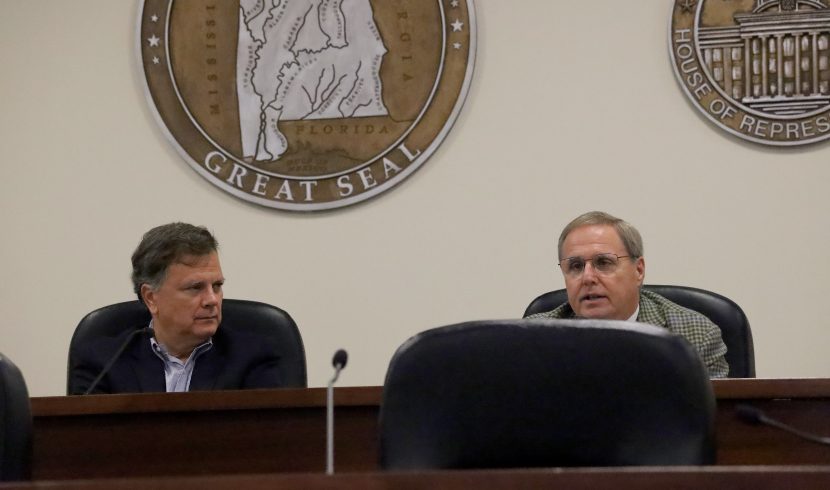
BIRMINGHAM, Ala. – Alabama lawmakers continued discussions Wednesday on how to tie a portion of college and university funding to student success, with a goal of encouraging institutions to graduate more students ready for in-demand jobs while still serving their core missions.
Sen. Arthur Orr, R-Decatur, who co-chairs the legislative committee looking at modernizing Alabama’s higher education funding formula with Rep. Danny Garrett, R-Trussville, said the objective is to help institutions “raise their bars” and reward progress.
“This effort is similar, but certainly not the same as the RAISE Act,” Orr said. That law, implemented this year, targets $166 million in additional funding toward K-12 students with greater needs – an initiative Garrett said has drawn praise from school superintendents.
Garrett said lawmakers are still early in the process of considering the best way to put performance-based funding in place.
“We’re being open and candid and we have no predetermined ideas,” he said. “Everybody will have discussions at the appropriate time.”
“It won’t be a ‘one size fits all,’” Orr added. “It’ll be more of an institution-by-institution approach. And that will take time, and that’ll take dialogue.”
Orr said any new model would draw from the Education Opportunity Reserve Fund, which is projected to hold about $1.1 billion, and would provide additional dollars beyond base operating budgets.
“This would be new money – a carrot, not a stick,” he said.
Lawmakers allocated $2.6 billion in state funding to Alabama’s 14 public universities and 26 community colleges for the current year’s operating budgets. Orr noted that Alabama’s community colleges have used a performance-based funding formula since 2019, but that model is being reviewed and could be revised.
The task force heard from national education policy group ExcelinEd, which said Alabama lags behind states such as Kentucky, Tennessee and Texas that already link large portions of higher education funding to outcomes such as graduation and job placement.
Matthew Joseph, ExcelinEd’s funding policy expert, said states that have adopted performance based funding have had three key takeaways: the money must be meaningful, the metrics must be focused and simple, and formulas must take into account students with higher needs by giving institutions more funding when those students succeed.
Where money and measures are concerned, states have committed varying percentages of a college’s budget to outcomes based funding. Joseph said that, for example, 100% of state funding for technical colleges in Texas is based on the wages graduates earn five years after completion.
Joseph said the measures and targets lawmakers choose must ensure that a college’s formula doesn’t have “unintended consequences” on enrollment, such as discouraging institutions from admitting unprepared or adult learners.
Measures should reward colleges for succeeding with students who have higher needs, he said. “In Tennessee, it’s 80% more,” he said. “In Texas, it’s 50% more.”
Other common measures Joseph shared with lawmakers include job placement, wages earned, successful transfer from two- to four-year programs and military enlistment.
The bottom line is that colleges gain more flexibility in how to use their state-funded resources but will also be held accountable for results, Joseph said.
Several lawmakers pressed for details on how Alabama might tailor a formula to its various institutions.
Rep. Corley Ellis, R-Columbiana, asked if other states adjust formulas for students with disabilities or for universities with large online populations and added that Alabama should ensure “apples-to-apples” comparisons among institutions.

Sen. Dan Roberts, R-Mountain Brook, said lawmakers could work with the state’s new Department of Workforce to target incentives toward high-demand jobs.
“This can be a great driver for what we see coming down the road as well,” he said.
Garrett asked if any states include measures related to how colleges impact a state’s labor force participation rate or keep graduates from leaving the state. Joseph said he has seen something similar in other states’ models but did not elaborate.
Joseph said ExcelinEd has been looking at best practices in performance-based funding and that Alabama is in a good position to learn from other states.
“This is not jumping off a cliff,” he said. “This is doing something that states have been doing, and they have been perfecting and evolving over time, and this is something that another state, like Alabama -with the resources you have, with the needs that you have – can just leap forward quite a bit in terms of where you are now to where you can be even in a few years.”
Joseph also clarified that ExcelinEd is not being paid for its assistance but will be available to help lawmakers as needed.
Jacksonville State University President Don Killingsworth, who leads the Alabama Council of College and University Presidents, attended the meeting and said institutions are ready to collaborate but want to ensure the metrics and comparisons are fair.
While lawmakers say they’re planning to use money from reserves for the performance-based funding, Killingsworth noted that Alabama does not have the same revenue streams for higher education that other states have.
“All those states around us that we’re being compared to have something in common, that we don’t – revenue sources like a lottery, that we do not have access to.”
He cautioned that regardless of whether performance based funding is a small or large percentage, it all makes a difference. “Every dollar is significant at any institution in Alabama,” Killingsworth said.
Gordon Stone, executive director of the Alabama Higher Education Partnership, said the group welcomes continued discussion. “For every dollar invested in our public universities, their work returns more than $12.50 to the state economy,” Stone said.
“While each university serves unique students and missions – and across the board, they contribute to Alabama through research, service, and world-class research,” he said.
According to Orr, the next steps for the committee include discussions with higher education leaders and drafting legislation for the task force to review before the legislative session begins Jan. 13.