
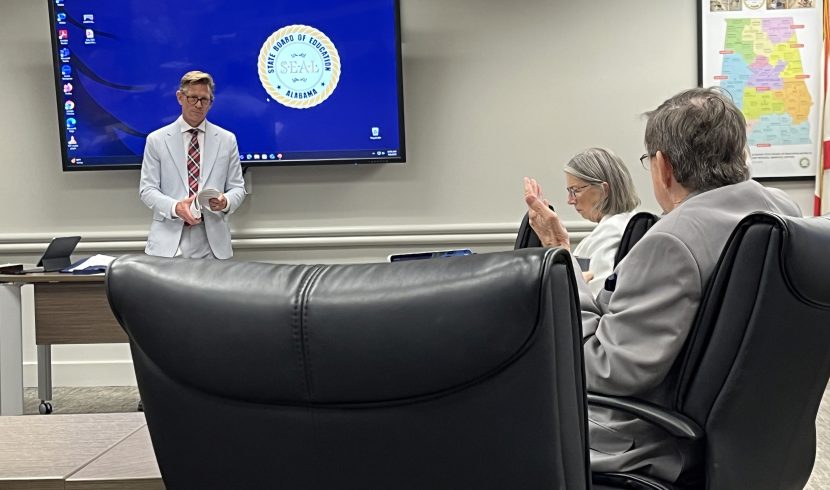
MONTGOMERY, Ala. – The Alabama State Board of Education on Tuesday elected new leadership and reviewed updates on student funding, school policies, and assessment results during its monthly meeting and work session.
Gov. Kay Ivey, who serves as board president, presided over the annual organizational meeting.
New officers elected
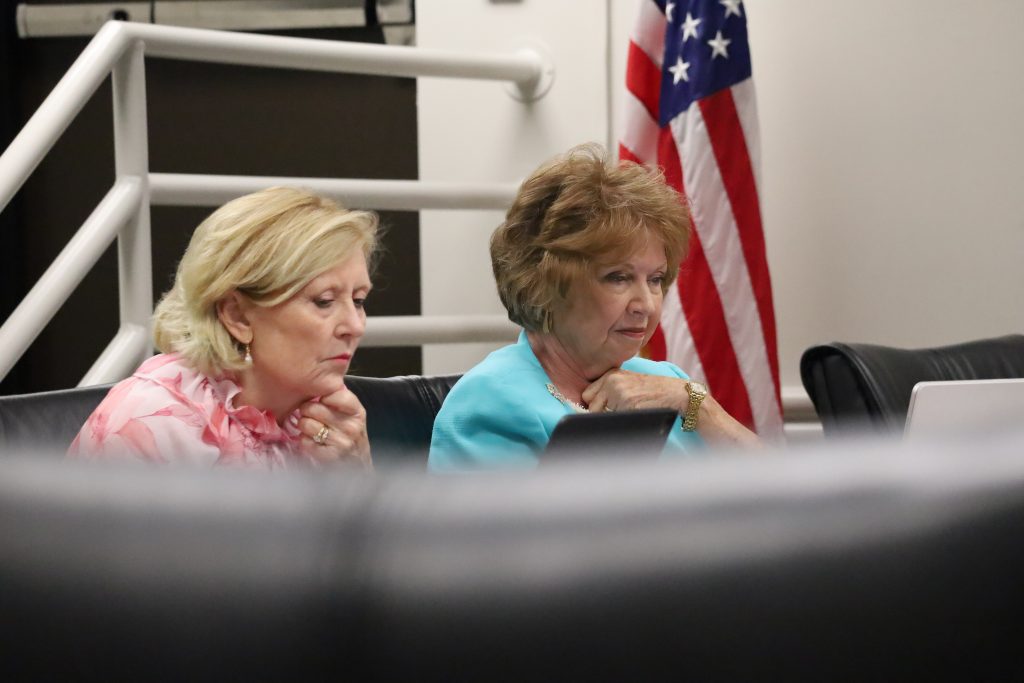
Marie Manning, who represents District 6, was unanimously elected vice president of the board. Manning, first elected in 2022, will preside over meetings in Ivey’s absence. Her district includes parts of northeast Alabama. She takes over from District 5 representative Tonya Chestnut.
District 3 representative Kelly Mooney, elected in 2024, was unanimously elected president pro tem. Mooney’s district covers parts of central Alabama.
RAISE Act rules and funding
Board members reviewed rules for administering new funding under the RAISE (Renewing Alabama’s Investment in Student Excellence) Act. The law, passed during the 2025 legislative session, establishes a new student-based funding model. The base funding amount per student is set at $7,547.
Additional weights will be applied to students in specific categories:
- Poverty: 2.25%
- Special education: 2% to 75%, depending on disability
- English learners: 7%, plus an additional 10% if ELL students exceed 9% of the student population
- Charter school students: 2%
- Gifted students: 4.5% (each district allocated an amount based on an assumption that 5% of students qualify)
Districts are expected to spend these weighted funds on the groups for whom they are intended but may reallocate up to 10% between categories. Moving more than 10% will require approval from the state superintendent.
Mackey told board members that allocations – totaling $166 million statewide – have already been calculated and shared with districts.
“Remember that the RAISE Act is something the Legislature intends to grow into,” he said, noting it will be phased in over time.
The board is expected to vote on the RAISE rules in August.
Vaping prevention and compliance
Board members also discussed their responsibilities under a new law requiring schools to implement vaping prevention policies and instruction.
“We are instructing local boards that you have to follow the state law, and we’re giving you guidance with a model policy and a model form,” Mackey said.
Board member Wayne Reynolds questioned why vaping was being singled out among wider discipline policies when local school boards already had policies in place regarding other drugs and substances.
“Sometimes the Legislature gets a hot issue, they go nuts over it, and they pass rules and we have to do policies,” he said. Reynolds also urged the board to consider stronger guidance on THC-infused gummies and other student substance use.
Mackey said the department has created an anti-vaping curriculum and hopes to work with lawmakers next session to delay the effective date of new education laws.
“There’s this growing sense of urgency. And it’s not just education,” he said.
The board plans to vote in August on the vaping policy, model form and curriculum.
Teacher paperwork streamlining committee formed
Under the new Teacher Paperwork Streamlining Act, the board must appoint a committee – primarily composed of classroom teachers – to review burdensome paperwork and recommend improvements.
Mackey said it has been difficult to recruit teachers for the committee given the short timeline and teachers’ already heavy workloads.
“Most teachers have said absolutely not… because it’s just more time and work for me and I’m already overburdened,” he said.
Assistant Superintendent Melissa Shields said the group will focus on daily classroom demands such as grading, lesson planning, assessments and discipline.
“The conversation is really going to be centric to what teachers encounter on a daily basis, from grading, lesson planning, assessments, discipline – all of those things that fall on his or her lap – to think about some opportunities to create more time for them to be teaching,” she said.
The committee will meet before Sept. 1 and serve a two-year term. Mackey said the department will cast a wider net for the next round of appointments.
The full video of the board’s work session is seen below. All meetings and work sessions are livestreamed.