

BIRMINGHAM, Ala. – Alabama students are scoring better on the ACT according to a report released Tuesday by the Public Affairs Research Council of Alabama.
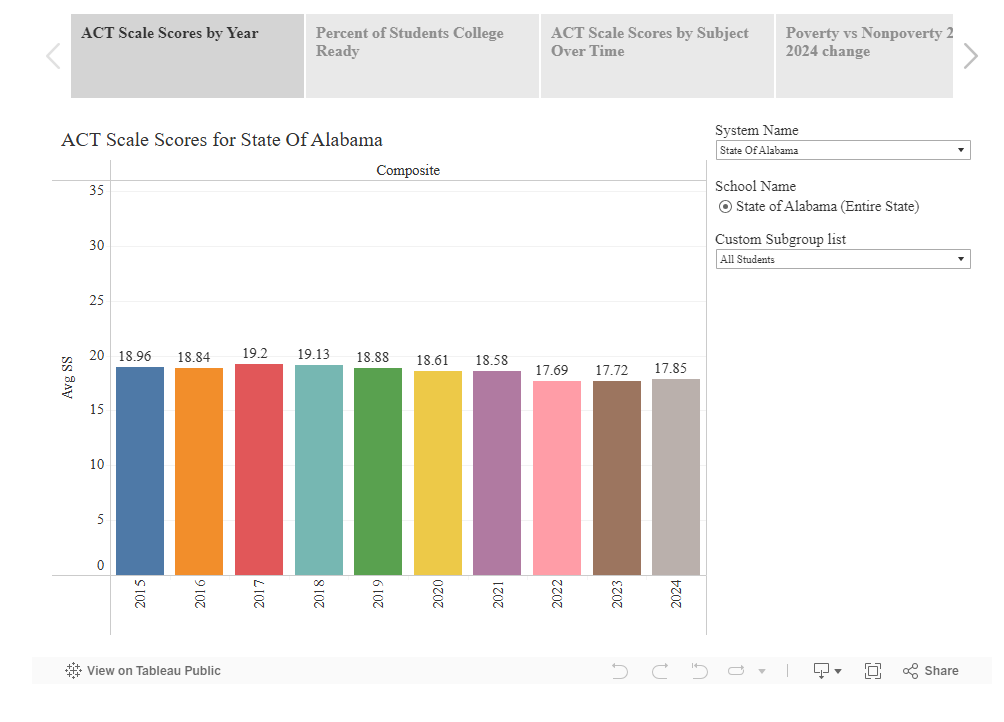
The class of 2024’s ACT composite score for Alabama’s public schools rose to 17.85, up from 17.72 for the class of 2023. However, scores remain lower than before the pandemic, when the class of 2021 averaged 18.58. Nationally, ACT scores continue to decline, dropping from 19.5 in 2023 to 19.4 in 2024 – more than a full point below the class of 2021’s score of 20.3.
Unlike many states where only college-bound students take the ACT, Alabama is one of nine states where all students, regardless of post-graduation plans, take the test. Because of this, PARCA cautions against direct comparisons between Alabama and states where participation is optional.
PARCA’s report provides an in-depth look at school-level ACT scores, which are not released by the Alabama Department of Education. The analysis highlights a strong correlation between economic advantages and higher scores.
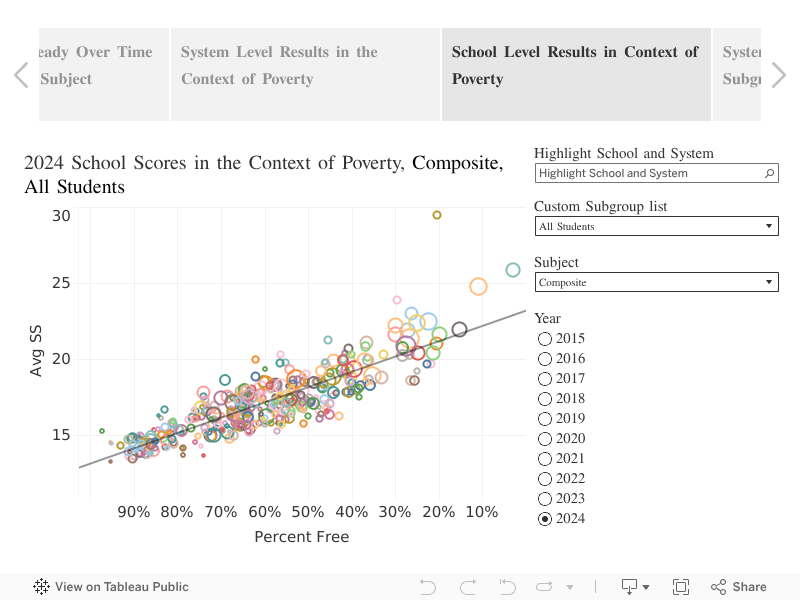
High schools in affluent areas, such as Mountain Brook and Vestavia Hills, as well as academically selective magnet schools in Montgomery and Huntsville, tend to score higher than others. In contrast, schools with higher levels of poverty, measured by the percentage of students eligible for free meals, generally see lower ACT performance.
However, some schools outperform expectations based on student poverty level. For example, Piedmont High School in Piedmont City schools, where more than half of students qualify for free meals, posted an average composite score of 20 – higher than some schools with lower poverty rates.
The chart below, created by PARCA, reflects each school’s score coupled with the percentage of students in poverty.
Since 2014, all Alabama public high school juniors have been able to take the ACT at no cost to the student. Some students retake the test at their own expense, and data suggests that doing so leads to higher scores.
According to an October news release from the Alabama Department of Education, students who take the test more than once averaged a composite score of 21 on subsequent attempts, compared to the statewide average of 18.
The scores PARCA analyzed reflect the final score for students.
ACT results directly factor into Alabama’s school and district report cards in two areas: Achievement and College and Career Readiness.
A student is considered proficient in the Achievement score calculation if they met a state-set benchmark in math, reading or science.
Meeting a benchmark score also earns the student a college or career readiness indicator, which contributes to the College and Career Readiness score.
Beginning with the Class of 2026, all Alabama students must earn at least one college or career readiness indicator to graduate.
Some education leaders are questioning whether the ACT should continue serving as a key accountability measure. Unlike state-created tests aligned to what students learn in high school, the ACT is designed to assess college readiness, and not all students plan to attend college.
State Superintendent Eric Mackey recently told board members that Alabama’s superintendents are split on whether to keep the ACT or to develop a new high school accountability test.
Before the pandemic, the ACT was a routine part of the college admissions process. But when testing became inaccessible in 2020, many colleges, including all of Alabama’s colleges, adopted test-optional policies. Many colleges have kept that policy in place. Students can qualify for admission based on a minimum high school GPA. Alabama’s two-year colleges do not require ACT scores for admission.
As discussions continue about the ACT’s role in accountability and admissions, the test itself is changing. Beginning in April, the ACT will be shorter in length and take less time to complete. Additional details on these changes can be found here.