
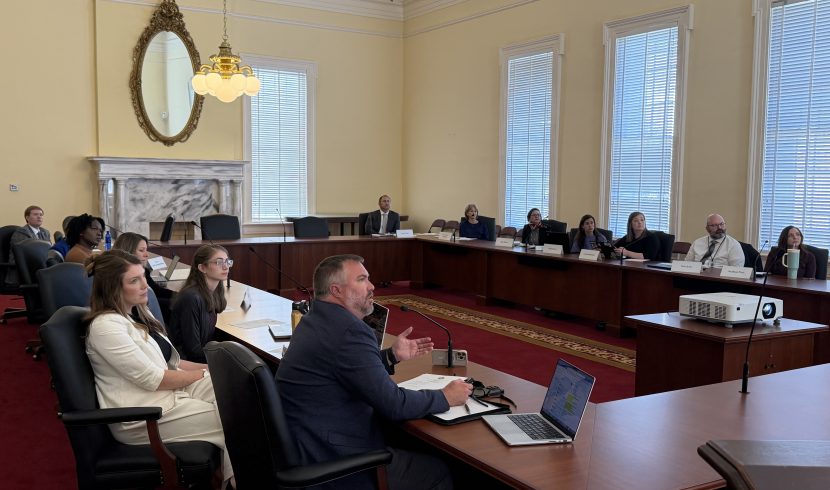
MONTGOMERY, Ala. – Alabama parents, teachers and school leaders agree that technology has a place in classrooms, but students need more time with books and less time looking at screens, according to early results from a survey shared Tuesday with the Governor’s Commission on Screen Time.
The commission held its final in-person meeting Tuesday in Montgomery and is working on a report for Gov. Kay Ivey, which members hope to present Dec. 1.
Researchers surveyed 3,175 teachers, 3,094 parents, 396 school leaders and 74 technology directors and staff members about how technology is used in Alabama’s public schools.
Parents and teachers said using more printed books and classroom materials was one of their top priorities. Most parents said their children spend too much time on screens at school.
Parents, teachers and school leaders also agreed that students need regular breaks from screens during the school day.
Even so, all three groups agreed that knowing how to use technology will help students in the future.
Parents and teachers disagreed somewhat about setting daily screen-time limits. Four in 10 parents supported limits, compared with one in four teachers.
Teachers said they most frequently use technology to test students and track their progress, help students practice skills and conduct research.
Most teachers said students use technology for 20 minutes to an hour and a half each school day. High school teachers were more likely than other teachers to report students using technology for 3.1 hours to more than 4.5 hours a day.
Rep. Jeana Ross, R-Guntersville, who chairs the commission, said she was struck by how often parents, teachers and school leaders agreed.
“I think the thing that I found very interesting is that basically we all agree,” Ross said. “You could see the trends across just about every subject matter that they asked about.”
Ross said the findings show Alabama may need to rethink how schools use technology.
“We’re seeing that perhaps redefining exactly how technology is used in our classrooms is very important,” she said.
University of Alabama professor and commission member Cailin Kerch, who helped lead the research, said she was pleased with how many people responded to the survey over the two weeks it was open.
“We want to have voices represented at all those different groups, and so we were honored to be able to collect the data and then work as a team to try to share the findings,” Kerch said.
Researchers are still studying the results, which reflect the opinions and experiences of parents, teachers and school leaders. Technology directors and staff were also surveyed and only about 40% said their districts could track how much time students actively spend using devices.
Ross said the commission is also considering changes to Alabama’s Teacher Observation Tool, which principals and other administrators use when observing and evaluating teachers. The changes could include questions about how teachers use technology during lessons.
Houston County Schools Superintendent Brandy White said the tool doesn’t currently ask whether screen use has a clear purpose or whether teachers balance it with other types of instruction.
“I think it would be an easy way to develop questions for a tool that we’re already using,” White said.
White said counting how long students use computers doesn’t always tell the whole story. Students working on Chromebooks, for example, might still be receiving instruction directly from a teacher.
He said enforcing daily screen-time limits would be difficult, particularly in middle and high schools where students move between different classrooms and teachers throughout the day.
Ross said the commission’s smaller working groups will finish their recommendations and put them together in a report for Ivey.
The findings could lead to new legislation, Ross said, but she wants teachers to have a say in how any new rules are developed.
“I want to talk some more to teachers and local school districts because that teacher autonomy, I think, is very important,” Ross said.
She said statewide guidance, though, could help teachers make decisions about classroom technology without leaving them to figure everything out on their own.