
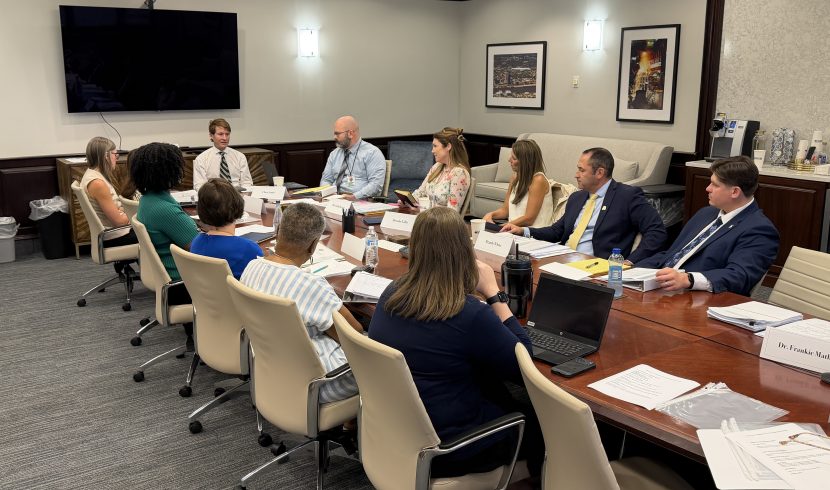
MONTGOMERY, Ala. – Alabama’s commission studying screen-based instruction is moving toward recommendations on when and how technology should be used in K-12 classrooms, with members focusing not simply on how much time students spend on screens but whether that technology serves an educational purpose and improves learning.
Rep. Jeana Ross, R-Guntersville, who chairs the Governor’s Commission on Screen-Based Instruction, said the group is making progress as it examines the many ways students and teachers use technology in classrooms. Members have broken into subcommittees and are beginning to narrow that work into recommendations.
The commission must submit recommendations to Gov. Kay Ivey by Dec. 1.
Ross told Alabama Daily News after the meeting that she wants to make sure people understand what the commission is trying to do.
“This is not a ban on technology,” Ross said. “It is to just ensure that the technology that is being used with our students at school is effective and it’s implemented in the proper way, and it’s something that supports learning, not replaces that important teacher, adult-child interaction.”
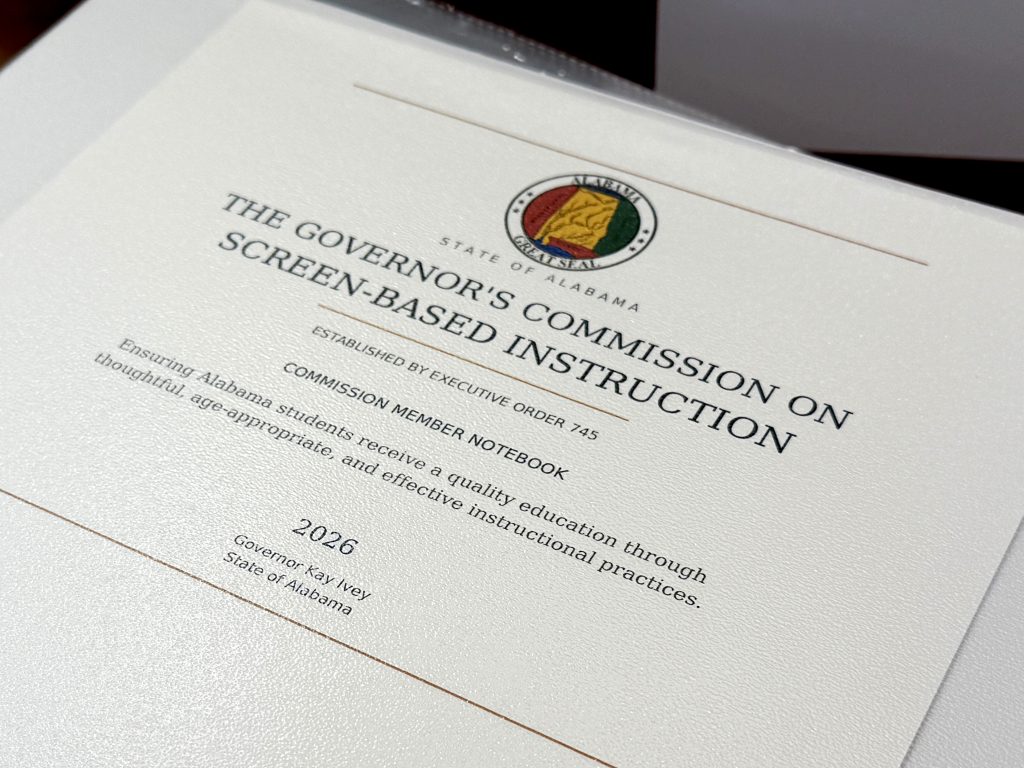
Ivey in July directed the commission to study how classroom technology affects learning, student health and preparation for college or work, to compare Alabama’s practices with research and practices elsewhere and consider age-appropriate limits, guidance for educators and ways to make sure technology supports rather than replaces teacher-led instruction.
Tuesday’s discussion focused less on setting limits on screen time and more on what students are actually doing on screens and whether that use helps them learn.
Members repeatedly cautioned against a one-size-fits-all approach, noting that technology can serve very different purposes depending on a student’s age, subject, needs and access to teachers or courses.
“Technology is not going away,” Houston County Superintendent Brandy White said, adding that the commission’s goal should not be simply to increase or decrease screen time, but to determine how schools can use technology with “balance and purpose.”
Chris Jenks, technology director for Tuscaloosa City Schools, said educators should be central to those decisions.
“We understand and see every day that not every minute spent on the screen is equal time,” Jenks said. He said teachers should start with what students need to learn, then decide whether technology or more traditional teaching methods are the best way to get them there.
Jenks also said some teachers have been given technology without enough training to use it effectively. He said policymakers need to understand technology use at the “front line level” from people who work with children every day.
Opelika High School Principal Kelli Fischer raised another question: whether technology is helping students think or making them too dependent on it.
“Are we preparing them to use technology or are we making them dependent on it?” Fischer said.
The commission is still gathering more information before making its recommendations. Researchers are developing statewide surveys of teachers, families and administrators about how screens are used in schools and how that use affects instruction, with results expected in November.
The commission plans to begin drafting recommendations in October and refine its final report in November.
The group’s work follows several recent efforts in Alabama to set boundaries around students’ use of screens and devices.
Ross pushed for passage of the FOCUS Act, which restricted students’ use of cell phones and other wireless communication devices during the school day beginning with the 2025-26 school year.
She also sponsored the Healthy Early Development and Screen Time Act during the 2026 legislative session, which set limits on screen use for young children in covered child care, pre-K and kindergarten settings. It becomes effective Jan. 1.
A second bill Ross sponsored during the 2026 session would have required the State Board of Education to develop research-supported standards for technology used in instruction and local school boards to adopt policies consistent with them. The House passed HB584, but the Senate did not take it up.
Ross also told ADN that she plans to use the commission’s recommendations to shape legislation for the 2027 session.
“These recommendations will inform a bill that I absolutely will file in January,” Ross said.