
Crouching in high grass, we awaited the early teal flight. Blue-winged teal migrate earlier than other ducks and usually arrive on the Gulf Coast in late August or September. To give people an opportunity to hunt these birds, Alabama opens a September teal season.
On this September morning, we waited and waited. Nothing came near us. Finally, we gave up without firing a shot. However, that didn’t end our day of adventure in the lower Mobile-Tensaw Delta marshes near Mobile.
“Come on, son. Let’s get in the canoe and go shoot some gallinules.”
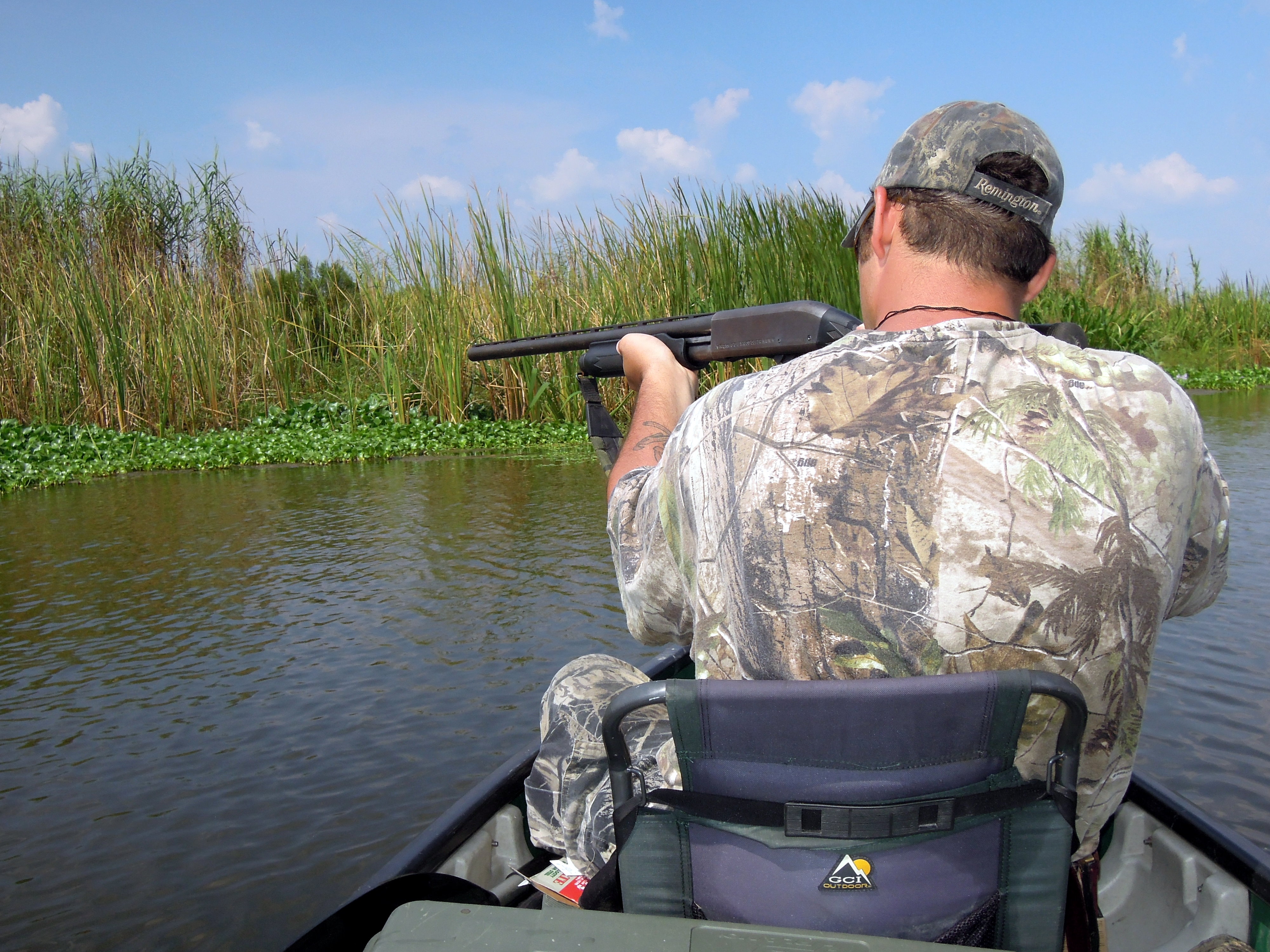
My son sat ready for action in the bow while I paddled from the stern. We glided along silently through the maze of small channels crisscrossing this delta marsh. In less than an hour, we headed for home with my son’s limit of 15 gallinules.
“Many people don’t really know what rails and gallinules are or that they are legal game birds,” stated Seth Maddox, the Assistant Chief of the Wildlife Section for the Alabama Wildlife and Freshwater Fisheries Division. “We have long seasons with liberal limits for them. They are good tablefare and great fun to hunt. I equate it to hunting quail on the water.”
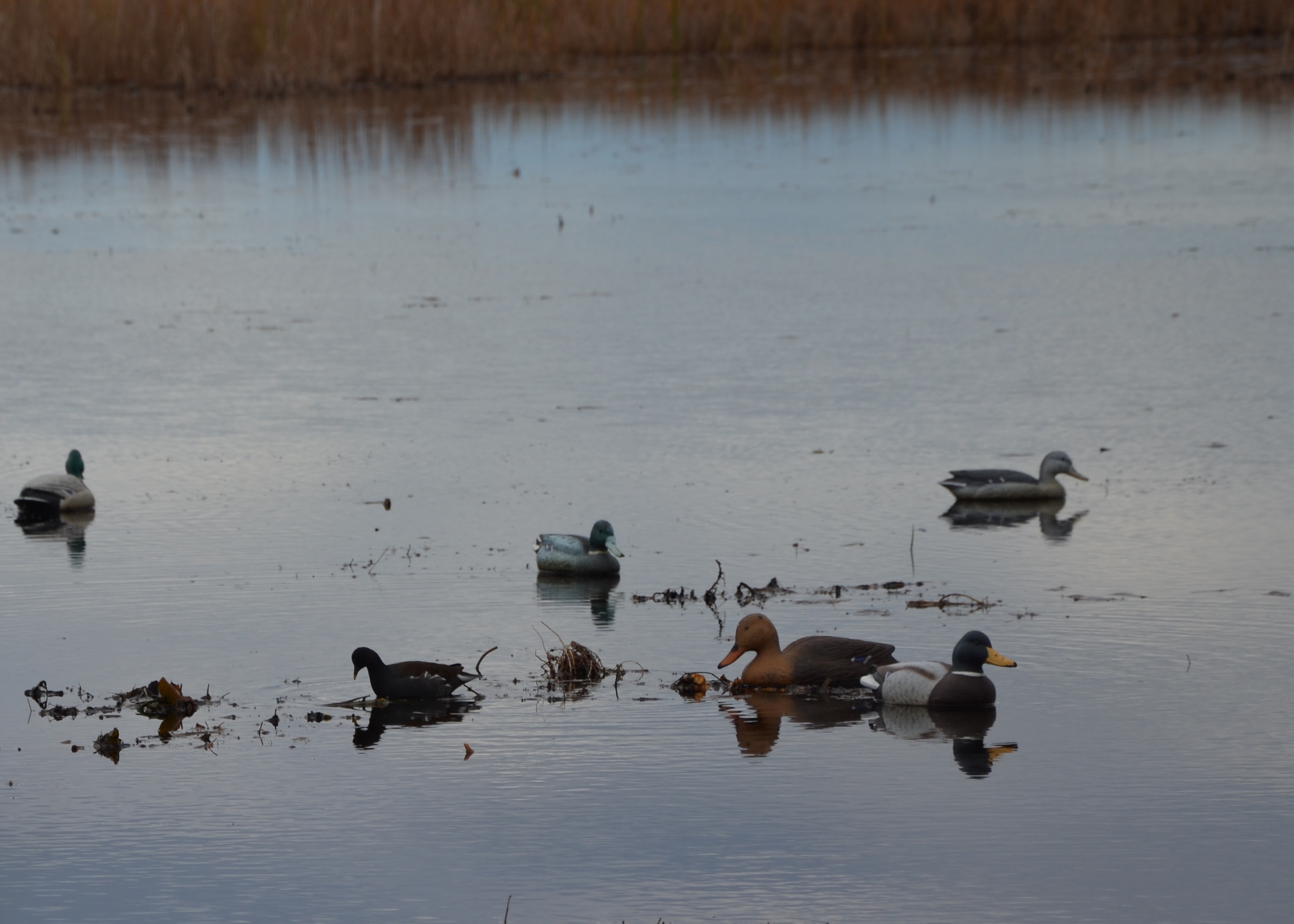
Rail and gallinule seasons run concurrently with the September teal season. This year, teal season lasts from Sept. 12-20. In addition, sportsmen can hunt rails and gallinules again from November 27 to January 26, 2027. This later season mostly coincides with regular duck season. During rail and gallinule season, Alabama sportsmen can bag up to 15 birds per day in any combination of king, clapper, Virginia, sora rails or gallinules.
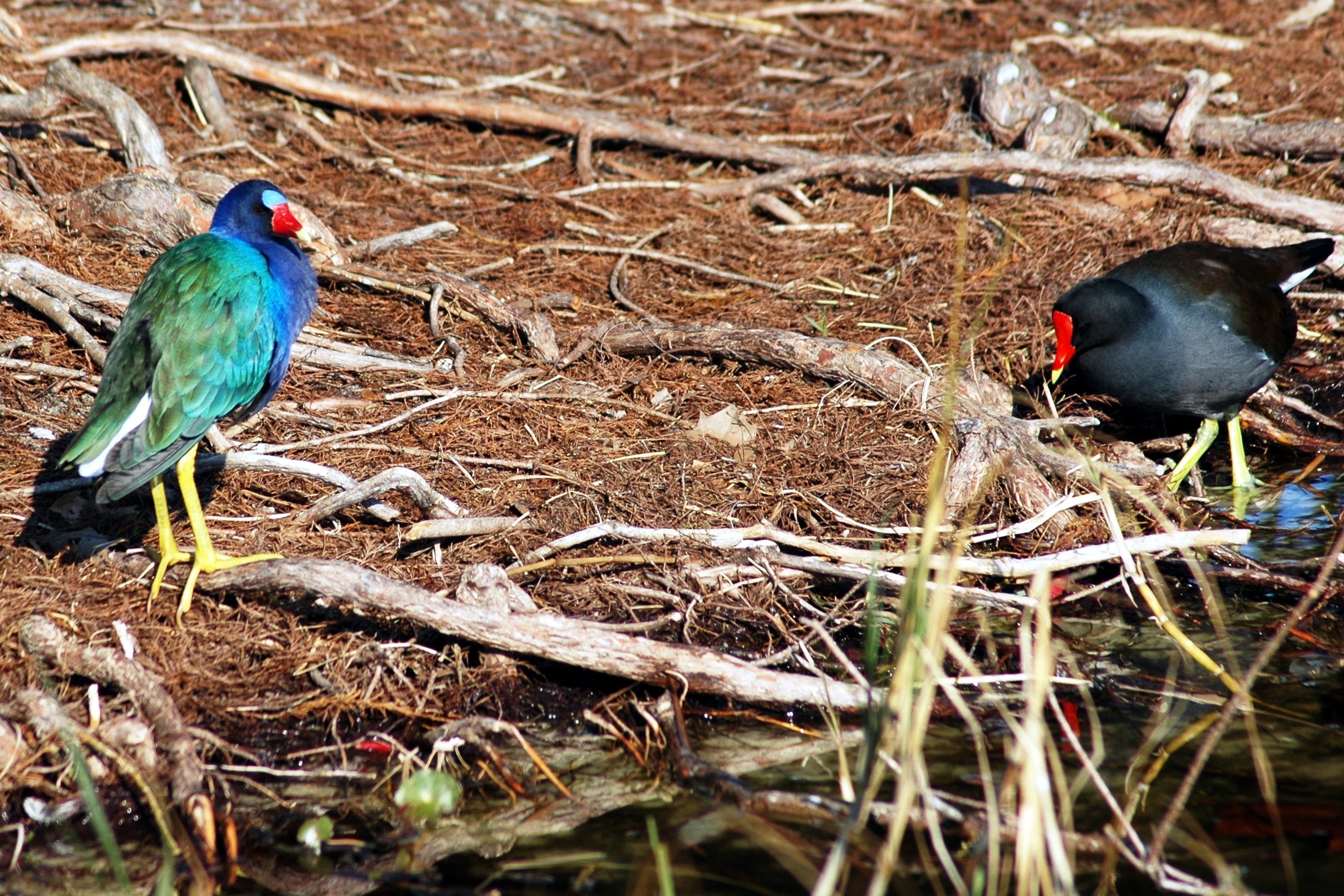
Common gallinules, the most common and widespread of the two species, occur statewide. They prefer freshwater marshes and reedy lake or river shorelines. Also called moorhens, common gallinules resemble coots with a grayish body, charcoal top and white trimmings. Its most striking feature, a bright scarlet chicken-like bill tipped in yellow distinguishes it from coots and ducks. A red patch on its forehead makes another excellent field mark.
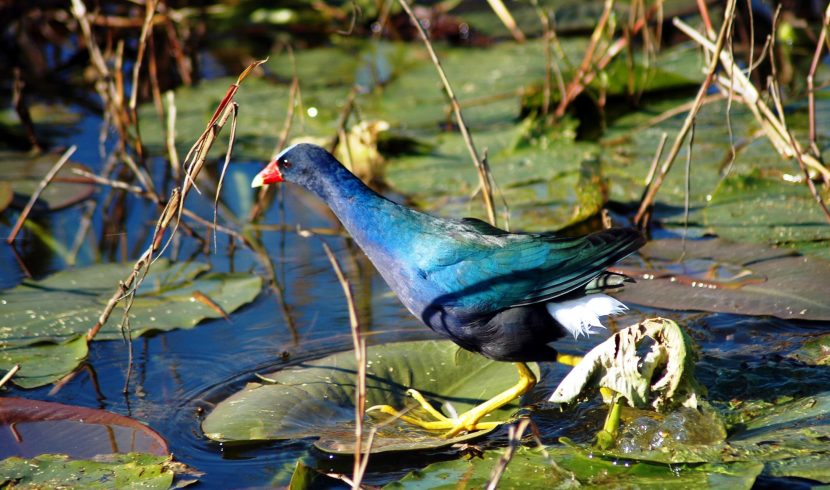
One of the most striking North American game birds, purple gallinules exhibit blue and green feathers, purple heads, long yellow legs, white rumps and red bills with yellow tips. Bright blue forehead patches distinguish purple gallinules from their red-patched and more drab common cousins.
Also called blue peters or swamp hens, purple gallinules thrive in freshwater marshes, lake shorelines and swamps. Both gallinule species use their long toes to deftly walk across matted grass, lily pads or other floating vegetation while hunting for small fish, insects, crustaceans, frogs and other tidbits.
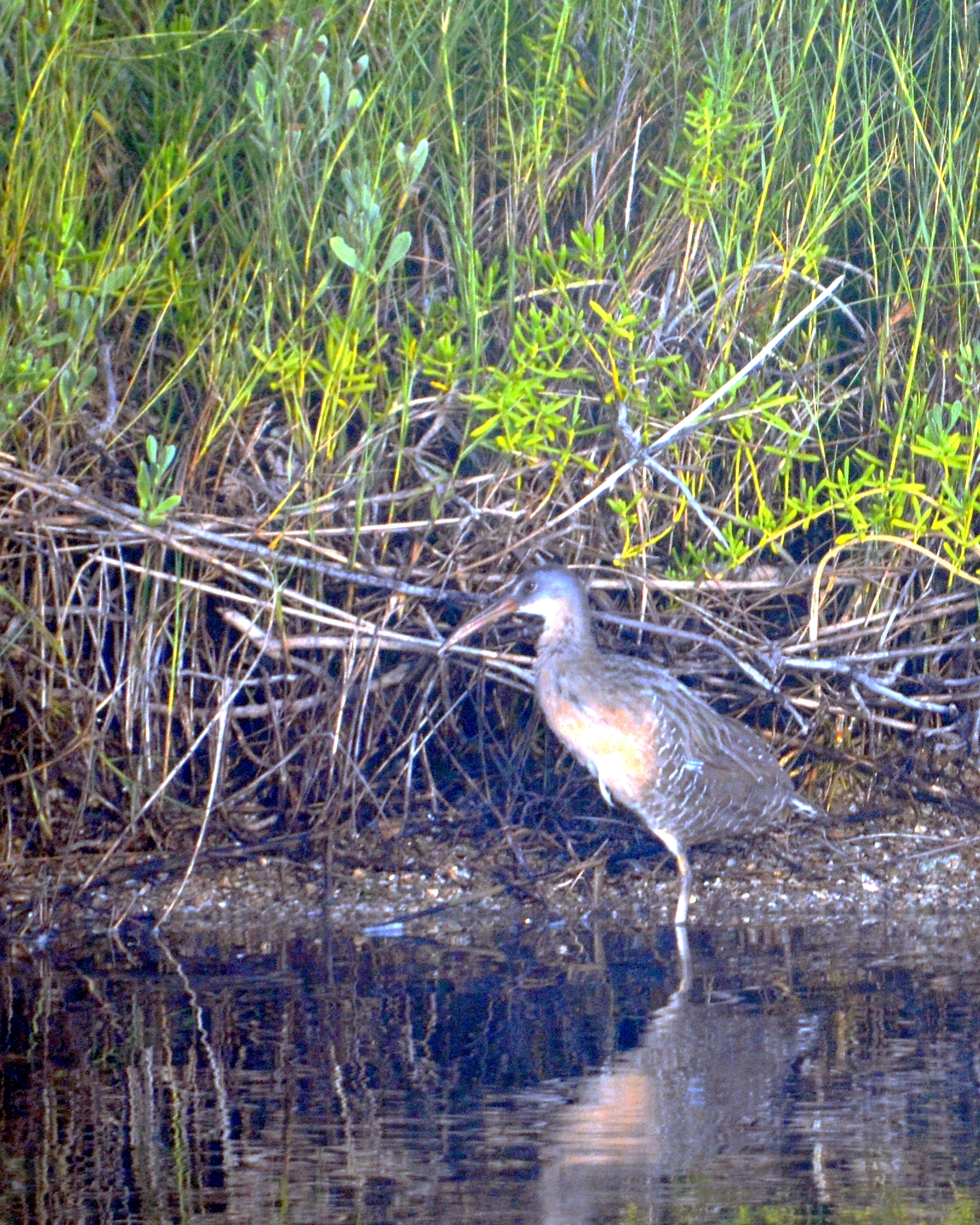
King rails, the largest of the family, sport long, slightly curved bills with rusty or rich chestnut and cinnamon coloring on their faces, necks and breasts. They prefer freshwater marshes, swamps, lake shorelines and other reedy sweet-water systems.
A chicken-like bird with grayish-brown under parts, chestnut backs and grayish-white bars under their rumps, clapper rails prefer salt marshes where they blend in with grass. More commonly heard than seen, clappers sing out loud cackling. Clappers come out at low tide to walk along mudflats where they use their long, slightly downward curved bills to snatch aquatic insects, crustaceans and small fish or probe the mud for invertebrates.
Virginia rails resemble half-scale kings with dark brown heads and backs, orange legs and long, curved bills. Patches of gray splashing on their cheeks distinguish these rails from their regal cousins.
The smallest, most widespread and common of the rails, sora rails grow to about the size of quail. They feature dark grayish-brown upperparts with black throats, blue-gray faces and black and white stripes on their lower flanks. They like freshwater systems and sometimes go in flooded agricultural fields. Unlike other rails, soras use their powerful short yellow chicken-like bills to crush seeds, snails, insects and any other foods.
“Rails and gallinules concentrate on larger bodies of water,” Maddox explained. “The marshy edges of rivers and shallow backwater areas with a lot of aquatic vegetation will be good places to look for them. Clapper rails are down in the salt marshes along the coast.”
Rails do not respond to calls or decoys, so sportsmen must go looking for them. Some people walk the marshes and shorelines to flush the birds. Federal laws prohibit hunters from shooting at migratory birds from boats under power, including sails and electric motors, but people can hunt rails and gallinules from any human-powered craft.
These birds receive almost no hunting pressure, but paddling a canoe or kayak along marshy channels and lake shorelines makes a great way to hunt these birds. They can provide exciting action, especially for young sportsmen. In a good spot, young shooters can burn through ammunition.
“A few dedicated hunters chase rails or gallinules, but it’s something else that people can hunt,” Maddox advised. “Teal usually fly at first light, but rails and gallinules stay out all morning. During teal season, I’ll hunt teal early. Then, I’ll go chase gallinules and rails the rest of the morning. Hunting rails and gallinules offers great opportunities to bring children hunting. Youngsters might get a chance to do a lot of shooting.”
Most rails and gallinules typically rather run from danger than fly. They can disappear easily into thick reeds. Gallinules fly more than rails, but when they do fly, they seldom go far. People can frequently stalk them again.
“Rails and gallinules are secretive marsh birds,” Maddox remarked. “They like to hide in vegetation like cattails and walk along the banks of sloughs and mudflats at the edge of the water. Paddling around in a canoe or kayak or polling along in a flat-bottom boat is a good way to hunt these species. People could also walk along the shorelines flushing birds.”
Make any day afield last a little longer and add to the fun by looking for rails and gallinules after the teal or other ducks stop flying. On a good day, young sportsmen of all ages could enjoy great additional opportunities to pull their triggers.
An avid sportsman, Felsher is professional writer, photographer and radio show host who has written thousands of articles for many publications. He’s always looking for ideas or outdoors adventures that will make good stories. Contact Felsh at [email protected] or through Facebook. He also hosts an outdoors tips show for WAVH FM Talk 106.5 radio station in Mobile.