
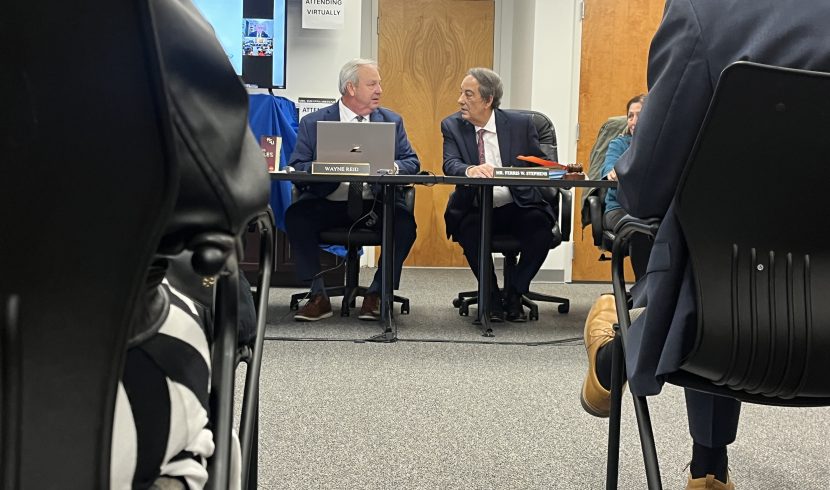
MONTGOMERY, Ala. – The Alabama Educational Television Foundation Authority, one of Alabama Public Television’s governing bodies, has postponed a meeting to approve using part of its rainy day fund for a statewide poll, according to an email to board members obtained by Alabama Daily News.
The Foundation, which manages donated and other funds used to support APT, was scheduled to convene next Tuesday in Montgomery for a specially called meeting to appropriate the money.
The board previously OK’d using the rainy day fund to finance the survey in July but had not approved a specific amount because of confusion over a contract. That vote came after the Alabama Educational Television Commission, which oversees APT’s operations and programming, decided on national polling firm McLaughlin and Associates as the facilitator of the survey.
Foundation Chair William Green postponed the meeting in an email on Thursday night. The message did not include a reason.
What Tuesday’s meeting was supposed to be
According to the legal notice filed with the Alabama Secretary of State’s office, approving the polling expenditure was the only item on Tuesday’s meeting agenda. There was confusion at the boards’ last meetings over the amount because the contract initially proposed by McLaughlin included services beyond the survey, including media buying and consulting.
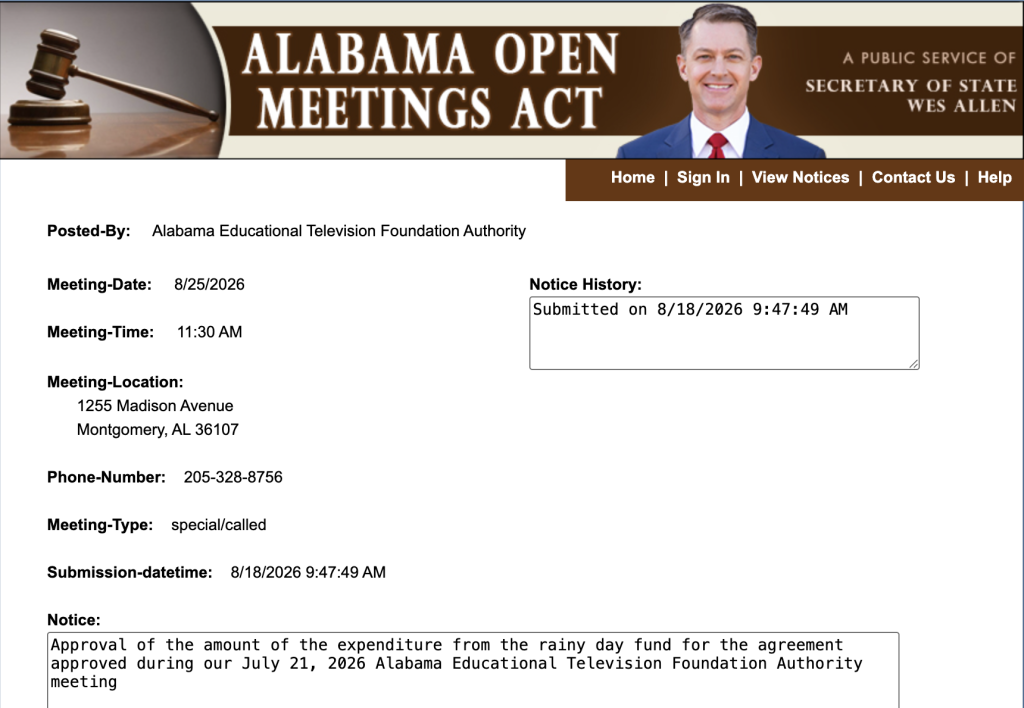
That was a “boilerplate” or “template” contract, board members said at the time. Because of the confusion, the Foundation delayed a vote on the specific appropriation from the rainy day fund.
Board members had also said the proposed cost of $47,500 might come down if the contract removed the other services, but that is not the case.
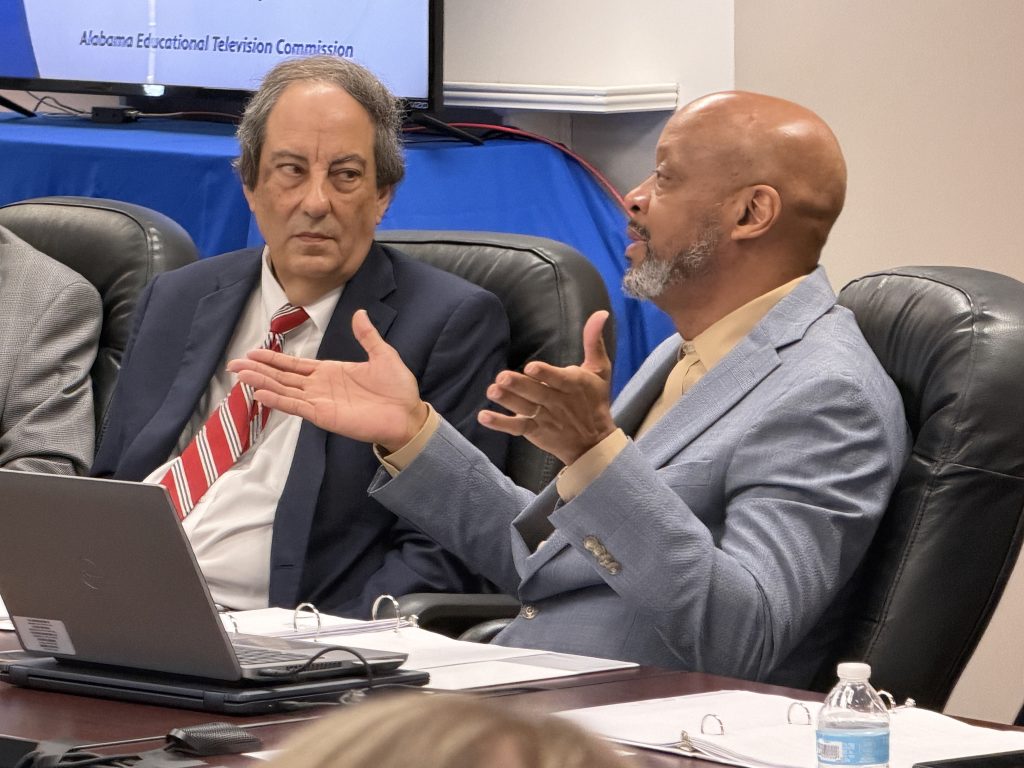
Commission Board Chair Ferris Stephens told Alabama Daily News this week that the final contract amount, even with the other services removed, will be $47,500.
“It was very clear that we are going to have a survey for $47,500 to do 600 surveys, and the surveys will be about 20 minutes apiece, and doing a scientific survey, a cross section of all Alabamians, not just voters or whatever, everyone, and so that’s what we decided to do,” Stephens said.
Controversy over the survey
Stephens says the survey will help APT better understand viewers’ opinions, but critics on the board say it is a veiled attempt to query Alabamians on more political questions.
McLaughlin, the polling company, works with many Republican clients, including the Republican National Committee, the Alabama Republican Party and dozens of GOP lawmakers, according to its website. The commission did not consider any other companies or conduct a request for proposal process.
McLaughlin did not immediately respond to a request for comment about how it conducts nonpartisan surveys.
Stephens, who introduced the motion to hire McLaughlin at the July commission meeting, said the company was the strongest option for the survey.
“They know how to do a survey. If you go on their website, they do it for Fortune 500 companies. It’s very impressive,” Stephens said. “They’re the place to go if you want the real thing, if you want what people really think. I have complete confidence, and obviously the majority of the board does too.”
The board approved his motion by a vote of 6-2.
Commissioner and Foundation board member Pete Conroy, one of the no votes, strongly disagrees with the Foundation contracting with McLaughlin.
“The optics are horrible, and I think the general public will see right through this attempt to do this new survey, disregarding the nearly 2,000 people who have already commented,” Conroy said.
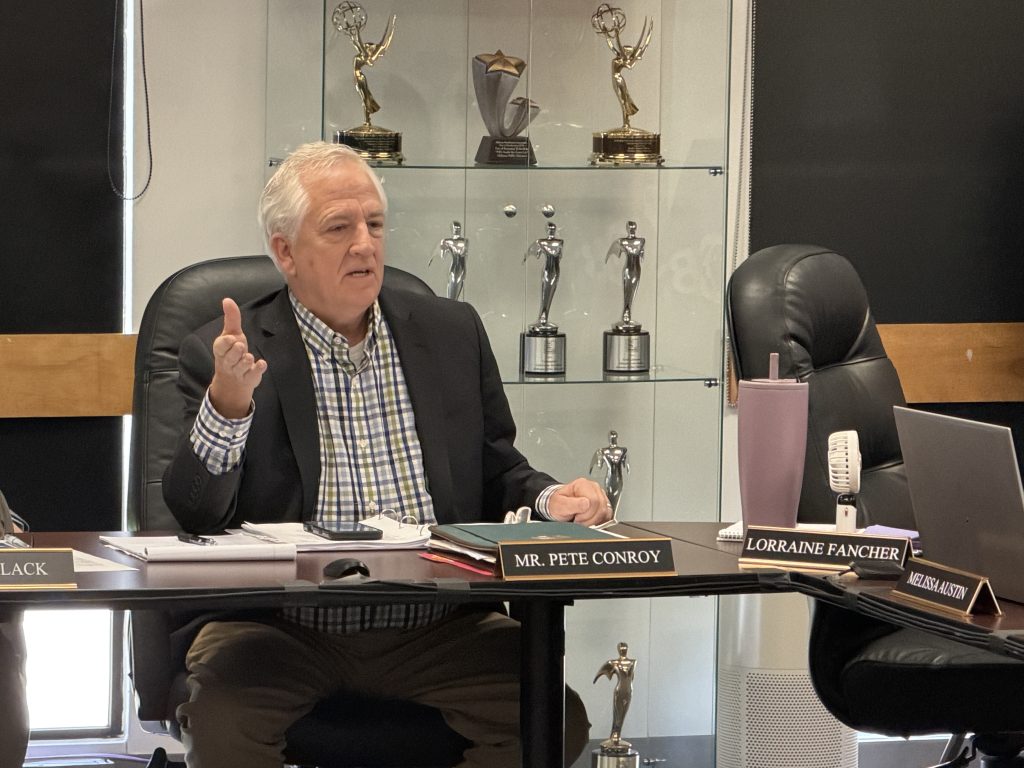
Commissioners received thousands of emails urging them not to disaffiliate from PBS during the board’s discussion, he explained.
Conroy also disagrees with the use of rainy day funds, given that the bylaws say that money should only be used for emergencies. He thinks the board should wait to consider the $47,500 price tag until its October meeting, when the Foundation takes up APT’s budget.
“The rainy day fund wasn’t even used when we were faced with having to let go 11 employees, and now using the foundation’s rainy day fund for this survey doesn’t seem proper,” Conroy said. “We do have rules that prohibit it, but like Ferris (Stephens) said in a recent meeting, ‘Well, we can change those rules.’”
Origins of the survey
The survey grew out of discussions more than a year ago about ending APT’s ties to PBS. After viewer pushback and a letter from Gov. Kay Ivey, the Commission voted not to disaffiliate from PBS.
Ivey, in her letter, told commissioners that if they were to disaffiliate, they should first survey Alabamians and make a plan for what would replace the programming. PBS supplies around 90% of APT’s programming, Green said in a previous meeting.

The Governor’s Office would not say specifically whether Ivey supports the board’s push to do a survey after disaffiliation was taken off the table, instead referring to the text of the letter from last year.
Though the conversation about Alabama Public Television cutting its PBS ties is in theory closed, some board members expressed concerns that the survey will broach the subject once again.
Conroy said the survey is “quite the opposite” of what Ivey’s letter recommended, calling it a “phony” survey.
“What the letter says is, if you’re going to disaffiliate, do a survey,” Conroy said. “Well, I had made the motion, and it was seconded, and it passed to abandon the concept of disaffiliation from PBS unless there was a financial reason not to do so. That passed, so we are no longer considering disaffiliation with PBS. So the need for the survey disappeared right then and there in my mind.”
Because of this, he’s unsure of the scope of the survey and has repeatedly said he thinks the board should slow down the approval process.
“I have no idea what the questions are, and if, as a commissioner, I’m not allowed to see what the questions are, that’s another problem,” Conroy said. “I sure know the questions that (Stephens) asks in between meetings, and they’re all directed towards disaffiliating with PBS.”
Stephens declined to share the questions he submitted with other board members during the July meeting. He has repeatedly brought up the Commission’s statutory duty to survey its viewers in response to criticism of the survey.
The Code of Alabama section about the Commission says it is “empowered and directed to survey, study and appraise the need for an overall plan for the use of television facilities available for noncommercial educational use in the state.”
“That’s what we’re doing,” Stephens told ADN after reading the code section aloud. “We’re going to survey as we were required to do under the statute. Can you think of any reason we should knowingly not follow our statutory obligation to conduct a survey?”